I'm asking for some input. I just connected some ideas relating to the archaic use of belts:
Indian guy climbing tall coconut tree with ankles bound, crawling like an 'inchworm' up the tree. (30 sec. video) [When in Malaysia, I tried climbing a coconut palm but failed, I hadn't known this trick.]
http://www.youtube.com/watch?v=KgW-926XtFs&feature=related
Chinese girl swimming dolphin-style with ankles bound so as to allow 'dolphin tail' undulations.
http://the-arc-ddeden.blogspot.com/2007/10/10-year-old-chinese-girl-dolphin.html
[River dolphins in Yangtze river, dugongs as visual model for early human swimmers?]
Wrist bracelets/necklaces/vests/skirts with shells, beads, holed coins as visible wealth and counters (primitive abacus/calendar such as a thread bracelet with 28 beads to represent lunar month).
Diving belt: kelp/vine/water lily stem or folded cloth sarong (linen/silk/palm fiber/pounded tree bark (tapa cloth of Hawaii/Samoa); wrapped (rappel?) / lashed (leash?) around belly/shoulders/calves (depending on function)
-notched & clipped mongongo or salt-crusted mangrove leaves for hut shingles (origin of salt trade, barter gift exchange between women who constructed their own dome huts)
-net (or skin) bag/basket clipped/strung to belt to hold foods/shells or as woven or inflated floating basket
-used around calves as coconut palm climbing strap (cloth tube sarong not knotted, depends on fiber friction)
-used around ankles as dolphin tail for more efficient long-term swimming (not short dives)
-used as baby backpack (I saw an Indonesian woman swaddle her infant in a square cloth, piggy-back style, then easily switch to nursing postion, far more simply practical than today's baby backpacks)
-used to hold short sharp (bamboo) stick spear/prybar and flint/razorclam blade, hand-axe holder/handle/hook while swimming/climbing/walking to keep hands and legs free for movements.
-AmerIndians used wampum belts of shells on strings: http://en.wikipedia.org/wiki/Wampum
for quipu, tokens and memory devices, highly valued. Other materials used porcupine quills. pounded goldleaf etc.
http://tech.groups.yahoo.com/group/AAT/message/364
-possibly after deep dive descent (while negatively buoyant) a (woven short sarong/skirt) could open parachute-like between ascending strokes to slow descent and then close during each arm/leg stroke phase to allow faster ascent. (from DeeperBlue.com message: This is how a dive works: Because of the air in our lungs, we are buoyant on the surface and remain so until about fifteen metres. The weight that a constant-weight diver wears around the neck helps him or her overcome the resistance at this depth. (Campbell wears about four pounds.) Between fifteen and thirty metres, most people are neutrally buoyant, and after thirty metres they are negatively buoyant, which means they sink. "Deeper than thirty metres, nobody swims," Marco Nones, a dive instructor in Sharm al-Sheikh, told me. "Fall down, fall down. Every diver slips." At the bottom of a deep dive, a diver is very heavy, because the lungs are so radically contracted. To return to neutral buoyancy, he must labor against this. Sometimes, on no-fins dives, he actually sinks while gliding between strokes and has to work to recover lost ground.
http://forums.deeperblue.com/general-freediving/84091-deepest-dive-new-yorker-article-sara-campbell.html.
When ascending at depth, one can't just propel up, one must brake downwards gravity effect, to stop sliding back down. This is like climbing a coconut palm tree without a foot strap, one tends to slip downwards after each step up, unlike climbing a ladder where you ratchet upwards each step and can't sink down (more like wearing long fins or monofin). One must brake the fall between strokes while allowing the glide up.
Any momentary rest, one must slow the descent by parachuting like a jellyfish*, or by becoming more horizontal. Probably spiral climbing is more efficient, like a tight corkscrew, each hand stroke vertically pulled down and pushed down but finished with horizontal outward flick to brake a second, then pulling hands inwards (and downwards slightly) and then forwards smoothly along body to far front and flick out hands again to brake before doing another stroke.
DDeden
Showing posts with label walking. Show all posts
Showing posts with label walking. Show all posts
Wednesday, April 25, 2012


Friday, January 20, 2012
Ancient Jews in Japan?
http://www5.ocn.ne.jp/~magi9/isracame.htm
http://biblicalanthropology.blogspot.com/2012/01/abrahams-anu-ancestors.html
"Abraham was the son of Terah and the name Terah (Tera) was found among the rulers of the Anu people who inhabited the Upper Nile and migrated widely between 15,000 and 10,000 years ago.... The Anu (Annu or Ainu) were aboriginal peoples of the Upper Nile. They were the first rulers of the Lower Nile. One of their sanctuaries was called Annu, the original name for Heliopolis, to which the great pyramids were aligned. The Anu were seafarers and had a written language which they introduced to the lands where they traveled and settled. The first peoples of Japan were Anu. The Anu alphabet became the basis for the Hebrew and Japanese alphabets." from Biblical Anthropology blog
I find this credible, based on the commonality of anu & dan for river valleys of the ancient trade network. I view it highly probable that the Terai valley of Nepal was connected to both Terah (father of Abraham of the Chaldees) and terraced taro (and later the domesticated weed, rice) floodplains; Terai being linked to Papuan languages & genetics (via Kusunda), and exchange point of sugar cane & taro to Papua.
Anu: Anu existed in Sumerian cosmogony as a sky dome that covered the flat earth (cf Bambuti 'endu' = interior of dome hut)
anu/-dan-/vene/phoeni/dene/tene/finni/den/Lena/Yana river & coastal peoples trading, tuna or salmon fishing, salt mining/brining (Ma'dan - Persian mining town), with dialects of dhanu/dnieper/don/(R or T replaced D: Rhine/Rhone/Thames-temez)
interesting parallels between Hebrew (Yahudi) and Japanese (Nihoni) Shinto culture & script language, and genetic linkage (including Tibet as well).
Perhaps more accurate, Anu that became Phoenician/Venician/Vennicones/Veneti/Fennic/Venne/Vinland voyagers/vikings (from way-go-n/vaya-/vika-/vector-/via-duct)* were a maritime/river trading people that used phonetic script in syllabary form (like Japanese) which was later adapted as alphabetical by western languages & Hebrew. First using wicker & hide punted roundboats (from inverted dome basket huts), then streamlined paddled rafts/canoes/umiaks & dogs, then ribbed-decked-keeled sailing vessels (with livestock) & then wagons/camel caravans, these marine technologies allowed fast dispersals around the old world and then the new world.
http://www.linguistics.ucsb.edu/faculty/gordon/gradation.pdf
Finnish roof: katto (resembles kota, a Lapp conic tent cf tipi)
http://en.wikipedia.org/wiki/Finnic_languages
http://www.paabo.ca/uirala/Farfarers.html
Note: Dan/Jordan/Sudan, anu/ainu, Sweden/Denmark, Danube/Don/Dniester, Fennu/Finn, Khotan/Turpan Turpan oasis (China) means 'the lowest place' in Uygur Language and 'the fertile land' in Turki [a schoolmate of mine from Finland was named Pannu, perhaps related to water voyager?)
Note: Ra/Rhone/Rhine, Dan/Den/Don, Finn/Fenn/Uenn refer to River/Coast valley way, and their harbor trading posts: Samar/Somal/Sumer/Suma, House: Dama/Duomo/Domus.
Dan: honorific "master of" [see Bucky Fuller's navigator-priests], c.1300, from O.Fr. dan/don from dominus; ancient northern Israel tribe Dan; Danaid: Greek myth daughter of Danaus, Argos king, condemned to draw water perpetually in bottomless buckets (origin of watermill?).
Danube: river of Europe (Ger. Donau, Hungarian Duna, Rus. Dunaj), from L. Danuvius, from Celtic *danu(w)-yo-, from PIE *danu- "river" (cf. Don, Dnieper, Dniester).
Dane: "native of Denmark," Daner, (replacing O.E. Dene (pl.) Perhaps ultimately from a source related to O.H.G. tanar "sand bank," [Sanskrit dhanu "sand shore"] or from P.Gmc. *den- "low ground", OE dhennu "river valley", cf anu
Dhanab (serpentine "tail"), Sudan, Red Sea shallows: http://itouchmap.com/?c=su&UF=-4747&UN=-6844&DG=RSV
dene "bare, sandy tract by the sea," late 13c., of uncertain origin, perhaps connected to dune, but the sense difference is difficult. "small valley," from O.E. denu "valley" (see den), PIE den/dan "down, low ground". Dendro (tree) probably related as serpentine form to both tail and river valley.
Before wheeled carts, traders would invert their skinboats to roof their stone/log foundationed market wares ashore along calm shallow waters.
"Note in the following map, the names Vennicones in the British north and Vennicni (obviously an abbreviation of the same Vennicones) in the north of Ireland. I see them as settlements of traders, handling wares from "Picts" on the one hand and visiting VENNE trader ships from "Scythia" on the other"
Rhobogdi: "(We bear in mind that Estonian has a very strong sea-trader tradition and would qualify as being located on the coast of "Scythia"!) The Rho at the front, would be the RA found in Rhone, Rhine, etc. which means 'way, path' and is often seen in the names of the earlier trade waterways (Ptolemy named the Volga Rha) but more often ot appeared as a suffix: Lige-RA, Wese-RA, Od-RA, etc.
There probably were two types of historic Picts. One type were sea-harvesters and used skin boats made from walrus hides, lived nomadically on outer shores and islands, and lived in semi buried circular rock shelters (like igloos, but made of rock and covered with sod)."
From the Bambuti leaf-shingled dome huts to sod-shingled domes to snow-block domes...
* annual: L. annalis form of annus "year," from PIE *at-no-, from base *at- "to go," on notion of "period gone through" (cf. Skt. atati "goes, wanders," as opposed to vasati static/stable/sedentary "stays")
stay: Gk. hestia "hearth," from PIE base *wes- "to dwell, stay" (cf. Skt. vasati "stays, dwells," Goth. wisan, O.E., O.H.G. wesan "to be").
PIE *stai- "stone," also "to thicken, stiffen" (cf. Skt. styayate "curdles, becomes hard;" Avestan stay- "heap;" Gk. stear "fat, tallow," stia, stion "pebble;" O.C.S. stena "wall").
http://biblicalanthropology.blogspot.com/2012/01/abrahams-anu-ancestors.html
"Abraham was the son of Terah and the name Terah (Tera) was found among the rulers of the Anu people who inhabited the Upper Nile and migrated widely between 15,000 and 10,000 years ago.... The Anu (Annu or Ainu) were aboriginal peoples of the Upper Nile. They were the first rulers of the Lower Nile. One of their sanctuaries was called Annu, the original name for Heliopolis, to which the great pyramids were aligned. The Anu were seafarers and had a written language which they introduced to the lands where they traveled and settled. The first peoples of Japan were Anu. The Anu alphabet became the basis for the Hebrew and Japanese alphabets." from Biblical Anthropology blog
I find this credible, based on the commonality of anu & dan for river valleys of the ancient trade network. I view it highly probable that the Terai valley of Nepal was connected to both Terah (father of Abraham of the Chaldees) and terraced taro (and later the domesticated weed, rice) floodplains; Terai being linked to Papuan languages & genetics (via Kusunda), and exchange point of sugar cane & taro to Papua.
Anu: Anu existed in Sumerian cosmogony as a sky dome that covered the flat earth (cf Bambuti 'endu' = interior of dome hut)
anu/-dan-/vene/phoeni/dene/tene/finni/den/Lena/Yana river & coastal peoples trading, tuna or salmon fishing, salt mining/brining (Ma'dan - Persian mining town), with dialects of dhanu/dnieper/don/(R or T replaced D: Rhine/Rhone/Thames-temez)
interesting parallels between Hebrew (Yahudi) and Japanese (Nihoni) Shinto culture & script language, and genetic linkage (including Tibet as well).
Perhaps more accurate, Anu that became Phoenician/Venician/Vennicones/Veneti/Fennic/Venne/Vinland voyagers/vikings (from way-go-n/vaya-/vika-/vector-/via-duct)* were a maritime/river trading people that used phonetic script in syllabary form (like Japanese) which was later adapted as alphabetical by western languages & Hebrew. First using wicker & hide punted roundboats (from inverted dome basket huts), then streamlined paddled rafts/canoes/umiaks & dogs, then ribbed-decked-keeled sailing vessels (with livestock) & then wagons/camel caravans, these marine technologies allowed fast dispersals around the old world and then the new world.
http://www.linguistics.ucsb.edu/faculty/gordon/gradation.pdf
Finnish roof: katto (resembles kota, a Lapp conic tent cf tipi)
http://en.wikipedia.org/wiki/Finnic_languages
http://www.paabo.ca/uirala/Farfarers.html
Note: Dan/Jordan/Sudan, anu/ainu, Sweden/Denmark, Danube/Don/Dniester, Fennu/Finn, Khotan/Turpan Turpan oasis (China) means 'the lowest place' in Uygur Language and 'the fertile land' in Turki [a schoolmate of mine from Finland was named Pannu, perhaps related to water voyager?)
Note: Ra/Rhone/Rhine, Dan/Den/Don, Finn/Fenn/Uenn refer to River/Coast valley way, and their harbor trading posts: Samar/Somal/Sumer/Suma, House: Dama/Duomo/Domus.
Dan: honorific "master of" [see Bucky Fuller's navigator-priests], c.1300, from O.Fr. dan/don from dominus; ancient northern Israel tribe Dan; Danaid: Greek myth daughter of Danaus, Argos king, condemned to draw water perpetually in bottomless buckets (origin of watermill?).
Danube: river of Europe (Ger. Donau, Hungarian Duna, Rus. Dunaj), from L. Danuvius, from Celtic *danu(w)-yo-, from PIE *danu- "river" (cf. Don, Dnieper, Dniester).
Dane: "native of Denmark," Daner, (replacing O.E. Dene (pl.) Perhaps ultimately from a source related to O.H.G. tanar "sand bank," [Sanskrit dhanu "sand shore"] or from P.Gmc. *den- "low ground", OE dhennu "river valley", cf anu
Dhanab (serpentine "tail"), Sudan, Red Sea shallows: http://itouchmap.com/?c=su&UF=-4747&UN=-6844&DG=RSV
dene "bare, sandy tract by the sea," late 13c., of uncertain origin, perhaps connected to dune, but the sense difference is difficult. "small valley," from O.E. denu "valley" (see den), PIE den/dan "down, low ground". Dendro (tree) probably related as serpentine form to both tail and river valley.
Before wheeled carts, traders would invert their skinboats to roof their stone/log foundationed market wares ashore along calm shallow waters.
"Note in the following map, the names Vennicones in the British north and Vennicni (obviously an abbreviation of the same Vennicones) in the north of Ireland. I see them as settlements of traders, handling wares from "Picts" on the one hand and visiting VENNE trader ships from "Scythia" on the other"
Rhobogdi: "(We bear in mind that Estonian has a very strong sea-trader tradition and would qualify as being located on the coast of "Scythia"!) The Rho at the front, would be the RA found in Rhone, Rhine, etc. which means 'way, path' and is often seen in the names of the earlier trade waterways (Ptolemy named the Volga Rha) but more often ot appeared as a suffix: Lige-RA, Wese-RA, Od-RA, etc.
There probably were two types of historic Picts. One type were sea-harvesters and used skin boats made from walrus hides, lived nomadically on outer shores and islands, and lived in semi buried circular rock shelters (like igloos, but made of rock and covered with sod)."
From the Bambuti leaf-shingled dome huts to sod-shingled domes to snow-block domes...
* annual: L. annalis form of annus "year," from PIE *at-no-, from base *at- "to go," on notion of "period gone through" (cf. Skt. atati "goes, wanders," as opposed to vasati static/stable/sedentary "stays")
stay: Gk. hestia "hearth," from PIE base *wes- "to dwell, stay" (cf. Skt. vasati "stays, dwells," Goth. wisan, O.E., O.H.G. wesan "to be").
PIE *stai- "stone," also "to thicken, stiffen" (cf. Skt. styayate "curdles, becomes hard;" Avestan stay- "heap;" Gk. stear "fat, tallow," stia, stion "pebble;" O.C.S. stena "wall").
Saturday, October 15, 2011
Videos
Incredible videos: mussel hunting under ice during low tide, others
http://www.youtube.com/watch_popup?v=Z0qGvC3vqaA
Amazing pendulum waves of Mach:
http://sciencedemonstrations.fas.harvard.edu/icb/icb.do?keyword=k16940&pageid=icb.page80863&pageContentId=icb.pagecontent341734&state=maximize&view=view.do&viewParam_name=indepth.html#a_icb_pagecontent341734
http://www.youtube.com/watch_popup?v=Z0qGvC3vqaA
Amazing pendulum waves of Mach:
http://sciencedemonstrations.fas.harvard.edu/icb/icb.do?keyword=k16940&pageid=icb.page80863&pageContentId=icb.pagecontent341734&state=maximize&view=view.do&viewParam_name=indepth.html#a_icb_pagecontent341734
Friday, March 19, 2010
Tools & Tetrapods Table
Comparison of species tool use habits:
| Species | Tool Type | Tool Use | Locale Used |
| Orangutan | small stick, leaf | neesia seed, squeak | canopy |
| Gorilla | long stick, stone | wading/bridging smash | ground waterside |
| Chimpanzee | stick, stone | smash, dig, spear, carry | ground canopy |
| Ar. Human | stick stone shell | smash, pry, cut, dam... | ground waterside |
| Capuchin | stone, shell | smash, pry | ground waterside |
| Sea Otter | stone | smash, carry | waterside |
| Beaver | stick | dam, carry | ground waterside |
H erectus 2ma Africa/Asia
H Heidelbergensis .4ma Spain
Anoiapithecus 12ma Spain: A hominoid with skull features similar to orangutans. Did Orangs live around the Mediterranian Sea forested bays, along with gibbons, and some moved along the Tethys coasts to south east Asia, while others transformed into hominids? Oreopithecus of Sardinia, Sahelanthropus of Chad, Orrorin etc. of east African Rift valley.
Spanish Orangutan 12 million years ago
Spanish Miocene apes 12ma: http://scienceblogs.com/laelaps/2010/04/fossil_teeth_tell_of_ancient_a.php#more
Are orangutans genetically closer to humans than chimps are?
Did lungfish only recently derive lungs like tetrapods?
orangs & lungfiswh
Tuesday, December 22, 2009
197th post: Hey, Its Ant-a Claws !!
South of Spain: Mar Menor Lagoon
Ant-a Claws
-
In honor of Darwins' anniversary of On the Origin of Species.
New Papyrus: Darwin
it takes 20 000 genes to make a nematode and 25 000 to make a human
http://www.livescience.com/technology/technovelgy_eyes_041104.html
Charles Darwin recognized that the eye would be a real test of the theory of evolution. He suggested that it might be possible to evolve an eye from "imperfect and simple" forms:
"To suppose that the eye, with all its inimitable contrivances for adjusting the focus to different distances, for admitting different amounts of light, and for the correction of spherical and chromatic aberration, could have been formed by natural selection, seems, I freely confess, absurd in the highest possible degree.
"Yet reason tells me, that if numerous gradations from a perfect and complex eye to one very imperfect and simple, each grade being useful to its possessor, can be shown to exist; if further, the eye does vary ever so slightly, and the variations be inherited, which is certainly the case; and if variation or modification in the organ be ever useful to an animal under changing conditions of life, then the difficulty of believing that a perfect and complex eye could be formed by natural selection, though insuperable by our imagination, can hardly be considered real."
Scientists today believe that the eye could evolve from a single light-sensing cell. Scientists disagree over whether it evolved just once, or many times.
It turns out that Nature is both creative and generous with her gifts. Recent research has shown that the tiny marine worm Platynereis dumerilii has two types of light-sensing cells. The eyes of the worm have rhabdomeric photoreceptors, a compound lens formation that is seen almost exclusively in insect eyes. Rhabdomeric photoreceptors are covered in little finger-like protrusions. In its brain, however, it has a different kind of light-sensing cells - ciliary cells that are seen in vertebrate animals. Ciliary cells have hair-like cilia that extend outward and branch out like tiny umbrellas. Two different ways of sensing light in a single organism! images
http://scienceblogs.com/pharyngula/2006/09/rhabdomeric_and_ciliary_eyes.php
Researcher Joachim Wittbrodt of the European Molecular Biology Laboratory in Heidelberg, Germany speculates that the ciliary cells may regulate the worm's daily activity cycle, saying "We think they are related to circadian rhythms. We have found that there is a direct connection to the area used for locomotion... In the beginning we had a toolbox... what was in the brain in the worm ends up in our eye." If the animal had two copies of the genes needed to make one kind of photoreceptor, speculates Wittbrodt, then the extra set would have been free to evolve into the other photoreceptor. Different animals would subsequently evolve to use the two options in different ways.
-
Genome: Ramen noodle folding form (no knots) is fractal globule based on icosa-dodecahedron.
"perfect" genome code
empirical genome code
"perfect" periodic table
-
I have speculated earlier here and elsewhere, that the human thumb's missing bone and associated muscle evolutionarily moved to become the fused mandible (lower jaw) and tongue.
-
I posted this comment at a biology website (RDF), in response to why flies have 6 legs and most vertebrates have only 4 [clue - beetles have 4 wings/jaws, reptiles have 4 legs]:
bilateral pentadactyle digits (insect legs/"hands"/wings/"jaws")*
bilateral pentadactyle digits (invertebrate squid tentacles)*
bilateral pentadactyle digits (vertebrate fingers/toes)*
(larval bilateral) pentadactyle digits (starfish or sand dollar)*
icosahedral/pentameric (eg. virus) symmetry (12 oral/anal sets of five cilia)
*digits can be asexually replicated (due to incomplete meiosis?) or mutatively lost, body segments also, so bilateral millipedes simply have axial multiple copies of their earlier rear set, while bilateral vertebrates have axial duplicated the pelvis from the forelimb carriage or axial duplicated the rear limbs on a rear part of the primitive forelimb carriage which eventually moved caudally.
Flies have 6 legs, 2 wings, 2 wing knobs = 10 digits (no jaws just sharp tubes, larval jaws are forelimbs)
Spiders/crabs have 8 legs, 2 pedipalps ("jawclaws") = 10 digits (no wings)
Squid have 8 regular tentacles, 2 long "thumb" tentacles = 10 digits
Reptiles, fish, mammals (primitive) have 10 digits (forelimbs), 10 digits (rear limbs)
Evo-devo, human mandible/tongue associates with the missing thumb bone and muscle, while the maxillae associates with the four fingers (before mandibular separation, all five fingers).
Probably, due to the developmental order, a fly would be more likely born without wing knobs or wings than to be born without legs, since legs seem to be more ancient. One born without a leg pair probably also has other more severe genetic mutations, especially in internal segmental replication. While a reptile with 6 legs must oxygenate them with lungs, sufficient oxygenation is critical (dolphins lost their legs as oxygen conservation became more significant) while small insects' spiracles provide enough O2 for many legs, and wings help gain more O2. Perhaps.
-
There is an invertebrate (marine proto-crustacean?) which cannot eat unless it locomotes all limbs, its jaws can't chew unless its digits are moving. This would seem very primitive, since lobster claws and fish jaws operate independently from the legs or fins. Note that while larval caterpillars chew using their 4 forelegs/jaws, adult butterflies only suck nectar while still.
Caterpillars chew with forelimbs modified into jaws, during pupation these jaws reform into webbed wings, so butterflies can fly but can't chew. Grasshoppers do not pupate, they go through stages of enlargement and add wings at a certain instar stage (they can't eat at this stage). The adult grasshopper can both leap and fly. Humans have webbing between thumb and forefinger and between maxillae and mandible (cheeks), in flying insects the same genes form webbed wings associated with jaws; initially (ancestrally) this webbing assisted in filter feeding in early marine invertebrate, moving food particles closer to the mouth orifice.
The primitive invertebrate ancestor had an oral-GI-anal pore/tube with 5 mobile cilia, with variable degrees of rigidity (tentacle vs tendon/bone) and inter-digital webbing, depending on whether the food drifted by current (river) or was static and required cilia pulsation and attachment.
Interesting news confirms earlier speculations
link
Public release date: 20-Apr-2007
[ Print Article | E-mail Article | Close Window ]
Contact: Anna-Lynn Wegener
wegener@embl.de
49-622-138-7452
European Molecular Biology Laboratory
Researchers discover that the centralised nervous system of
vertebrates is much older than expected
The rise of the central nervous system (CNS) in animal evolution has
puzzled scientists for centuries. Vertebrates, insects and worms
evolved from the same ancestor, but their CNSs are different and were
thought to have evolved only after their lineages had split during
evolution. Researchers from the European Molecular Biology Laboratory
(EMBL) in Heidelberg now reveal that the vertebrate nervous system is
probably much older than expected. The study, which is published in
the current issue of Cell, suggests that the last common ancestor of
vertebrates, insects and worms already had a centralised nervous
system resembling that of vertebrates today.
Many animals have evolved complex nervous systems throughout the
course of evolution, but their architectures can differ substantially
between species. ...all these species descend from a common ancestor
called Urbilateria. If this ancestor already possessed a nervous
system, what it might have looked like and how it gave rise to the
diversity of nervous systems seen in animals today is what Detlev
Arendt and his group study at EMBL. To do so, they investigate the
nervous system of a marine annelid worm called Platynereis dumerilii.
"Platynereis can be considered a living fossil," says Arendt, "it
still lives in the same environment as the last common ancestors used
to and has preserved many ancestral features, including a prototype
invertebrate CNS. Comparing the molecular fingerpint of Platynereis
nerve cells with what is known about vertebrates revealed surprising
similarities.
"Our findings were overwhelming," says Alexandru Denes, who carried
out the research in Arendt's lab. "The molecular anatomy of the
developing CNS turned out to be virtually the same in vertebrates and
Platynereis. Corresponding regions give rise to neuron types with
similar molecular fingerprints and these neurons also go on to form
the same neural structures in annelid worm and vertebrate."...
The findings provide strong evidence for a theory that was first put
forward by zoologist Anton Dohrn in 1875. It states that vertebrate
and annelid CNS are of common descent and vertebrates have turned
themselves upside down throughout the course of evolution.
"This explains perfectly why we find the same centralised CNS on the
backside of vertebrates and the bellyside of Platynereis," Arendt
says. "How the inversion occurred and how other invertebrates have
modified the ancestral CNS throughout evolution are the next exciting
questions for evolutionary biologists."
http://chancenecessity.blogspot.com/2009/02/geoffroys-lobster-and-animal-common.html
-
urbilateria
A similar study involving Platynereis dumerlii comes to much the same conclusion. PZ Meyers has a explanation of this bit of research. This result, that humans are evolutionarily slow has been portrayed as a bit of a surprise, but is something that has been in the works for awhile. For example, as early as 1992 it was known that insulin genes in humans and apes evolved at a slower rate than in monkeys. The phenomena, called the “Hominid-rate-slowdown hypothesis”. was first suggested by Goodman in a 1961 paper entitled “The Role of Immunochemical Differences in the Phyletic Development of Human Behavior” (published in Human Biology) and led to papers being published on the subject up to the present (here and here for example).
http://www.hoxfulmonsters.com/2008/12/living-fossil-platynereis-dumerilii-unraveling-the-first-steps-of-eye-evolution
-
updated from earlier post (Vertebrates are inverted invertebrates).
To continue, with slight clarification, if interested:
See Neil Shubins slideshow, especially page 6 slide 5, to compare Hox gene positions in human and fruit fly.
http://tiktaalik.uchicago.edu/book-tools.html
My earlier explanation of primitive pentadactylity (5 digits) didn't well cover the duplication of reptile/mammal rear limbs from the forelimb carriage, this duplication is actually the same as the duplication of (beetle) 4 wings / 4 jaw mouthparts from the primitive frontal digits.
-
(I've briefed the text)
Dragonflies & damselflies (Odonates) can chew but they can't walk, their 6 legs are for perching and grabbing.
http://theatavism.blogspot.com/2009/11/sunday-spinelessness-damselflies.html
"You can tell a damselfly from a dragonfly thanks to the way they hold their wings - damselflies fold them up over their body when they land (butterfly-like) while dragonflies hold them open (moth-like)..." Interesting, butterflies or moths can walk a bit but can't chew, beetles & grasshoppers can walk and chew but their flight is not so well controlled.
wiki lacewings/netwings/antlions
The insect order Neuroptera, or net-winged insects, includes the lacewings, mantidflies, antlions, and their relatives. The adults of this order possess four membranous wings, with the forewings and hindwings about the same size, and with many veins. They have chewing mouthparts, and undergo complete metamorphosis. Neuropterans are soft-bodied insects with relatively few specialised features. They have large lateral compound eyes, and may or may not also have ocelli. Their mouthparts have strong mandibles suitable for chewing, and lack the various adaptations found in most other endopterygote insect groups.
They have four wings, which are usually similar in size and shape, have a generalised pattern of veins. Some Neuropterans have specialised sense organs in their wings, or have bristles or other structures to link their wings together during flight.[4]
The larvae are specialised predators, with elongated mandibles adapted for piercing and sucking. The larval body form varies between different families, depending on the nature of their prey. In general, however, they have three pairs of thoracic legs, each ending in two claws. The abdomen often has adhesive discs on the last two segments.[4] ...ant lions, which bury themselves completely out of sight and ambush prey from "pits" in the soil. Larvae of some Ithonidae are root feeders, and larvae of Sisyridae are aquatic, and feed on freshwater sponges. A few mantispids are parasites of spider egg sacs.
As in other holometabolic orders, there is a pupal stage, generally enclosed in some form of cocoon composed of silk and soil or other debris. The pupa eventually cuts its way out of the cocoon with its mandibles, and may even move about for a short while before undergoing the moult to the adult form.[4] Adults of many groups are also predatory, but some do not feed, or consume only nectar. They are delicate or cumbersome flyers, the spoon wings have rear wings like birds of paradise. Nemoptera
Nemoptera larvae
http://theatavism.blogspot.com/search/label/sci-blogs
It's a springtail (Collembola) - a member of a group of arthropods closely related to (but distinct from insects). They get their common name from a long forked organ, the furcula, that usually sits folded up under the abdomen. The earliest fossil hexapod, and one of the first terrestrial animals, Rhyniella praecursor, is a springtail...'Gomph's live in Antarctic mainland, springtails importantly make soil. Tail derived from crab/crayfish folded tail?
Orobophana pacifica: They are tiny, live on coral rubble on Cook Islands. Even though they live on land they aren't closely related to the "true" landsnails in the order Stylommatophora. To see the difference you need to look into their eyes. If you click on the image above to get a high resolution version you might just be able to see the eye - it's a black dot just underneath the tentacles ("feelers"). In true landsnails like the ones you find in you garden the eyes sit on the ommatophores, a second set of tentacles which are retractable.
bird feet, talons, webbing
Can you walk and talk and chew gum at the same time ?
The mechanics of being Human: a self-balancing, 28-jointed adaptor-based biped; an electro-chemical reduction plant, integral with segregated stowages of special energy extracts in storage batteries, for subsequent actuation of thousands of hydraulic and pneumatic pumps, with motors attached; 62,000 miles of capillaries.... R. Buckminster Fuller-
Bucky: Dictators never create their own opportunities.
A neat series of articles on human facial expressions (non-verbal communication), especially interesting after having read that human cheeks are merely muscular/fatty webbing connecting the mandible to maxilla like butterfly wings. Makes me wonder about the link of the smile to the crinkling of the eyelids or the tightening of the eyebrows, all these facial muscles which communicate internal feelings instantly which are usually masked by reflexive social gestures. They must have evolved in deep time, and gradually fine tuned in humans, a super-social species.
facing others
Human social traits: anonymous, cooperative, infants
Hrdy sociality hypothesis
Corneal blink reflex: trigeminal nerve senses, facial nerve motors to blink at bright light or loud sound or irritating particle in eye.
Corneal reflex
Accomodation reflex
Pupillary light reflex
-
Pigmentation in desert lizards
white lizards
Pigmentation in humans: Baltic blonde & blue eyes from Gulf stream & grain?
pigment
"There is only one spot on the planet where grains will grow despite sub-arctic sunlight.
It is where the warm waters of the Gulf Stream wash ashore. The Baltic is the only place on earth where ocean currents keep it warm enough to grow grain despite dim sunlight. When the inhabitants of this region switched to grain about 6 KYA, they suddenly got insufficient vitamin D to survive. They had stopped eating mostly meat and fish in a place where sunlight was too dim to produce vitamin D in normally pigmented skin. And so they adapted by retaining into adulthood the infantile trait of extreme paleness. Blonde hair and blue eyes were other infantile traits that were just swept along accidentally."
Why did they shift from hunting/gathering (grain processing sorghum in Mozambique 100ka) to complete absolute dependence on grain? What about their cattle/goats/dogs? Fishing seems to have increased rather than decreased amongst Baltic sea peoples with better boat/net technology. Camouflage is always important, whether for predator, prey or combat, but less for farmers. Clothing in cold? Baltic was warm in winter? Europeans also adapted by retaining the ability to digest lactose in adulthood, obtaining vitamin D from milk.
-
Medieval rural Briton women had wider thicker bones than city women
http://www.guardian.co.uk/science/2009/dec/17/women-yorkshire-archeaology-find
Language evolution
http://schott.blogs.nytimes.com/2009/12/16/q-and-a-the-death-of-languages/
-
Whale fossil 4.5ma in Spain: deposited on seafloor 50m deep, now 80m above ground 24km inland. So 4.5ma Medit was high, or tectonic uplifting or both.
http://www.sciencedaily.com/releases/2009/12/091215101716.htm
Dwarf suction-feeding Australian baleen whale
http://news.bbc.co.uk/2/hi/science/nature/8430402.stm
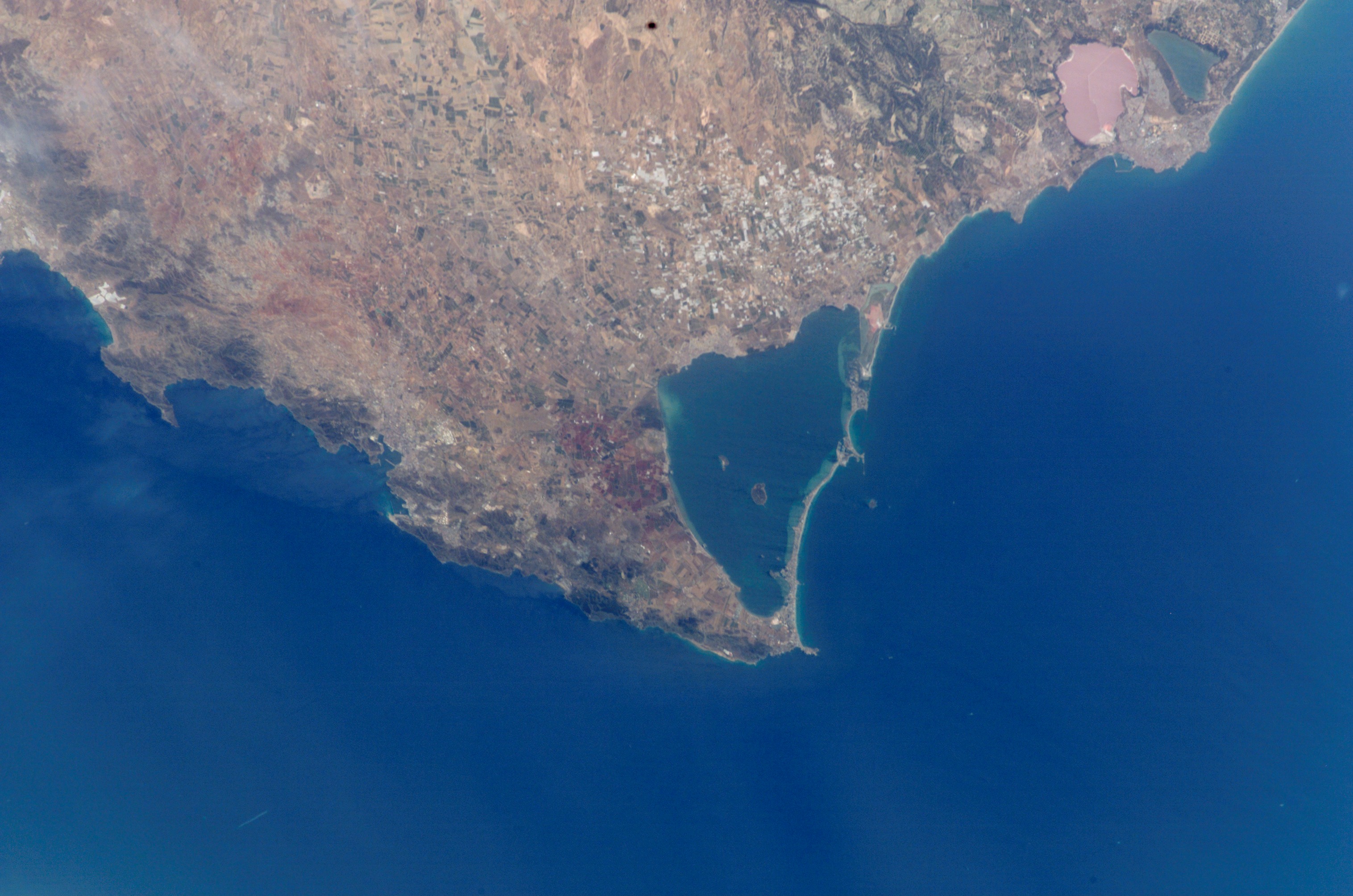
Ant-a Claws
-
In honor of Darwins' anniversary of On the Origin of Species.
New Papyrus: Darwin
it takes 20 000 genes to make a nematode and 25 000 to make a human
http://www.livescience.com/technology/technovelgy_eyes_041104.html
Charles Darwin recognized that the eye would be a real test of the theory of evolution. He suggested that it might be possible to evolve an eye from "imperfect and simple" forms:
"To suppose that the eye, with all its inimitable contrivances for adjusting the focus to different distances, for admitting different amounts of light, and for the correction of spherical and chromatic aberration, could have been formed by natural selection, seems, I freely confess, absurd in the highest possible degree.
"Yet reason tells me, that if numerous gradations from a perfect and complex eye to one very imperfect and simple, each grade being useful to its possessor, can be shown to exist; if further, the eye does vary ever so slightly, and the variations be inherited, which is certainly the case; and if variation or modification in the organ be ever useful to an animal under changing conditions of life, then the difficulty of believing that a perfect and complex eye could be formed by natural selection, though insuperable by our imagination, can hardly be considered real."
Scientists today believe that the eye could evolve from a single light-sensing cell. Scientists disagree over whether it evolved just once, or many times.
It turns out that Nature is both creative and generous with her gifts. Recent research has shown that the tiny marine worm Platynereis dumerilii has two types of light-sensing cells. The eyes of the worm have rhabdomeric photoreceptors, a compound lens formation that is seen almost exclusively in insect eyes. Rhabdomeric photoreceptors are covered in little finger-like protrusions. In its brain, however, it has a different kind of light-sensing cells - ciliary cells that are seen in vertebrate animals. Ciliary cells have hair-like cilia that extend outward and branch out like tiny umbrellas. Two different ways of sensing light in a single organism! images
http://scienceblogs.com/pharyngula/2006/09/rhabdomeric_and_ciliary_eyes.php
Researcher Joachim Wittbrodt of the European Molecular Biology Laboratory in Heidelberg, Germany speculates that the ciliary cells may regulate the worm's daily activity cycle, saying "We think they are related to circadian rhythms. We have found that there is a direct connection to the area used for locomotion... In the beginning we had a toolbox... what was in the brain in the worm ends up in our eye." If the animal had two copies of the genes needed to make one kind of photoreceptor, speculates Wittbrodt, then the extra set would have been free to evolve into the other photoreceptor. Different animals would subsequently evolve to use the two options in different ways.
-
Genome: Ramen noodle folding form (no knots) is fractal globule based on icosa-dodecahedron.
"perfect" genome code
empirical genome code
"perfect" periodic table
-
I have speculated earlier here and elsewhere, that the human thumb's missing bone and associated muscle evolutionarily moved to become the fused mandible (lower jaw) and tongue.
-
I posted this comment at a biology website (RDF), in response to why flies have 6 legs and most vertebrates have only 4 [clue - beetles have 4 wings/jaws, reptiles have 4 legs]:
bilateral pentadactyle digits (insect legs/"hands"/wings/"jaws")*
bilateral pentadactyle digits (invertebrate squid tentacles)*
bilateral pentadactyle digits (vertebrate fingers/toes)*
(larval bilateral) pentadactyle digits (starfish or sand dollar)*
icosahedral/pentameric (eg. virus) symmetry (12 oral/anal sets of five cilia)
*digits can be asexually replicated (due to incomplete meiosis?) or mutatively lost, body segments also, so bilateral millipedes simply have axial multiple copies of their earlier rear set, while bilateral vertebrates have axial duplicated the pelvis from the forelimb carriage or axial duplicated the rear limbs on a rear part of the primitive forelimb carriage which eventually moved caudally.
Flies have 6 legs, 2 wings, 2 wing knobs = 10 digits (no jaws just sharp tubes, larval jaws are forelimbs)
Spiders/crabs have 8 legs, 2 pedipalps ("jawclaws") = 10 digits (no wings)
Squid have 8 regular tentacles, 2 long "thumb" tentacles = 10 digits
Reptiles, fish, mammals (primitive) have 10 digits (forelimbs), 10 digits (rear limbs)
Evo-devo, human mandible/tongue associates with the missing thumb bone and muscle, while the maxillae associates with the four fingers (before mandibular separation, all five fingers).
Probably, due to the developmental order, a fly would be more likely born without wing knobs or wings than to be born without legs, since legs seem to be more ancient. One born without a leg pair probably also has other more severe genetic mutations, especially in internal segmental replication. While a reptile with 6 legs must oxygenate them with lungs, sufficient oxygenation is critical (dolphins lost their legs as oxygen conservation became more significant) while small insects' spiracles provide enough O2 for many legs, and wings help gain more O2. Perhaps.
-
There is an invertebrate (marine proto-crustacean?) which cannot eat unless it locomotes all limbs, its jaws can't chew unless its digits are moving. This would seem very primitive, since lobster claws and fish jaws operate independently from the legs or fins. Note that while larval caterpillars chew using their 4 forelegs/jaws, adult butterflies only suck nectar while still.
Caterpillars chew with forelimbs modified into jaws, during pupation these jaws reform into webbed wings, so butterflies can fly but can't chew. Grasshoppers do not pupate, they go through stages of enlargement and add wings at a certain instar stage (they can't eat at this stage). The adult grasshopper can both leap and fly. Humans have webbing between thumb and forefinger and between maxillae and mandible (cheeks), in flying insects the same genes form webbed wings associated with jaws; initially (ancestrally) this webbing assisted in filter feeding in early marine invertebrate, moving food particles closer to the mouth orifice.
The primitive invertebrate ancestor had an oral-GI-anal pore/tube with 5 mobile cilia, with variable degrees of rigidity (tentacle vs tendon/bone) and inter-digital webbing, depending on whether the food drifted by current (river) or was static and required cilia pulsation and attachment.
Interesting news confirms earlier speculations
link
Public release date: 20-Apr-2007
[ Print Article | E-mail Article | Close Window ]
Contact: Anna-Lynn Wegener
wegener@embl.de
49-622-138-7452
European Molecular Biology Laboratory
Researchers discover that the centralised nervous system of
vertebrates is much older than expected
The rise of the central nervous system (CNS) in animal evolution has
puzzled scientists for centuries. Vertebrates, insects and worms
evolved from the same ancestor, but their CNSs are different and were
thought to have evolved only after their lineages had split during
evolution. Researchers from the European Molecular Biology Laboratory
(EMBL) in Heidelberg now reveal that the vertebrate nervous system is
probably much older than expected. The study, which is published in
the current issue of Cell, suggests that the last common ancestor of
vertebrates, insects and worms already had a centralised nervous
system resembling that of vertebrates today.
Many animals have evolved complex nervous systems throughout the
course of evolution, but their architectures can differ substantially
between species. ...all these species descend from a common ancestor
called Urbilateria. If this ancestor already possessed a nervous
system, what it might have looked like and how it gave rise to the
diversity of nervous systems seen in animals today is what Detlev
Arendt and his group study at EMBL. To do so, they investigate the
nervous system of a marine annelid worm called Platynereis dumerilii.
"Platynereis can be considered a living fossil," says Arendt, "it
still lives in the same environment as the last common ancestors used
to and has preserved many ancestral features, including a prototype
invertebrate CNS. Comparing the molecular fingerpint of Platynereis
nerve cells with what is known about vertebrates revealed surprising
similarities.
"Our findings were overwhelming," says Alexandru Denes, who carried
out the research in Arendt's lab. "The molecular anatomy of the
developing CNS turned out to be virtually the same in vertebrates and
Platynereis. Corresponding regions give rise to neuron types with
similar molecular fingerprints and these neurons also go on to form
the same neural structures in annelid worm and vertebrate."...
The findings provide strong evidence for a theory that was first put
forward by zoologist Anton Dohrn in 1875. It states that vertebrate
and annelid CNS are of common descent and vertebrates have turned
themselves upside down throughout the course of evolution.
"This explains perfectly why we find the same centralised CNS on the
backside of vertebrates and the bellyside of Platynereis," Arendt
says. "How the inversion occurred and how other invertebrates have
modified the ancestral CNS throughout evolution are the next exciting
questions for evolutionary biologists."
http://chancenecessity.blogspot.com/2009/02/geoffroys-lobster-and-animal-common.html
-
urbilateria
A similar study involving Platynereis dumerlii comes to much the same conclusion. PZ Meyers has a explanation of this bit of research. This result, that humans are evolutionarily slow has been portrayed as a bit of a surprise, but is something that has been in the works for awhile. For example, as early as 1992 it was known that insulin genes in humans and apes evolved at a slower rate than in monkeys. The phenomena, called the “Hominid-rate-slowdown hypothesis”. was first suggested by Goodman in a 1961 paper entitled “The Role of Immunochemical Differences in the Phyletic Development of Human Behavior” (published in Human Biology) and led to papers being published on the subject up to the present (here and here for example).
http://www.hoxfulmonsters.com/2008/12/living-fossil-platynereis-dumerilii-unraveling-the-first-steps-of-eye-evolution
-
updated from earlier post (Vertebrates are inverted invertebrates).
To continue, with slight clarification, if interested:
See Neil Shubins slideshow, especially page 6 slide 5, to compare Hox gene positions in human and fruit fly.
http://tiktaalik.uchicago.edu/book-tools.html
My earlier explanation of primitive pentadactylity (5 digits) didn't well cover the duplication of reptile/mammal rear limbs from the forelimb carriage, this duplication is actually the same as the duplication of (beetle) 4 wings / 4 jaw mouthparts from the primitive frontal digits.
-
(I've briefed the text)
Dragonflies & damselflies (Odonates) can chew but they can't walk, their 6 legs are for perching and grabbing.
http://theatavism.blogspot.com/2009/11/sunday-spinelessness-damselflies.html
"You can tell a damselfly from a dragonfly thanks to the way they hold their wings - damselflies fold them up over their body when they land (butterfly-like) while dragonflies hold them open (moth-like)..." Interesting, butterflies or moths can walk a bit but can't chew, beetles & grasshoppers can walk and chew but their flight is not so well controlled.
wiki lacewings/netwings/antlions
The insect order Neuroptera, or net-winged insects, includes the lacewings, mantidflies, antlions, and their relatives. The adults of this order possess four membranous wings, with the forewings and hindwings about the same size, and with many veins. They have chewing mouthparts, and undergo complete metamorphosis. Neuropterans are soft-bodied insects with relatively few specialised features. They have large lateral compound eyes, and may or may not also have ocelli. Their mouthparts have strong mandibles suitable for chewing, and lack the various adaptations found in most other endopterygote insect groups.
They have four wings, which are usually similar in size and shape, have a generalised pattern of veins. Some Neuropterans have specialised sense organs in their wings, or have bristles or other structures to link their wings together during flight.[4]
The larvae are specialised predators, with elongated mandibles adapted for piercing and sucking. The larval body form varies between different families, depending on the nature of their prey. In general, however, they have three pairs of thoracic legs, each ending in two claws. The abdomen often has adhesive discs on the last two segments.[4] ...ant lions, which bury themselves completely out of sight and ambush prey from "pits" in the soil. Larvae of some Ithonidae are root feeders, and larvae of Sisyridae are aquatic, and feed on freshwater sponges. A few mantispids are parasites of spider egg sacs.
As in other holometabolic orders, there is a pupal stage, generally enclosed in some form of cocoon composed of silk and soil or other debris. The pupa eventually cuts its way out of the cocoon with its mandibles, and may even move about for a short while before undergoing the moult to the adult form.[4] Adults of many groups are also predatory, but some do not feed, or consume only nectar. They are delicate or cumbersome flyers, the spoon wings have rear wings like birds of paradise. Nemoptera
Nemoptera larvae

http://theatavism.blogspot.com/search/label/sci-blogs
It's a springtail (Collembola) - a member of a group of arthropods closely related to (but distinct from insects). They get their common name from a long forked organ, the furcula, that usually sits folded up under the abdomen. The earliest fossil hexapod, and one of the first terrestrial animals, Rhyniella praecursor, is a springtail...'Gomph's live in Antarctic mainland, springtails importantly make soil. Tail derived from crab/crayfish folded tail?
Orobophana pacifica: They are tiny, live on coral rubble on Cook Islands. Even though they live on land they aren't closely related to the "true" landsnails in the order Stylommatophora. To see the difference you need to look into their eyes. If you click on the image above to get a high resolution version you might just be able to see the eye - it's a black dot just underneath the tentacles ("feelers"). In true landsnails like the ones you find in you garden the eyes sit on the ommatophores, a second set of tentacles which are retractable.
bird feet, talons, webbing
Can you walk and talk and chew gum at the same time ?
The mechanics of being Human: a self-balancing, 28-jointed adaptor-based biped; an electro-chemical reduction plant, integral with segregated stowages of special energy extracts in storage batteries, for subsequent actuation of thousands of hydraulic and pneumatic pumps, with motors attached; 62,000 miles of capillaries.... R. Buckminster Fuller-
Bucky: Dictators never create their own opportunities.
A neat series of articles on human facial expressions (non-verbal communication), especially interesting after having read that human cheeks are merely muscular/fatty webbing connecting the mandible to maxilla like butterfly wings. Makes me wonder about the link of the smile to the crinkling of the eyelids or the tightening of the eyebrows, all these facial muscles which communicate internal feelings instantly which are usually masked by reflexive social gestures. They must have evolved in deep time, and gradually fine tuned in humans, a super-social species.
facing others
Human social traits: anonymous, cooperative, infants
Hrdy sociality hypothesis
Corneal blink reflex: trigeminal nerve senses, facial nerve motors to blink at bright light or loud sound or irritating particle in eye.
Corneal reflex
Accomodation reflex
Pupillary light reflex
-
Pigmentation in desert lizards
white lizards
Pigmentation in humans: Baltic blonde & blue eyes from Gulf stream & grain?
pigment
"There is only one spot on the planet where grains will grow despite sub-arctic sunlight.
It is where the warm waters of the Gulf Stream wash ashore. The Baltic is the only place on earth where ocean currents keep it warm enough to grow grain despite dim sunlight. When the inhabitants of this region switched to grain about 6 KYA, they suddenly got insufficient vitamin D to survive. They had stopped eating mostly meat and fish in a place where sunlight was too dim to produce vitamin D in normally pigmented skin. And so they adapted by retaining into adulthood the infantile trait of extreme paleness. Blonde hair and blue eyes were other infantile traits that were just swept along accidentally."
Why did they shift from hunting/gathering (grain processing sorghum in Mozambique 100ka) to complete absolute dependence on grain? What about their cattle/goats/dogs? Fishing seems to have increased rather than decreased amongst Baltic sea peoples with better boat/net technology. Camouflage is always important, whether for predator, prey or combat, but less for farmers. Clothing in cold? Baltic was warm in winter? Europeans also adapted by retaining the ability to digest lactose in adulthood, obtaining vitamin D from milk.
-
Medieval rural Briton women had wider thicker bones than city women
http://www.guardian.co.uk/science/2009/dec/17/women-yorkshire-archeaology-find
Language evolution
http://schott.blogs.nytimes.com/2009/12/16/q-and-a-the-death-of-languages/
-
Whale fossil 4.5ma in Spain: deposited on seafloor 50m deep, now 80m above ground 24km inland. So 4.5ma Medit was high, or tectonic uplifting or both.
http://www.sciencedaily.com/releases/2009/12/091215101716.htm
Dwarf suction-feeding Australian baleen whale
http://news.bbc.co.uk/2/hi/science/nature/8430402.stm
Tuesday, February 10, 2009
a walk on the beach

a walk on the beach is often the best medicine
http://nymag.com/health/features/46213/
http://forums.deeperblue.com/beach-bar/81903-walk-beach.html
http://www.footprints-inthe-sand.com/index.php?page=Poem/Poem.php
Poem, Footprints in the sand, by Mary Stevenson

1.5 million years ago, set of footprints in Kenya
a day at the beach
Wednesday, November 26, 2008
LOLturtles
Gator causes turtle traffic jam

164ma skye turtles in Scotland
http://www.sciencedaily.com/releases/2008/11/081119093227.htm
220ma 1/2- shelled turtles in China
http://www.newsdaily.com/stories/tre4ap6hx-us-china-turtle/
http://scienceblogs.com/notrocketscience/2008/11/heroes_in_a_halfshell_show_how_turtles_evolved.php
http://scienceblogs.com/pharyngula/2008/11/odontochelys_a_transitional_tu.php?utm_source=mostactive&utm_medium=link
http://tech.groups.yahoo.com/group/AAT/message/48820
Also, vets used ultrasound to find a gallstone in a soft-shelled pancake turtle.

164ma skye turtles in Scotland
http://www.sciencedaily.com/releases/2008/11/081119093227.htm
220ma 1/2- shelled turtles in China
http://www.newsdaily.com/stories/tre4ap6hx-us-china-turtle/
http://scienceblogs.com/notrocketscience/2008/11/heroes_in_a_halfshell_show_how_turtles_evolved.php
http://scienceblogs.com/pharyngula/2008/11/odontochelys_a_transitional_tu.php?utm_source=mostactive&utm_medium=link
http://tech.groups.yahoo.com/group/AAT/message/48820
Also, vets used ultrasound to find a gallstone in a soft-shelled pancake turtle.
Thursday, July 3, 2008
Puffins and Penguins

 Puffins (left pic) live north of the equator along the coasts, they both dive and fly, and tend to walk like a duck (horiz. axis).
Penguins (right pic) live south of the equator along the coasts, they only dive, and tend to hop or walk (vertical axis) somewhat like a human. Some species of puffins & penguins may look similar due to eco-niche convergent parallels, but they are not closely related.
 Penguin ice island, they flock tightly to avoid the seals, orcas and sharks of deep water.
http://simonc.f2o.org/south/archives/000145.php
Petrol penguins
http://news.yahoo.com/s/ap/20080718/ap_on_sc/brazil_dead_penguins_2
Why diving birds have small wings
http://jeb.biologists.org/cgi/content/full/207/17/i
Penguinology (Antarctica)
http://penguinology.blogspot.com/
----------------------------------------------------------------------------------------
thanks to jewel for noticing my marine mammal center 'penguin' t-shirt was actually a puffin t-shirt (my oops), got me checking out the difference between the two. But why does the marine mammal center feature birds anyways?
Subscribe to:
Posts (Atom)