Showing posts with label biology. Show all posts

Wednesday, August 10, 2011

The Line of the Archer, the Biologist & the Polymath

At Catalogue of Organisms biology blog, [http://coo.fieldofscience.com/2011/08/red-lined-wings-of-south-america.html?showComment=1312665778549#comment-c4532519180935840235 ] I made a comment regarding the original measure of the word "line", following his description : "A 'line' is a unit of measurement used by a number of 18th and 19th century biologists. The exact length of a line seems to have varied somewhat between countries (see this page for explanations), though it seems to have generally been a little more than 2 mm. Linnaeus apparently defined a line in the introduction to Philosophia Botanica as the length of a lunule (the white half-moon at the base of a fingernail) on any finger other than the thumb." (italics mine)

my comment: perhaps originally 'line' represented the diameter or thickness of a taut bowstring on an archer's bow? I'd think it fits in this way:


L-ine singlet, a-lign (ligament/tendon) (parallel fiber, straight or single coil)


Tw-ine duplet, div-ide, twisted lines -> X (double helix)


Tr-ine triplet, tri-plait, braided lines -> * (offset & interwoven)


See the picture in my earlier post here: http://the-arc-ddeden.blogspot.com/2010/05/archae-numeric.html


Note that in the 123 sequence, Roman numerals are vertical lines, Chinese numerals are horizontal lines and Indi-Arabic numerals are vertical cursively attached lines.


Per Bucky Fuller, there are no mathematically straight lines in nature, there are only progressively less non-straight lines as vector edges between and enclosing events.

http://www.rwgrayprojects.com/synergetics/synergetics.html

http://en.wikipedia.org/wiki/Synergetics_(Fuller)


Wednesday, June 8, 2011

Vertebrates "are" Invertebrates

I asked the following questions to Christopher at his blog Catalogue of Organisms, in his post on moths.


  1. Are the pharyngeal arches in vertebrates homologous to the first pair of true legs in insects?


  2. Are the abdomenal prolegs in holometabolous caterpillars homologous to the ventral mammae & milk line in mammals? (both involve fluid-dynamic flow rather than muscle movement, and woulld explain presence of most male mammals retaining vestigial nipples).


I suspect so, in both cases. Having just read The Secret Life of Lobsters by Trevor Corson, I see that female lobsters secrete protein glue (for egg attachment) from cement ducts on their caudalmost swimmerettes (homologous to caudalmost prolegs & mammae secreting casein glue-rich milk IMO). They fold their tails like crabs and deposit thousands of eggs within the folded area, protecting them from exposure. Marsupials seem to have retained this trait, except the marsupial embryo escapes the egg and womb and crawls by forelimbs to the mammae which are protected from exposure by a skin fold (pouch). The echidna, an egg laying primitive monotreme mammal with a pouch, has no external nipples, the hatched infant licks the abdomen to get milk. It appears to be a homology between these distinct taxa.


Aaron Filler's book on Vertebrae called The Upright Ape goes into detail on the spine & vertebrae as archetype, but does not mention this: Lobsters inside their eggs molt 35 times, changing their 'skin'. (After leaving the egg, lobsters eat their shed 'skin'.) The 35 molts produce the somites which form the vertebral column (in vertebrates), internally similar to the external rattles of the molting rattlesnake, I'd say. (Unlike lobsters, snakes never eat their shed skin AFAIK.) It is my contention that the 35 molts are, geometrically, 7 episodes of pentameric (5-way split) distribution, resulting in, for example, 7 cervical vertebrae in mammals, etc.


DDeden

PS. Insect wings and bird/dinosaur feathers appear to be homologous to lobster swimmerettes, (and more distantly to caterpillar prolegs and mammalian mammae). Imagine that! Nature Rules!

PPS. Insect wings appear to be homologs to a vertebrate rib "shell", that is, the delicate forewings of a butterfly are equivalent evolutionarily to the hyperdense ribcage of a dugong, the aftwings of a moth to a sauropod pelvis, the fly's vestigial flight knobs to a giant blue whales vestigial pelvis.


http://coo.fieldofscience.com/2011/06/colour-vs-crypsis.html#comments


http://www.uprightape.net/


http://www.amazon.com/Secret-Life-Lobsters-Scientists-Unraveling/dp/0060555580


Also interesting to compare human embryos and giant sauropod dinosaurs:


http://svpow.wordpress.com/2011/05/23/the-worlds-longest-cells-speculations-on-the-nervous-systems-of-sauropods/


and the tentacles of squid ((4 + 1) x 2) with the typical prolegs of a caterpillar ((4 + 1) x 2)...


=================================================================


Church forests of Lake Tana, Ethiopia 'Trees are the jewels of God"


http://blogs.plos.org/blog/2011/02/25/church-forest/


They function similarly to the European tradition of Royal Forest. Interesting the name of the island forests is Coptic Forest, similar to Coppice Forest.


Tuesday, May 18, 2010

bird-dino postures


uncinate process in birds

JR Codd 2010 Compar.Biochem.Physiol.A156:303-8
Uncinate processes in birds: morphology, physiology, and function

The avian respiratory system is remarkable in terms of its complexity &
efficiency. The evolution of this system with its unique lung morphology &
physiology has contributed to birds being one of the most successful
vertebrate lineages.
Despite holding the attention of the scientific community for a long time,
much remains to be discovered about the complexities of this system. Recent
advances have highlighted the important role that accessory breathing
structures, the uncinate processes, play in understanding how this system
functions & evolved.
Almost all spp of extant bird have uncinate processes extending from the
mid-point of the vertebral ribs. These processes are integral to the
mechanics of ventilation in birds, being active in both in- & expiration,
but also playing some role during locomotion.
The morphological variation in the uncinate processes suggests that the
constraints placed on the body by adaptations to different forms of
locomotion are key to understanding differences in how birds breathe.
These processes also occur in the theropod dinosaurs, providing further
evidence that they are the ancestors of modern birds, but also highlighting
the intrinsic flexibility in the ventilatory systems of these animals.
-
death pose of long necked dinos & posture of resting geese: sleeping with head on back above abd. air sacs (parallel to backfloating & whale blowhole on back) while floating or on nest, the eyes see behind when awake but static, able to see predators which approach from behind. Uncinate processes probably evolved as air sac flexible cages allowing leaping-breathing like kangaroos) but bellows not deflating during sleep which would result in sinking.
kangaroo leap breathe

Amazing argonaut octopus: here

Monday, May 10, 2010

We be neandertals

Gene expression

1 - 4% of genome of anyone derived from outside sub-saharan Africa is shared with neandertal genome.
-

Atlatl spear-throwers include a launcher, a long narrow dart with flint tip, and a stone weight: atlatl
Compare to harpoons, polespears, Hawaiian slings, throwing spears, lances, bow & arrows
paleo art atlatls
-

Grey whale in Mediterranean Sea
here

""Over a lifetime, a gray whale migrates the equivalent distance of a return trip to the moon."
-

Salt springs in the Sahara: Niger has clays rich in salt from ancient seabeds, the salt springs of Teguidda-n-Tessoumt are surrounded by small round pools of brine, where salt crystals form on top slowing evaporation so children sprinkle water to break the crust which then settles at the bottom as crystals, later collected as loaves. Then the salt ponds are cleaned of remaining clay mud and reused, the mud dumped onto manmade hillocks. Much of the salt is traded via desert-edge nomads for use by domestic herds. Trees are very rare in the Sahara, but two trees grow nearby. (from article in Awake! Jan 09)

Thursday, March 25, 2010

Humboldt Bay, Nor Cal Pacific events


Humboldt Bay / Kuala Walu Wiki current mariculture Bay conditions
-
HUMBOLDT BAY SYMPOSIUM
DATE: APRIL 22-24, 2010
VENUE: WHARFINGER BUILDING, EUREKA, CA
-

CeNCOOS HSU Abstract on Humboldt Bay mariculture, chlorophyll & oysters
abstract

Chlorophyll Levels in the Bay F. J. Shaughnessy
1; G. B. Crawford1 1. Humboldt State University, Arcata, CA, United States.
A variety of ocean observation platforms exist in Humboldt Bay and the outer northern coast of California. Part of this system, now operated by CeNCOOS, includes fixed instrument packages in Humboldt Bay containing a variety of basic water quality sensors including chlorophyll fluorometers. The first such system was deployed in the bay in 2003. Oyster growers in the bay, who account for 60-70% of California’s oyster production, immediately started using the near real time chlorophyll data to make decisions about when to plant out and harvest the bivalves. The growers have since indicated they would also like to be able to predict the availability of food (i.e. phytoplankton) in the bay in order to improve their business decisions. This presentation focuses on the development of a statistical model for predicting bay chlorophyll...

Poster on Nor Cal coast huge persistent clockwise eddy, effect of temp & tide: http://www.cencoos.org/documents/about/OceanSci_poster_2010_sm.pdf

CeNCOOS
Central & Northern California Coastal Observing System
(Govt. funded)
-

April 26 - Freediving Apnea Scandi discussion group in Dahab Egypt
http://www.deeperblue.com/newsfull.php/2244
The current programme being proposed include the following presentations:

* Bubbles and DCS in deep diving
* Eating or fasting before maximal apnea
* Effects of dry apnea training on protective responses
* Warm up – or not before maximal apnea
* SaO2 recovery and pulmonary oedema
* Mental training and diving performance
-

May 26 - DHA celebration in London, including seafood heritage.

Omega 3 fish oils (DHA) are essential to human diet, they are most plentiful at the shores.

For information on the DHA conference, request a pdf here.
To register online: go here

-

Sea otters sleep on their backs while floating on the water surface.

Northern elephant seals sleep on their backs while sinking down into the depths.

-

Biol Lett. 2010 Apr 23;6(2):163-6. Epub 2009 Oct 28.
Three-dimensional resting behaviour of northern elephant seals: drifting like a falling leaf.

Mitani Y, Andrews RD, Sato K, Kato A, Naito Y, Costa DP.

National Institute of Polar Research, 10-3, Midorikawa, Tachikawa, Tokyo 190-8518, Japan. yo_mitani@fsc.hokudai.ac.jp

During their long migrations through the Pacific, northern elephant seals, Mirounga angustirostris, never haul out on land and they rarely spend more than a few minutes at a time at the surface. They are almost constantly making repetitive, deep dives, raising the question of when do they rest? One type of dive, the drift dive, characterized by a time-depth profile with a phase of lower than average descent speed is believed to be a resting dive. To examine the behaviour of seals during drift dives, we measured body position and three-dimensional diving paths of six juvenile seals. We found that seals rolled over and sank on their backs during the drift phase, wobbling periodically so that they resembled a falling leaf. This enabled seals to drastically slow their descent rate, possibly so that negatively buoyant seals can rest without ending up in the abyss. This reduces the work required to return to the surface to breath, and allows them time to rest, process food or possibly sleep during the descent phase of these dives where they are probably less susceptible to predation.

PMID: 19864274 [PubMed - in process]
-

Small World Indah Center

Re. Jenny
-

The Big 5 Ideas of Science

Biological evolution via natural selection of genetic permutation
Geological plate tectonic continental drift and seafloor spreading
Atomic model of matter - nuclear/electromagnetic mass energy
Periodic table of chemical elements - tetrahedral form of table
Big bang origin of universe - big beats

(relativity, ico-octet structure, gravity as surface area?)


Plate tectonic theory explains the processes that have shaped Earth in terms of plates (large movable segments of the lithosphere) and their movement, including continental drift, seafloor spreading, seismic and volcanic activity, and the structures of Earth's crust to provide a unifying model of Earth's evolution.

The subducting slab contains many hydrous minerals, which release their water on heating during subduction under the continental plate margin; this water then causes the mantle to melt, producing volcanism. Examples of this are the Andes mountain range in South America and the Japanese island arc.

Driving forces of plate motion

Tectonic plates are able to move because of the relative density of oceanic lithosphere and the relative weakness of the asthenosphere. Dissipation of heat from the mantle is acknowledged to be the original source of energy driving plate tectonics. The current view, although it is still a matter of some debate, is that excess density of the oceanic lithosphere sinking in subduction zones is the most powerful source of plate motion. When it forms at mid-ocean ridges, the oceanic lithosphere is initially less dense than the underlying asthenosphere, but it becomes denser with age, as it conductively cools and thickens. The greater density of old lithosphere relative to the underlying asthenosphere allows it to sink into the deep mantle at subduction zones, providing most of the driving force for plate motions. The weakness of the asthenosphere allows the tectonic plates to move easily towards a subduction zone.[22] Although subduction is believed to be the strongest force driving plate motions, it cannot be the only force since there are plates such as the North American Plate which are moving, yet are nowhere being subducted. The same is true for the enormous Eurasian Plate. The sources of plate motion are a matter of intensive research and discussion among earth scientists. wikipedia
http://en.wikipedia.org/wiki/Plate_tectonics
http://en.wikipedia.org/wiki/Supercontinent_cycle

Strange that they claim Plate Tectonic Theory explains, yet, they they can't explain how or why plates actually move.

Supercontinental ice house & green house cycles

There are two types of global earth climates: Icehouse and Greenhouse. Icehouse is characterized by frequent continental glaciations and severe desert environments. We are now in the icehouse phase, moving towards Greenhouse. Greenhouse is characterized by warm climates. Both reflect the supercontinent cycle.

* Icehouse Climate
o Continents moving together
o Sea level low due to lack of seafloor production
o Climate cooler, arid
o Associated with Aragonite seas
o Formation of Supercontinents

* Greenhouse Climate
o Continents dispersed
o Sea level high
o High level of sea floor spreading
o Relatively large amounts of CO2 production at oceanic rifting zones
o Climate warm and humid
o Associated with Calcite seas

Periods of Icehouse Climate: Much of Neoproterozoic, Late Paleozoic, Late Cenozoic.

Periods of Greenhouse Climate: Early Paleozoic, Mesozoic-Early Cenozoic.
[edit] Relation to evolution

The principal mechanism for evolution is natural selection among diverse populations. As genetic drift occurs more frequently in small populations, diversity is an observed consequence of isolation. Less isolation, and thus less diversification, occurs when the continents are all together, producing both one continent and one ocean with one coast. In Latest Neoproterozoic to Early Paleozoic times, when the tremendous proliferation of diverse metazoa occurred, isolation of marine environments resulted from the breakup of Pannotia.

An arrangement of N-S continents and oceans leads to much more diversity and isolation than E-W oceans and continents. This forms zones that are separated by water or land and that merge into climatically different zones along communication routes to the north and south. Formation of similar tracts of continents and ocean basins, only oriented E-W would lead to much less isolation, diversification, and slower evolution. Through the Cenozoic, isolation has been maximized by an arrangement of N-S ocean basins and continents.

Diversity, as measured by the number of families, follows the supercontinent cycle very well.

Friday, March 19, 2010

Tools & Tetrapods Table


Comparison of species tool use habits:


SpeciesTool TypeTool UseLocale Used


Orangutan

small stick,


leaf
neesia seed, squeak
canopy
Gorillalong stick, stone
wading/bridging smash
ground waterside


Chimpanzee

stick, stone

smash, dig, spear, carry
ground canopy

Ar. Humanstick stone shellsmash, pry, cut, dam...
ground waterside


Capuchin

stone, shellsmash, pry
ground waterside
Sea Otter
stonesmash, carry
waterside
Beaver

stick

dam, carry
ground waterside


H erectus 2ma Africa/Asia

H Heidelbergensis .4ma Spain

Anoiapithecus 12ma Spain: A hominoid with skull features similar to orangutans. Did Orangs live around the Mediterranian Sea forested bays, along with gibbons, and some moved along the Tethys coasts to south east Asia, while others transformed into hominids? Oreopithecus of Sardinia, Sahelanthropus of Chad, Orrorin etc. of east African Rift valley.
Spanish Orangutan 12 million years ago

Spanish Miocene apes 12ma: http://scienceblogs.com/laelaps/2010/04/fossil_teeth_tell_of_ancient_a.php#more

Are orangutans genetically closer to humans than chimps are?
Did lungfish only recently derive lungs like tetrapods?
orangs & lungfiswh

Sunday, March 7, 2010

Dinosaur-Avian evolution

see my comments

Early bird-dino types had long straight bony tails used to prop upright while static on ground and perch upright on tree branches. Their long necks allowed them to sleep with the head swivelled back between the arms/wings, giving them ability to see behind & above while resting, advantage against predators which normally attack from the rear or above. This tucked-back posture (seen also in giraffes & geese) has resulted in many fossil birdinos found in this position, the "death pose", because they died asleep on the ground, perhaps in buried hollows or underbrush during sandstorms.

When these 'birdinos' developed bristle filament protofeathers on the caudal ventral surface, it allowed better perching while on branches, the feather tips and edges acting like velcro or fingertip ridges, the long fan of feathers giving part-circumferential anchorage, from bone to bark, while the long curved hyperextended toes were above the branch, the other toes clamped from below. Eventually a side toe moved sidewards, then reversed, giving better traction and reducing need for a long heavy tail, so they replaced the bony tail with long tail feathers and short pygostyle, while shrinking the long neck (except in waders/surface feeders) and replacing teeth with lightweight beaks, improving aerial traits. Non-aquatic arboreal birds greatly shortened the body axis, grounded birds less so.

Compare arboreal (carni-frugi?) birdinos to tupaia tree shrews:

Nocturnal pen-tailed tree shrew (Ptilocercus lowi) with bony feather-fan tail which drinks wine from bertram palm and hops when on the ground (compare to early birdinos with long bony tail with feather fans):
http://www.npr.org/templates/story/story.php?storyId=93001529
http://weirdimals.wordpress.com/2010/03/03/pen-tailed-tree-shrew/
http://en.wikipedia.org/wiki/Eugeissona
(Tree shrews are very small insectivore/frugivore/nectarivores, close cousins to primates, niche habits similar to early birdinos? (cf drunken monkey hypothesis and Asian Flush reaction to nectar-fruit-yeast alcohol consumption on metabolism re sugar/carb/aldehyde/diabetes.)

Diurnal mountain tree shrew with fluffy squirrel tail which after feeding on pitcher plant nectar exudates then deposits Nitrogenous poo into the loo, the bowl of the pitcher plant, and runs swiftly while on the ground:
http://rsbl.royalsocietypublishing.org/content/5/5/632
http://www.livescience.com/strangenews/090623-tree-shrew-lavatory.html


Coelecanth - dinosaur fish that swam on 4 legs, uses trimtab tail rudder
dinofish
-

Petro city Monstrosity: Cities have become havens for engines, not humans.
http://www.beyondtheedge.org/automotive/a-world-without-cars/?utm_source=feedburner&utm_medium=feed&utm_campaign=Feed%3A+BeyondTheEdge+(Beyond+The+Edge)

Tuesday, March 2, 2010

Dolphins & diabetes II

Diabetes II: only in humans and dolphins? Large brain needs O2 & energy balance:
-

Model for human health

“While some people may eat a high protein diet to help control diabetes, dolphins appear to have developed a diabetes-like state to support a high protein diet,” veterinary epidemiologist Stephanie Venn-Watson, director of clinical research at the NMMF, told a meeting of the American Association for the Advancement of Science (AAAS) in San Diego.

It’s the first time researchers have found a natural animal model for type II diabetes in humans.

This not only allows scientists to explore diabetes-like functions in an animal model, but studying their genome may help find a completely new treatment.

Large brain demand high blood glucose

“Shared large brains that have high blood glucose demands may explain why two completely different species - humans and dolphins - have developed similar physiological mechanisms to handle sugar,” she added.

There are also hints that humans and dolphins may share similar chronic conditions associated with diabetes, such as insulin resistance, haemochromatosis (or iron overload) and kidney stones.
dolphin diabetes

Dolphins have harmless diabetic fast during sleep which pumps up blood glucose levels. Most animals get their glucose from eating carbs, but not dolphins. Brains need suhgar to function, but fish has none. 3 dolphins with abnormal insulin levels also had iron overload, a condition associated with diabetes in people. While humans and dolphins aren't closely related, both have big brains and blood cells that can move large amounts of glucose, so both may have a switch.

Whale carcass muscles contain so much iron-rich myoglobin that they smell metallic until they rot.


-

Stone age Norway: sealers, whalers stone age
-

Red Sea Reefs had freshwater templates
reef
-
Hormones-neurotransmitters: vasopressin, oxytocin, serotonin
http://zinjanthropus.wordpress.com/2010/02/21/eating-disorders-oxytocin-and-vasopressin/#comment-494
http://www.lucasbrouwers.nl/blog/2010/03/on-the-origin-of-animals/
http://scienceblogs.com/tetrapodzoology/2010/01/redbellies_harlequins_plump_toads.php
-


chimps: stones & sticks in food processing in trees and on ground
gorillas: sticks in wading water, stones in food processing nuts on ground
orangs: small sticks in food processing (neesia seeds between lips) in trees
humans: sticks, stones, shells for domes, dams, food processing, in water and on ground
capuchins: shells, stones for food processing on ground and waterside trees
sea otters: stones in food processing in water
beavers: sticks in food processing, dome huts, dams, in water and on ground

Monday, February 22, 2010

Air Air everywhere

Diving physiology bio-chem: respiration, apnea

Divers should not hyperventilate causing alkalosis in blood, due to susceptibility to sudden black-out from lack of oxygen (with no chemoreceptor warning).
Rather they should be neutral pH, during dive the accumulation of carbon dioxide produces acidosis in the blood (even if there is abundant oxygen) which in MDR (mammalian divers reflex) is a safer mode, high CO2 triggers air hunger (oxygen conservation) and diaphragmatic contractions pump O2 & CO2 around efficiently.


REFINING THE BREATH by DOUG KELLER 2007

And then there are times when we anticipate physical stress and begin to breathe harder, using the chest muscles. The problem is that this situation of persistent mental and emotional stress has become more the rule of daily life than the exception. The body is on constant alert via the sympathetic nervous system, but the physical exertion — and the need for accelerated breathing — never comes. As a result, we’ve both pumped in more oxygen and pumped out carbon dioxide in this process of hyperventilation, and a vital chemical balance in the body has been seriously upset.

Here begins the vicious cycle that is so familiar to hyperventilators. The harder we breathe, the more oxygen-starved we feel, and we can’t ‘catch’ our breath. This is not for lack of oxygen, but because so much carbon dioxide has been forced out in the process of overbreathing. The presence of carbon dioxide in our blood allows the hemoglobins to transport oxygen to the body’s tissues. If too much carbon dioxide is ‘blown off’ by hyperventilation, the blood becomes alkaline, and the hemoglobin can’t release the oxygen molecules, which are chemically ‘stuck’ to it. The blood is carrying around plenty of oxygen: the problem is that the body can’t get any of it!
Carbon dioxide also provides the chemical message in the blood that leads us to take our next breath. At the end of the exhalation, there is a natural, restful pause before we breathe in again. During that pause, carbon dioxide builds up in the blood at the same time that oxygen is being released into the tissues. When it reaches a certain level, the respiratory center of the brain sends a signal through the phrenic nerve to the diaphragm to take another breath.

In the normal course of breathing, the entire process of respiration is driven by carbon dioxide, from the first neurochemical impulse that initiates the inhalation, to the chemical balancing act in the blood that delivers oxygen to the body. All of this happens without our having to think about or consciously direct the process, and the whole process works astoundingly well, with carbon dioxide playing a central role from beginning to end.

That, of course, describes the natural process of the breath, in which the conscious mind, with its slurry of desire, emotion and expectation, is not factored in. But what happens when we overbreathe? Usually an excess of carbon dioxide in the blood tells us to take another breath in, and the process is quite relaxed. But when carbon dioxide drops below a certain level (due to anticipatory fast hard breathing), the message from the body — which is now not receiving the oxygen it needs — is that we are suffocating! And so the breath is driven by the body’s panic, and we breathe harder, making the situation worse instead of better. A subtle chemical imbalance soon becomes a full-blown panic attack. The age-old cure for panic attacks — to breathe into a paper bag — has a very good biochemical basis: it’s meant to increase the levels of carbon dioxide by re-breathing the same air, until the proper balance is restored.

When it comes to stressful breathing patterns, or patterns of ‘overbreathing, certainly the vicious cycle of the biochemistry of hyperventilation plays the part of gasoline thrown on the fire. Mental anticipation and anxiety, however, is the match that lights the fire.
-
So relax, and just glow a little. ;)

h/t kelp princess @ Deeper Blue

Sunday, January 3, 2010

5 digits primitive, others derived from ancestral form

fish & tetrapods (article missing)

Pentadactyly (from Greek pente- = "five" plus δακτυλος = "finger") is the condition of having five digits on each limb. It is believed that all living tetrapods are descended from an ancestor with a pentadactyl limb, although many species have now lost or transformed some or all of their digits by the process of evolution

"Major branching events in vertebrate evolution occurred long ago. Sharks branched off the human lineage at least 430 million years ago.

The ray-finned fishes, technically known as Actinopterygians, branched off 420 million years ago.
"Teleosts, the largest subgroup of Actinopterygians, include the vast majority of fishes today," Coates said.

Acanthostega looked like "a large, grotesque salamander," Coates said. It had legs and digits, with rudimentary ankles and wrists, but also internal gills and a large tail fin. Acanthostega, along with new work by Coates and Clack on other previously discovered early tetrapods, contradicted long-held paleontological beliefs that early tetrapods all had five digits on each limb. But, Acanthostega had eight, while other creatures of the same period had seven and six digits."

[DD: Ancanthostega derived 8 from 5 primary digits for better swimming (just as the ray finned fish did), it probably lacked interdigital skin webbing (unlike todays' frogs and salamanders, think sturgeon) so more digits were selected, with multiple extra digits, some becoming mere t
hin needle-like bones in teleosts. Tiktaalik had 5 digits, and was ancestral to tetrapods.]

Interesting note:

Didactyly (from Greek di-="two" plus δακτυλος = "finger") or bidactyly is the condition of having two digits on each limb, as in the Hypertragulidae and Two-toed Sloth, Choloepus didactylus. In humans this name is used for an abnormality in which the middle digits are missing, leaving only the thumb and fifth finger, or big and little toes.

Tuesday, December 22, 2009

197th post: Hey, Its Ant-a Claws !!

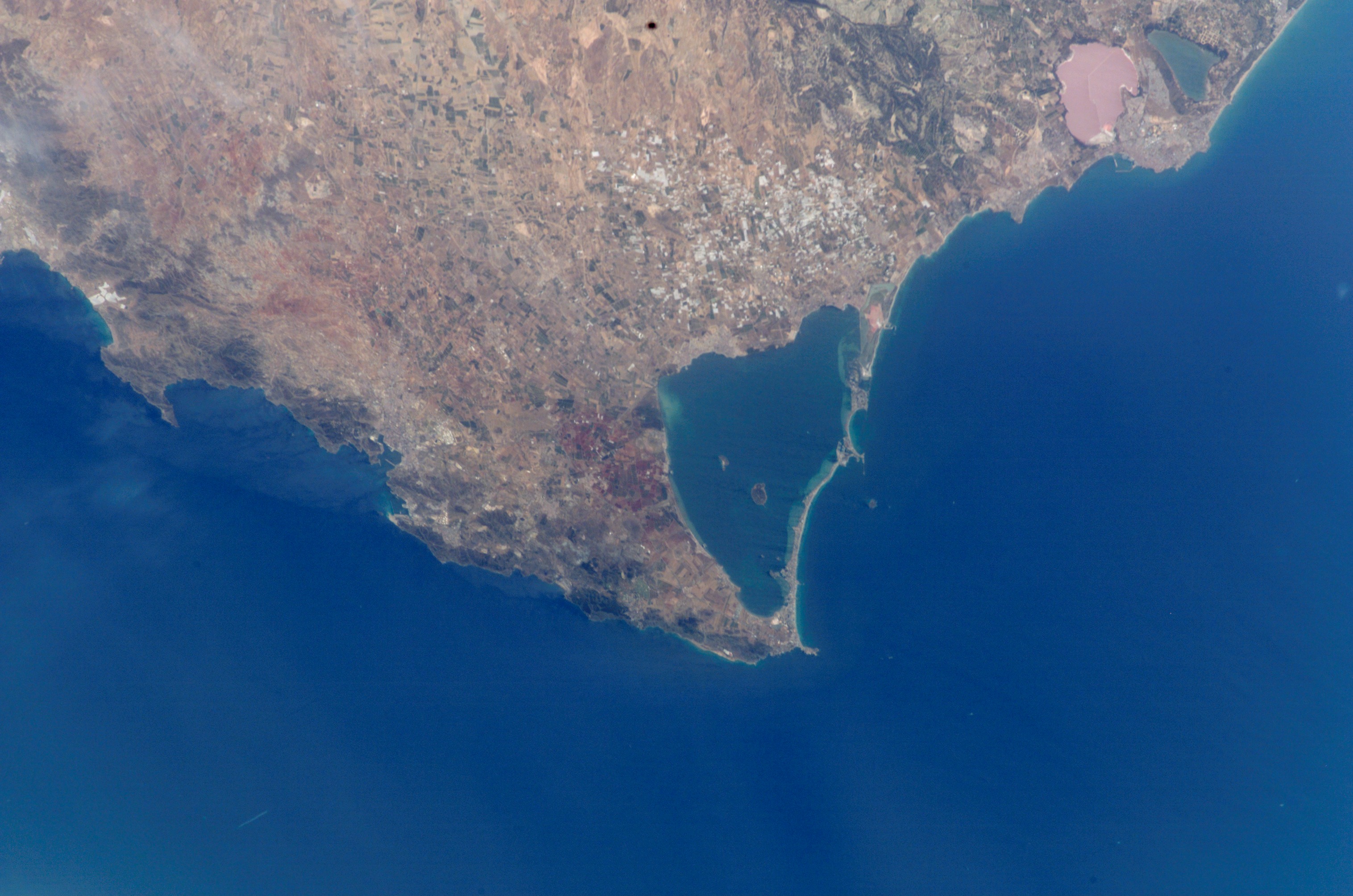
South of Spain: Mar Menor Lagoon

Ant-a Claws
-

In honor of Darwins' anniversary of On the Origin of Species.
New Papyrus: Darwin

it takes 20 000 genes to make a nematode and 25 000 to make a human

http://www.livescience.com/technology/technovelgy_eyes_041104.html
Charles Darwin recognized that the eye would be a real test of the theory of evolution. He suggested that it might be possible to evolve an eye from "imperfect and simple" forms:

"To suppose that the eye, with all its inimitable contrivances for adjusting the focus to different distances, for admitting different amounts of light, and for the correction of spherical and chromatic aberration, could have been formed by natural selection, seems, I freely confess, absurd in the highest possible degree.

"Yet reason tells me, that if numerous gradations from a perfect and complex eye to one very imperfect and simple, each grade being useful to its possessor, can be shown to exist; if further, the eye does vary ever so slightly, and the variations be inherited, which is certainly the case; and if variation or modification in the organ be ever useful to an animal under changing conditions of life, then the difficulty of believing that a perfect and complex eye could be formed by natural selection, though insuperable by our imagination, can hardly be considered real."

Scientists today believe that the eye could evolve from a single light-sensing cell. Scientists disagree over whether it evolved just once, or many times.

It turns out that Nature is both creative and generous with her gifts. Recent research has shown that the tiny marine worm Platynereis dumerilii has two types of light-sensing cells. The eyes of the worm have rhabdomeric photoreceptors, a compound lens formation that is seen almost exclusively in insect eyes. Rhabdomeric photoreceptors are covered in little finger-like protrusions. In its brain, however, it has a different kind of light-sensing cells - ciliary cells that are seen in vertebrate animals. Ciliary cells have hair-like cilia that extend outward and branch out like tiny umbrellas. Two different ways of sensing light in a single organism! images
http://scienceblogs.com/pharyngula/2006/09/rhabdomeric_and_ciliary_eyes.php

Researcher Joachim Wittbrodt of the European Molecular Biology Laboratory in Heidelberg, Germany speculates that the ciliary cells may regulate the worm's daily activity cycle, saying "We think they are related to circadian rhythms. We have found that there is a direct connection to the area used for locomotion... In the beginning we had a toolbox... what was in the brain in the worm ends up in our eye." If the animal had two copies of the genes needed to make one kind of photoreceptor, speculates Wittbrodt, then the extra set would have been free to evolve into the other photoreceptor. Different animals would subsequently evolve to use the two options in different ways.
-

Genome: Ramen noodle folding form (no knots) is fractal globule based on icosa-dodecahedron.
"perfect" genome code
empirical genome code
"perfect" periodic table
-

I have speculated earlier here and elsewhere, that the human thumb's missing bone and associated muscle evolutionarily moved to become the fused mandible (lower jaw) and tongue.
-

I posted this comment at a biology website (RDF), in response to why flies have 6 legs and most vertebrates have only 4 [clue - beetles have 4 wings/jaws, reptiles have 4 legs]:

bilateral pentadactyle digits (insect legs/"hands"/wings/"jaws")*
bilateral pentadactyle digits (invertebrate squid tentacles)*
bilateral pentadactyle digits (vertebrate fingers/toes)*
(larval bilateral) pentadactyle digits (starfish or sand dollar)*
icosahedral/pentameric (eg. virus) symmetry (12 oral/anal sets of five cilia)

*digits can be asexually replicated (due to incomplete meiosis?) or mutatively lost, body segments also, so bilateral millipedes simply have axial multiple copies of their earlier rear set, while bilateral vertebrates have axial duplicated the pelvis from the forelimb carriage or axial duplicated the rear limbs on a rear part of the primitive forelimb carriage which eventually moved caudally.

Flies have 6 legs, 2 wings, 2 wing knobs = 10 digits (no jaws just sharp tubes, larval jaws are forelimbs)
Spiders/crabs have 8 legs, 2 pedipalps ("jawclaws") = 10 digits (no wings)
Squid have 8 regular tentacles, 2 long "thumb" tentacles = 10 digits
Reptiles, fish, mammals (primitive) have 10 digits (forelimbs), 10 digits (rear limbs)

Evo-devo, human mandible/tongue associates with the missing thumb bone and muscle, while the maxillae associates with the four fingers (before mandibular separation, all five fingers).

Probably, due to the developmental order, a fly would be more likely born without wing knobs or wings than to be born without legs, since legs seem to be more ancient. One born without a leg pair probably also has other more severe genetic mutations, especially in internal segmental replication. While a reptile with 6 legs must oxygenate them with lungs, sufficient oxygenation is critical (dolphins lost their legs as oxygen conservation became more significant) while small insects' spiracles provide enough O2 for many legs, and wings help gain more O2. Perhaps.
-
There is an invertebrate (marine proto-crustacean?) which cannot eat unless it locomotes all limbs, its jaws can't chew unless its digits are moving. This would seem very primitive, since lobster claws and fish jaws operate independently from the legs or fins. Note that while larval caterpillars chew using their 4 forelegs/jaws, adult butterflies only suck nectar while still.

Caterpillars chew with forelimbs modified into jaws, during pupation these jaws reform into webbed wings, so butterflies can fly but can't chew. Grasshoppers do not pupate, they go through stages of enlargement and add wings at a certain instar stage (they can't eat at this stage). The adult grasshopper can both leap and fly. Humans have webbing between thumb and forefinger and between maxillae and mandible (cheeks), in flying insects the same genes form webbed wings associated with jaws; initially (ancestrally) this webbing assisted in filter feeding in early marine invertebrate, moving food particles closer to the mouth orifice.

The primitive invertebrate ancestor had an oral-GI-anal pore/tube with 5 mobile cilia, with variable degrees of rigidity (tentacle vs tendon/bone) and inter-digital webbing, depending on whether the food drifted by current (river) or was static and required cilia pulsation and attachment.

Interesting news confirms earlier speculations
link
Public release date: 20-Apr-2007
[ Print Article | E-mail Article | Close Window ]

Contact: Anna-Lynn Wegener
wegener@embl.de
49-622-138-7452
European Molecular Biology Laboratory

Researchers discover that the centralised nervous system of
vertebrates is much older than expected

The rise of the central nervous system (CNS) in animal evolution has
puzzled scientists for centuries. Vertebrates, insects and worms
evolved from the same ancestor, but their CNSs are different and were
thought to have evolved only after their lineages had split during
evolution. Researchers from the European Molecular Biology Laboratory
(EMBL) in Heidelberg now reveal that the vertebrate nervous system is
probably much older than expected. The study, which is published in
the current issue of Cell, suggests that the last common ancestor of
vertebrates, insects and worms already had a centralised nervous
system resembling that of vertebrates today.

Many animals have evolved complex nervous systems throughout the
course of evolution, but their architectures can differ substantially
between species. ...all these species descend from a common ancestor
called Urbilateria. If this ancestor already possessed a nervous
system, what it might have looked like and how it gave rise to the
diversity of nervous systems seen in animals today is what Detlev
Arendt and his group study at EMBL. To do so, they investigate the
nervous system of a marine annelid worm called Platynereis dumerilii.

"Platynereis can be considered a living fossil," says Arendt, "it
still lives in the same environment as the last common ancestors used
to and has preserved many ancestral features, including a prototype
invertebrate CNS. Comparing the molecular fingerpint of Platynereis
nerve cells with what is known about vertebrates revealed surprising
similarities.

"Our findings were overwhelming," says Alexandru Denes, who carried
out the research in Arendt's lab. "The molecular anatomy of the
developing CNS turned out to be virtually the same in vertebrates and
Platynereis. Corresponding regions give rise to neuron types with
similar molecular fingerprints and these neurons also go on to form
the same neural structures in annelid worm and vertebrate."...

The findings provide strong evidence for a theory that was first put
forward by zoologist Anton Dohrn in 1875. It states that vertebrate
and annelid CNS are of common descent and vertebrates have turned
themselves upside down throughout the course of evolution.

"This explains perfectly why we find the same centralised CNS on the
backside of vertebrates and the bellyside of Platynereis," Arendt
says. "How the inversion occurred and how other invertebrates have
modified the ancestral CNS throughout evolution are the next exciting
questions for evolutionary biologists."

http://chancenecessity.blogspot.com/2009/02/geoffroys-lobster-and-animal-common.html
-

urbilateria
A similar study involving Platynereis dumerlii comes to much the same conclusion. PZ Meyers has a explanation of this bit of research. This result, that humans are evolutionarily slow has been portrayed as a bit of a surprise, but is something that has been in the works for awhile. For example, as early as 1992 it was known that insulin genes in humans and apes evolved at a slower rate than in monkeys. The phenomena, called the “Hominid-rate-slowdown hypothesis”. was first suggested by Goodman in a 1961 paper entitled “The Role of Immunochemical Differences in the Phyletic Development of Human Behavior” (published in Human Biology) and led to papers being published on the subject up to the present (here and here for example).
http://www.hoxfulmonsters.com/2008/12/living-fossil-platynereis-dumerilii-unraveling-the-first-steps-of-eye-evolution
-
updated from earlier post (Vertebrates are inverted invertebrates).
To continue, with slight clarification, if interested:

See Neil Shubins slideshow, especially page 6 slide 5, to compare Hox gene positions in human and fruit fly.
http://tiktaalik.uchicago.edu/book-tools.html

My earlier explanation of primitive pentadactylity (5 digits) didn't well cover the duplication of reptile/mammal rear limbs from the forelimb carriage, this duplication is actually the same as the duplication of (beetle) 4 wings / 4 jaw mouthparts from the primitive frontal digits.
-
(I've briefed the text)
Dragonflies & damselflies (Odonates) can chew but they can't walk, their 6 legs are for perching and grabbing.
http://theatavism.blogspot.com/2009/11/sunday-spinelessness-damselflies.html
"You can tell a damselfly from a dragonfly thanks to the way they hold their wings - damselflies fold them up over their body when they land (butterfly-like) while dragonflies hold them open (moth-like)..." Interesting, butterflies or moths can walk a bit but can't chew, beetles & grasshoppers can walk and chew but their flight is not so well controlled.

wiki lacewings/netwings/antlions
The insect order Neuroptera, or net-winged insects, includes the lacewings, mantidflies, antlions, and their relatives. The adults of this order possess four membranous wings, with the forewings and hindwings about the same size, and with many veins. They have chewing mouthparts, and undergo complete metamorphosis. Neuropterans are soft-bodied insects with relatively few specialised features. They have large lateral compound eyes, and may or may not also have ocelli. Their mouthparts have strong mandibles suitable for chewing, and lack the various adaptations found in most other endopterygote insect groups.

They have four wings, which are usually similar in size and shape, have a generalised pattern of veins. Some Neuropterans have specialised sense organs in their wings, or have bristles or other structures to link their wings together during flight.[4]

The larvae are specialised predators, with elongated mandibles adapted for piercing and sucking. The larval body form varies between different families, depending on the nature of their prey. In general, however, they have three pairs of thoracic legs, each ending in two claws. The abdomen often has adhesive discs on the last two segments.[4] ...ant lions, which bury themselves completely out of sight and ambush prey from "pits" in the soil. Larvae of some Ithonidae are root feeders, and larvae of Sisyridae are aquatic, and feed on freshwater sponges. A few mantispids are parasites of spider egg sacs.

As in other holometabolic orders, there is a pupal stage, generally enclosed in some form of cocoon composed of silk and soil or other debris. The pupa eventually cuts its way out of the cocoon with its mandibles, and may even move about for a short while before undergoing the moult to the adult form.[4] Adults of many groups are also predatory, but some do not feed, or consume only nectar. They are delicate or cumbersome flyers, the spoon wings have rear wings like birds of paradise. Nemoptera
Nemoptera larvae


http://theatavism.blogspot.com/search/label/sci-blogs
It's a springtail (Collembola) - a member of a group of arthropods closely related to (but distinct from insects). They get their common name from a long forked organ, the furcula, that usually sits folded up under the abdomen. The earliest fossil hexapod, and one of the first terrestrial animals, Rhyniella praecursor, is a springtail...'Gomph's live in Antarctic mainland, springtails importantly make soil. Tail derived from crab/crayfish folded tail?

Orobophana pacifica: They are tiny, live on coral rubble on Cook Islands. Even though they live on land they aren't closely related to the "true" landsnails in the order Stylommatophora. To see the difference you need to look into their eyes. If you click on the image above to get a high resolution version you might just be able to see the eye - it's a black dot just underneath the tentacles ("feelers"). In true landsnails like the ones you find in you garden the eyes sit on the ommatophores, a second set of tentacles which are retractable.

bird feet, talons, webbing


Can you walk and talk and chew gum at the same time ?

The mechanics of being Human: a self-balancing, 28-jointed adaptor-based biped; an electro-chemical reduction plant, integral with segregated stowages of special energy extracts in storage batteries, for subsequent actuation of thousands of hydraulic and pneumatic pumps, with motors attached; 62,000 miles of capillaries.... R. Buckminster Fuller-
Bucky: Dictators never create their own opportunities.

A neat series of articles on human facial expressions (non-verbal communication), especially interesting after having read that human cheeks are merely muscular/fatty webbing connecting the mandible to maxilla like butterfly wings. Makes me wonder about the link of the smile to the crinkling of the eyelids or the tightening of the eyebrows, all these facial muscles which communicate internal feelings instantly which are usually masked by reflexive social gestures. They must have evolved in deep time, and gradually fine tuned in humans, a super-social species.

facing others

Human social traits: anonymous, cooperative, infants
Hrdy sociality hypothesis

Corneal blink reflex: trigeminal nerve senses, facial nerve motors to blink at bright light or loud sound or irritating particle in eye.
Corneal reflex
Accomodation reflex
Pupillary light reflex

-

Pigmentation in desert lizards
white lizards
Pigmentation in humans: Baltic blonde & blue eyes from Gulf stream & grain?
pigment

"There is only one spot on the planet where grains will grow despite sub-arctic sunlight.
It is where the warm waters of the Gulf Stream wash ashore. The Baltic is the only place on earth where ocean currents keep it warm enough to grow grain despite dim sunlight. When the inhabitants of this region switched to grain about 6 KYA, they suddenly got insufficient vitamin D to survive. They had stopped eating mostly meat and fish in a place where sunlight was too dim to produce vitamin D in normally pigmented skin. And so they adapted by retaining into adulthood the infantile trait of extreme paleness. Blonde hair and blue eyes were other infantile traits that were just swept along accidentally."

Why did they shift from hunting/gathering (grain processing sorghum in Mozambique 100ka) to complete absolute dependence on grain? What about their cattle/goats/dogs? Fishing seems to have increased rather than decreased amongst Baltic sea peoples with better boat/net technology. Camouflage is always important, whether for predator, prey or combat, but less for farmers. Clothing in cold? Baltic was warm in winter? Europeans also adapted by retaining the ability to digest lactose in adulthood, obtaining vitamin D from milk.
-

Medieval rural Briton women had wider thicker bones than city women
http://www.guardian.co.uk/science/2009/dec/17/women-yorkshire-archeaology-find

Language evolution
http://schott.blogs.nytimes.com/2009/12/16/q-and-a-the-death-of-languages/

-
Whale fossil 4.5ma in Spain: deposited on seafloor 50m deep, now 80m above ground 24km inland. So 4.5ma Medit was high, or tectonic uplifting or both.
http://www.sciencedaily.com/releases/2009/12/091215101716.htm

Dwarf suction-feeding Australian baleen whale
http://news.bbc.co.uk/2/hi/science/nature/8430402.stm

Monday, December 21, 2009

Bittersweet: genes for taste

The bitter taster gene, I hadn't known that it is stronger in some groups. How does it fit with increased eating of mint/mustard? Cooking? Adding salt? Alcohol? Fermented milk vs fresh milk - lactase persistence? PTC/PROP? Malaria?

Some Neandertals and some humans lack it, some have multiple copies.

http://www.newscientist.com/article/dn16335-genes-give-africans-a-better-sense-of-taste.html

New research suggests that Africans have more sensitive palates than Europeans and Asians - at least for bitter tastes. A survey of numerous African populations in Kenya and Cameroon found a striking amount of diversity in a gene responsible for sensing bitter tastes. "If they have more genetic diversity, there's more variation in their ability to taste," says Sarah Tishkoff, a geneticist at the University of Pennsylvania in Philadelphia, who presented the findings at a recent conference. Europeans and Asians typically have only one of two forms of a gene called TAS2R38, which detects a bitter-tasting compound called PTC and similar chemicals in vegetables such as broccoli and Brussels sprouts. The gene makes the difference between people tasting a weak dilution of the compound or not, with little nuance in between.

However, the compounds that cause bitter tastes can be thyroid-damaging, notes Paul Breslin, a neuroscientist at Monell Chemical Senses Center in Philadelphia. If you have a healthy thyroid you want to eat these things because they're packed with vitamins, he says. [Cooking?]

Seafood benefits : A diet high in iodine - common in coastal-dwelling people - protects against such thyroid damage, but, iodine intake typically drops off the further people live from the ocean. So bitter-sensitive genes could help these people avoid toxic veggies, Breslin speculates. Tishkoff wonders why, then, Europeans lost some the ability to sense bitterness. Different diets and evolutionary forces offer one explanation, she says. Their lack of bitter taste diversity could also be due to a paucity of genetic variation in the small number of African migrants that became ancestors to the Europeans. In general, sub-Saharan Africans boast more genetic diversity than people native to Europe and other continents.

Avoiding potentially toxic plants might not be the only reason for diversity in bitter taste genes, says Theodore Schurr, an anthropologist at the University of Pennsylvania, who was not involved in the study. His team found lots of variation in bitter taste genes in a Siberian population that has historically eaten few vegetables.

http://www.newscientist.com/article/dn6668-genetic-variation-gives-a-taste-for-alcohol.html
People with a gene variation that dulls their taste buds to bitter flavours drink twice as much alcohol as those with more sensitive palates, suggests a US study. The bitter chemical 6-n-propylthiouracil (PROP) is often used in taste tests and in 2003 a gene influencing the sensitivity to PROP was discovered. The gene, TAS2R38, codes for a taste bud receptor and has several natural variations.

TAS2R38. About half of the world's population have at least one copy of the low-sensitivity variant AVI, he says.

A new study of ancient DNA offers preliminary support for that conclusion. Neanderthals possessed a gene mutation that would have meant they couldn't taste bitter chemicals found in many plants. There has been speculation that this mutation, which occurs in a taste receptor gene called TAS2R38, is beneficial to humans because it makes vitamin-packed vegetables more palatable. It probably arose in the common ancestor of modern humans and Neanderthals more than a million years ago. The gene encodes a receptor that detects a chemical called phenylthiocarbamide, which is closely related to compounds produced by broccoli, cabbage and Brussels sprouts.

http://www.newscientist.com/article/dn17595-seafood-gave-us-the-edge-on-the-neanderthals.html
He and colleague Erik Trinkaus at Washington University in St Louis, Missouri, compiled chemical measurements taken from bone collagen protein belonging to 13 Neanderthals and 13 modern humans, all recovered in Europe. They also added data collected from a 40,000-year-old human recovered in Romania's Oase cave.

Because our bones are constantly destroyed and rebuilt while we are alive, the atoms that make up collagen hold a record of what we've eaten. "When you take a sample of a bone you're getting all those breakfasts, lunches and dinners for 20 years," Richards says.
Telltale atoms

Measurements of the abundance of heavy isotopes of carbon and nitrogen hold the key. Marine environments contain a higher proportion of heavy carbon atoms (carbon-13) than land ecosystems, so lots of carbon-13 in the recovered collagen points to a seafood diet. Meanwhile, heavy nitrogen (nitrogen-15) tends to build up as the atom moves up the food chain, from plants to herbivores to carnivores.

High levels of heavy nitrogen can also come from a diet with lots of freshwater fish. Aquatic food webs tend to contain more steps than terrestrial ecosystems, so large fish often have higher levels of heavy nitrogen than land predators.
-
A very unusual mammal: the short tailed shrew, echolocates, clicks, venomous, cannibalistic...
http://en.wikipedia.org/wiki/Northern_Short-tailed_Shrew

Tuesday, December 8, 2009

Flower-fruit plants => Flying fauna! CO2, O2, N2

Green plants can't uptake carbon from soil, because they use water to move nutrients, water + carbon = carbonic acid (eats limestone -> caves). Soil fungi do decompose carbs, as do animals, and exude CO2. Plant leaves "breathe" O2 just like animals and fungi. Plant leaves "eat" CO2, using solar energy to decompose it into O2 & C, the C is then combined with H et al to make carbs for plant tissue. Plants (grasses) require wind to reduce stratification of gases (gas stratification starves them of C or chokes them of O2), tropical rainforests need mobile animals not only for fruit dissemination but also gas mixing (flying insects/fruit bats/fruit birds), this is the major advantage of angiosperm flora over non-fruiting gymnosperms (seeded but non-fruiting conifers) and the reason that flowering plants and symbiotic fauna "won" the competitive war against cycads, conifers, ferns, etc. Biological textbooks say little about gas stratification prevention, but it is critical in closed-canopy ecosystems (same reason that sealife comes in both mobile jetsam (tail/fin) & immobile photosynthetic flotsam). [my comment@]
flowers + fruit induce faunal flight to mix gas
-

flower origin
-
ancient scorpionflies pollinating gymnosperms?
ResearchBlogging.org

"The first flowering plants evolved more than a hundred million years ago, while dinosaurs were still on the scene. Since then, they’ve come to dominate the world, largely outcompeting the plants that were there before, such as conifers, cycads, and ginkgoes...The reason for showy flowers is to attract pollinators, most commonly insects. Today, the majority of flowering plants use insects to carry their pollen, whereas most gymnosperms (the older group of plants, including conifers) are pollinated by the wind. Insects have one clear advantage over the wind: they can track down another flower of the same species...From insect fossils, it looks like there were pollinators (scorpionflies) around in the Jurassic, which had evolved together with the gymnosperms that were around at the time...some fossil gymnosperms weren't well adapted for wind pollination."

http://takluyver.wordpress.com/2009/12/08/carbon-dioxide-and-nitrogen-not-such-a-double-whammy/
"Nitrogen makes up nearly 80% of the atmosphere, but pure nitrogen (aka N2) isn’t very easy to get at. What counts is ‘reactive nitrogen’, especially dissolved nitrate (NO3-) and ammonia (NH4+). Plants can readily take this up and use it, helping them to grow faster (NPK fert). In fact, over half of the reactive nitrogen being made each year now comes from human activities.
Ecologists know quite well that adding nitrogen often leads to fewer species living together. And a recent experiment neatly showed why that might be: when plants’ roots are battling it out for nutrients (like nitrogen), it’s a relatively fair fight. But add nitrogen, and the fight moves above the ground, for the light plants need to grow. Here, bigger plants can quickly shade out smaller ones and kill (some of) them off... carbon dioxide and nitrogen have different effects on plants, and they seem to balance out to some extent. Although the effect of light wasn’t clear cut in this experiment, I think it might also be important that higher carbon dioxide lets plants grow in deeper shade."
-
leaf veins

http://ecographica.blogspot.com/2009/12/evolution-is-in-veins-of-our-captors.html
"...primitive ancestors of the tyrannical angiosperms underwent adaptation to feed on the then abundant atmospheric carbon dioxide. Through undertaking a process known as photosynthesis, some early plant-forms gained reproductive advantage and quickly out-competed their rivals. In time, their numbers became so great that oxygen – a byproduct of photosynthesis - accumulated in the biosphere to such extent that it triggered a catastrophic transition to an oxygenated planet. In hindsight, this rapid transition, called the ‘Great Oxygenation Event,’ can be viewed as a first step in the angiosperms’ selfish remaking of the Earth, and as foreshadowing the eventual enslavement of all humankind.

Initially, constrained anatomy affectively limited the plants’ ability to channel the xylem tissues required for harnessing the sun’s rays. Xylem tissues are essential to photosynthesis because it is their job to convey water and nutrients throughout the plant. Early plants lacked sufficient internal structure and architecture to serve as pathways for xylem transport; this physically restricted the amount of energy that could be generated through photosynthesis. In other words, because of a lack of adequate venation, the radiation of angiosperms was kept in-check. However, this all changed during the Cretaceous Period.

Over the course of evolutionary history, natural selection tinkered at the physiology of the angiosperms, incrementally improving their clumsy and inefficient application of photosynthesis until eventually, about 120,000,000 years ago, the density of the angiosperms’ veins dramatically increased by 300-400%. The upsurge in venation meant that the plants’ xylem tissues more frequently made contact with individual plant cells; this pushed the capacity of the angiosperms’ energetic processes far beyond what they could achieve previously. Newly acquired energy surpluses were promptly invested in reproduction and as a result angiosperm populations exploded the world over."

Marine CO2 effects on shellfish, crustaceans, calcific algae:
crabs & CO2
(compare to green plants in soil which can't absorb carbonic acid through roots, so must consume CO2 in air via photosynthesis.)
eco-web-tet: ants, fungi, bacteria, plant in 4 way symbiotic relationship
plants & ants

Game theory: bacteria and human in decision making in stress
http://www.eurekalert.org/pub_releases/2009-12/uoc--bpn121109.php

Saturday, November 28, 2009

Amazing animals

platymolekiwiduck
A Hawaiian duck that resembled a platypus-mole-kiwi, probably foraged in forest duff and shallow streams, huge trigeminus - why? electrosensory bill or nares? apnea adaptation? whiskery feathers?

An octopus carries and uses coconut shells
octopus hand tools

long tail glider
the tail has 2 rows of ventral ridges, reminds me of my interpretation of dino-bird and pterosaur long bony tails with bristle scale feathers to grasp tree bark, both taxa co-evolved into short tailed flyers with improved perching rear toe claws but in this "squirrel" which lacks wings is sufficient for gliding from tree to tree.

Both from Christopher Taylor's nature blog, Catalogue of Organisms

From Zooillogix nature blog: antarctic seals & elephant birth
leopard seals
weddell seals
http://scienceblogs.com/zooillogix/2009/11/graphic_elephant_birth.php

Cameron's blog: Galapagos Marine iguana

Marine CO2 effects on shellfish, crustaceans, calcific algae:
crabs & CO2
(compare to green plants in soil which can't absorb carbonic acid through roots, so must consume CO2 in air via photosynthesis.)
eco-web-tet: ants, fungi, bacteria, plant in 4 way symbiotic relationship

Ich! Parasite has 2 endoparasites:
http://www.eurekalert.org/pub_releases/2009-12/uog-url120209.php
-

Humans and saltwater: (h/t Frank at Greg's site)

a recent study in ultra-marathon runners (100 mi) found that they lost between 11.2 and 144 g of sodium during the event. Obviously the range is huge and it really depends on the person. Total water loss in the same event ranges from 14 to 36 liters.

A liter of seawater contains approximately 35g of salt. One liter of blood contains 9g of salt. For every liter of seawater you drank you would need to add 2.8 liters of fresh unsalted water to be “even.”
-
While sweating excessive amounts of salt would be deleterious to humans inhabiting hot and humid inland environments, sweating large quantities of salt that was isotonic with the blood stream would be advantageous in a hot and humid coastal marine environment where significant
quantities of marine invertebrates were consumed." MW

-
PZ on evo development of nervous system: exaptation of simple organelles in protists to tissue cells, salt control, electric potential...
nerve evolution

Tuesday, November 10, 2009

Gibbons, Humans, Great Apes

http://news.discovery.com/human/human-ancestor-diet-nuts.html

"Early hominid ancestors may have left the trees to take advantage of ground-level foods, a behavioral shift that could have resulted in two of the major defining characteristics of humans: unique teeth and walking on two legs, a mode of locomotion known as bipedalism that is extremely rare elsewhere in the animal kingdom."

No, they started at wetland/woodland edges, eating water lily/lotus/sedge rhyzomes/umbels and bush berries and low hanging fruits and fallen nuts, then apes moved higher in rainforest canopy while human ancestors moved to more coastal seashore areas.


Note folded flanges of adult male reduce sunlight in eyes, give gorilla appearance; balding scalp. Nonfolded flanges are broadly flat faced, very non-gorilla appearance, note clear beard and non-nasal mustache. Bornean and Sumatran orangs separated 1.6ma
flanges
flat flange
Very dark furred orangutan
dark orangutan
http://en.wikipedia.org/wiki/Orangutan
Male with flanges, eyes near center of face, long hair like mammoth
http://en.wikipedia.org/wiki/File:Pongo_pygmaeus84-300.jpg


Human deep larynx vs ape air sacs: apnea/speech vs flotation (de Boer, Boe, Lieberman...)
http://www.babelsdawn.com/babels_dawn/2009/10/how-old-is-language.html#more
http://ebbolles.typepad.com/babels_dawn/2008/03/fossil-evidence.html
http://ebbolles.typepad.com/babels_dawn/2008/03/stop-your-yacki.html
http://www.sciencedirect.com/science?_ob=ArticleURL&_udi=B6WKT-46MJTJN-D&_user=10&_rdoc=1&_fmt=&_orig=search&_sort=d&view=c&_acct=C000050221&_version=1&_urlVersion=0&_userid=10&md5=9b118ac4f846a53b6cb9455392901a9d
http://www.ncbi.nlm.nih.gov/pmc/articles/PMC15600/
http://www.babelsdawn.com/babels_dawn/2008/03/apes-are-not-us.html


Humans & gibbons share these traits (unlike great apes):

1) long achilles tendon
2) proportionately long legs (not neandertals)
3) protruding chin (not neandertals)*
4) upright biped primarily
5) no laryngeal air sac (exclude siamangs)
6) more monogamous pair bonding
7) continuous song rather than discrete hoots
8) low sexual dimorphism (teeth)
9) no woven branch nest (also siamangs)


gibbons and great apes share these traits (unlike humans)

1) fur coat
2) grasping big toe
3) very low carnivory
4) large canines, small molars


Chromosomes: Great apes have conserved primitive 48 chromosomes, humans derived 46, gibbons variable per species.

Gait: Gibbons and humans have conserved bipedal upright locomotion (original float-feeding/standing hominoid posture) while great apes have derived terrarboreal quadrupedalism.

Milk composition in hominoids, human milk is unique to all apes and all mammals
http://glycob.oxfordjournals.org/cgi/content/abstract/19/5/499

"In comparison, type I oligosaccharides predominate over type II oligosaccharides in human milk, whereas nonprimate milk almost always contains only type II oligosaccharides. The milk or colostrum of the great apes contained oligosaccharides bearing both N-glycolylneuraminic acid and N-acetylneuraminic acid, whereas human milk contains only the latter. Great ape milk, like that of humans, contained fucosylated oligosaccharides whereas siamang milk did not."

Neu5Gc in hominoids, malaria susceptibility in humans and NWM Aotus monkeys
http://www.pnas.org/content/99/18/11736.abstract

Human malaria resistance recent? "Although sickle cell is best known in Africa, there is also an India-Pakistan variant of it that seems to have evolved separately," Hawks explained. "Both variants have evolved very recently, in the last three or four thousand years, and in that time have risen to as much as 10 to 15 percent of the populations.
Surprisingly, based on skull measurements, the human brain appears to have been shrinking over the last 5,000 or so years.

"When it comes to recent evolutionary changes, brains have shrunk about 150 cubic centimeters, off a mean of about 1,350. That's roughly 10 percent," Hawks said. "As to why is it shrinking, perhaps in big societies, as opposed to hunter-gatherer lifestyles, we can rely on other people for more things, can specialize our behavior to a greater extent, and maybe not need our brains as much," he added.

Human salivary amylase multiple of chimp, especially starch-eaters? Digestion begins as soon as you shovel a forkful of those mashed potatoes into your mouth and masticate (or chew) the food. Your mouth secretes saliva (up to 1.5 quarts a day) that moistens your food and also contains enzymes (special kinds of proteins) that help break down the food before it reaches your stomach.

One of these enzymes, called salivary amylase, breaks down starches, and a new study finds that humans carry extra copies of the gene that encodes the enzyme, which may have helped spur human evolution. The study, published in the Sept. 9 issue of the journal Nature Genetics, found that humans have more copies of the gene than their ape relatives. The humans sampled carried as many as 15 copies each, while chimpanzees had only two.

The study also found a correspondence between the number of copies of the gene and the amount of starch in a population's diet. Members of the Tanzanian Hadza tribe, which ate more tubers and roots, had more copies of the gene than their neighbors (the Datog) who mostly raised livestock. The finding supports theories that some change in the diet of early humans fueled the simultaneous increases in the size of human brains and bodies, as well as the expansion of our ancestors' geographic range.

Trade distinguished Hs from others (neandertal, baboon, bonobo)
group inter-trade

Evolving group gene
dance, trance & chance

Slight chin in early Hs man 110ka in China & S Africa?
http://johnhawks.net/weblog/fossils/china/mulan-mandible-stone-2009.html

Toba supervolcano dried and cooled south Asia 73ka
Toba effects

Face & limb traits identify various congenital disorders:
traits

Herbivorous hadrosaur dinosaur: biped, quadruped, hopper or walker?
hadrosaur

Friday, August 28, 2009

Fishapods

With placoderm-like forebears in brackish shallows, perhaps Tiktaalik was a
primitive proto-salamander/reptile, Acanthostega a primitive pelagic
proto-ray-finned fish (with its duplicated digits for better hydrodynamic
propulsion), and Ichthyostega a primitive proto-frog, with its lack of
abdominal ribs allowing the gradually lengthening rear limbs with broad
paddled feet to come far forward to launch or lunge (and later to leap),
"differentiated vertebral column, with a short neck, weird tall neural spines
in the pelvic region, and a tail which is proportionally shorter" sounding a
lot like a short-legged frog, to eventually lose a few digits and fuse the
coccyx, but retain the primitive skin breathing ability and need to reproduce
in shallow later.

See pictures of fishapods
http://scienceblogs.com/tetrapodzoology/2008/04/functional_anatomy_part_i.php

http://en.wikipedia.org/wiki/Tiktaalik
http://en.wikipedia.org/wiki/fishapod

Tuesday, August 18, 2009

Icosa + Octa + Tet = ICTET

Novel structure incorporating 3 simplest structural polyhedral forms:
" the ARC in =4D= " the tail as a rotating/fused/swiveling structure

I found 6 correlations. [Update: a 7th found, the Proxigean extreme spring tide occurs every 31 years, see bottom of post.] The last one was hard, the ictet has 31 sides, but what was the 12? I knew there must be a twelve. Then I remembered Bucky's 12 radial spokes supporting a tensional wheel. Just as a rotating tail (but not a swiveling tail) such as a propeller or a clock must balance outwards to avoid offset erosion of the prop axle, the wheel must have 12 contacts in balance, as the sphere in a matrix must have 12 contact points. The result is extraordinary. (I did not originally see the link of 31 GC & vertebral nerve prs and 12 cranial nerves, Rybo at Synergeo group did, a copy of his graphic is at the bottom of the ARC blog. Ken at AAT group noted the 31 equal temperment of an octave.)

1 growth-31 vert neural pairs, 12 cranial nerve pairs, pentameric
2 form-31 great circles in icosa, 12 vertices, pentagonal
3 energy-31 equal temperment in octave, 12 tones, pentatonic
4 time-31~ day/night cycles in month, 12 month, heptapent
5 triax-31=sum of 1st 7 factors, of 12 factors of 60, hexapent
6 ictet-31 triangular sides, 12 deg. of freedom of tail pentabase
7 orbit-31 year cycle extreme proxigean spring tide, 12 pt ellipsis
Bio video of helical propelled bacteria: Rhodobacter sphaeroides
http://www.rowland. harvard.edu/ labs/bacteria/ showmovie. php?mov=rsphe_ f_swim_1
http://tinyurl. com/qzdb4r
Good graphical explanation of flagella, cilia, rod:
http://lecturer. ukdw.ac.id/ dhira/BacterialS tructure/ Flagella. html

Note: (Flower petals/leaves often split as 2, 3, 5, which are prime)

The number 60, a highly composite number, has twelve factors:
1, 2, 3, 4, 5, 6, 10, 12, 15, 20, 30, 60.

1 + 2 + 3 + 4 + 5 + 6 + 10 = 31 (sum of 1st 7 factors)

In spherically arranged tight-fit ball packing layers:
12, 42, 92, 162, 252, 362 (shell layer balls in VE, Icosa)
10, 40, 90, 160, 250, 360 (subtract 2)
1, 4, 9, 16, 25, 36 (divide by 10)
f = 1, 2, 3, 4, 5, 6 (sq root)

form: 1 tet = 4 sides (tetrahedron)
form: 1 octa = 8 sides (octahedron)
form: 1 octet = 11 sides (2 merge into 1 double pane = tube)
form: 1 icosa = 20 sides (icosahedron)
form: 1 ictet = 31 sides (icosa w/ pin-hinged octet "tail")

Ictet = icosa + tail, polar moment, mono-axis

So now we have a composite structure of all 3 structural elements, the overall shape is an icosa-spheroid with an octet tail which can rotate in any direction (or if reversely docked, swing-hinge in an arc), answering the question, from whence did the flagella and sperm arise. Also explains the persistence of the tail in all motile organisms. Also explains why humans have 31 vertebral neural pairs, 12 cranial neural pairs and no tail. At least it would seem so.

AFAIK no one has noted the significance of the combined 'Ictet' structure as a universal jointed spheric mobile entity, and its numerical parallel of 31 sides with the 31 equal temperment of the octave, the 31 vertebral neural pairs in humans, the 31 lunar days and 31 great circles of the icosahedron, the 31 sum of 1st 7 factors of 60.

http://www.tabletoptelephone.com/~hopspage/Fuller.html
http://en.wikipedia.org/wiki/Icosahedron
http://www.buckminster.info/Pics/Tetrahedra/Tet-Quark-Mite.gif
At the single open vertex of the tetrahedron (the far left blue point) of the octet is the universal 'pin joint' which is attached to one of the 12 pentagonal sutures (pore/window) of the (truncated/regular) icosahedron or hexapent buckyball, the octet tail allowed to swivel radially or horizontally on a favorable plane.

(The picture includes the internal electrostatic bonding forces referred to as a mite or quark, whose form is an irregular tetrahedron.)

Note that the icosa meets the octet at a pentagon window, the tet meets the octa with each of the tet base corners having 5 vectors. So there is a continuum of pentagonal adhesion/cohesion, aka pentabase. Synergetic.

DDeden, August 18, 2009

(ictet not abbreviation for interpenetrated icosa-tet, rather an abbreviation for attached icosa-octa-tet, in the manner of R.B. Fuller term octet to name attached octa-tet form in patent.)

(More information on ICTET 31-12 available at AAT & Synergeo Yahoo groups.)
-
background addendum:
The term harmony derives from the Greek (harmonía), meaning "joint", re. "to fit
together, to join". The harmonious major triad is composed of three tones in a
simple whole number ratio of 6:5:4. The major triad chord in music theory
consists of a root, a major third, and a perfect fifth.

In structural theory, the simplest closed structures, the Platonic triad, are
the tetrahedron, the octahedron and the icosahedron. It would seem to me that
these 2 triads or chords are the same relationship expressed in different form,
(sound) energy and physical matter. [Compare to diving/backfloating partners
with infant]

The relevance to the 'ictet' above is that the chordal form triad is
preserved, the icosa, tet and oct are securely joined, yet the pin joint allows
vibrational energy propulsion via propeller rotation equivalent to a wheel of 12 spokes tensionally held or 12 degrees of freedom. A dual pin hinge would produce lateral swiveling.

An alternative form, not considered here but perhaps relevant to echinoforms or
spongiforms, is a central icosa with an octet flagella (or spine) docked at each
of the 12 surface pentagons, resembling a stellated icosahedron.

Tetrahedron: triangular corner (3 lines converge)
Octahedron: square corner (4 lines converge)
Icosahedron: pentagon corner (5 lines converge)

Potentially supporting information as to the antiquity of the ictet tail structure, this time as a fused external structure: fused structural segments produce 'primary cilia' (flagella, filament) different from motile cilia and found in animal skin and brain cells. Not impossibly this 'primary cilia' became the source of the notochord & tail in pre/vertebrates.
-

http://www.eurekalert.org/pub_releases/2009-08/uoc--ssc082109.php
"Unlike the more familiar motile cilia, primary cilia do not move, and only one pokes out of each cell. They have recently been discovered to play an essential role in assuring normal embryological development. May protect against skin cancer"

http://www.eurekalert.org/pub_releases/2009-08/uoc--sbt082109.php
"UCSF scientists have discovered that a tiny filament extending from cells, until recently regarded as a remnant of evolution, may play a role in the most common malignant brain tumor in children. "In the last few years, primary cilia have been shown to be essential for the cell-signaling that drives both human development, including the differentiation of stem cells into neurons, and some diseases, including polycystic kidney disease. The fact that the two UCSF studies implicate primary cilia in two totally different tissues suggests the finding is likely to be very general."

Note: A skew icosahedron is inscribed within an octahedron in a 4 frequency tetrahedron.
http://groups.yahoo.com/group/synergeo/message/54332

"In other words, you can't make a regular icosahedron out of regular tetrahedrons. In
http://groups.yahoo.com/group/synergeo/message/10326
I once said that, "The dihedral angle between the faces of a regular tetrahedron is 1.230959418 radians or 70.52877938 degrees. This is also the angle between alternating faces of a regular octahedron. Notice that it is not quite 72 degrees, so you can't put exactly five
tetrahedra around a common edge or five octahedra around a common vertex, as was attempted in the gapball or octaball Photos." AM
http://home.usit.net/~rybo6/rybo/id2.html
-

The number 31 pops up again, this time in regard to tidal cycles.
"During the last 400 years, there have been 39 instances or 'Extreme Proxigean Spring Tides' There were, in fact cases of extreme tidal flooding recorded during these particular spring tides which occur once every 31 years."

1800 yr ocean tidal cycle
http://www.pubmedcentral.nih.gov/articlerender.fcgi?artid=18099

The gravitational force of the moon is one ten-millionth that of earth, but when you combine other forces such as the earth's centrifugal force created by its spin, you get tides.
When the moon is full or new, the gravitational pull of the moon and sun are combined. At these times, the high tides are very high and the low tides are very low. This is known as a spring tide. The net result of this is that the Earth gets deformed into a slightly squashed, ellipsoidal shape due to these tidal forces.

The tidal bulge of the Moon follows along the path on the earth's surface which intersects with the orbital plane of the Moon. This plane is tilted about 23 degrees with respect to the equatorial plane of the earth. The result is that near the equator, the difference between high tide and low tide is actually rather small, compared to other latitudes.

The Proxigean Spring Tide is a rare, unusually high tide. This very high tide occurs when the moon is both unusually close to the Earth (at its closest perigee, called the proxigee) and in the New Moon phase (when the Moon is between the Sun and the Earth). The proxigean spring tide occurs at most once every 1.5 years.

During the last 400 years, there have been 39 instances or 'Extreme Proxigean Spring Tides' where the tide-producing severity has been near the theoretical maximum. The last one of these was on March 7 1995 at 22:00 hours Greenwich Civil Time during a lunar Full Moon. There were, in fact cases of extreme tidal flooding recorded during these particular spring tides which occur once every 31 years."

If you see earths' orbit as a circle (slightly lopsided, ellipse) around the sun, imagine the sun as the center of a sunflower, and earth orbit as the edge of that center, then the moon could be seen as a set of 366 flower petals around it. In the last 400 years, the extreme proxigean spring tide occurred 39 times. Maybe at 366 it skipped the extreme tide.

Also note Rybo's picture at bottom of page showing the 31 spinal nerve pairs and 12 cranial nerve pairs.

Friday, June 12, 2009

Parallel convergence

Sit float feeding in warm water -> hominoid, absent tail, air sac

Sit grass feeding on dry ground -> gelada, long tail, no air sac


Sit float feeding in warm water -> LCA toad/frog, throat sac, croak, long
prehensile tongue, rear feet similar to other frogs

Dive & swim in water -> diving frog, no throat sac, no croak, trill, no more
long prehensile tongue, rear feet differs from other frogs
Diving frog
This most-aquatic frog has a unique immunity to the fungi that is killing
amphibians around the world. Breath control.

Dive & swim in water -> human, no throat sac, no croak, speech/click
no prehensile toes, rear feet differs from other hominoids
Diving hominoid
This most-aquatic hominoid has a unique condition (domestication) that is
killing hominoids around the world. Breath control.

Parallel convergence among tetrapods.

-

Orang-utans: Our Closest Relative?

Lluc

I find it odd that Lluca was pictured as a flat faced orangutan, considering
that it is the most distant of all hominoids from the current location of the
orangutan populations. Yet if it was merely the westernmost kin of a ring
species of base Pongid-Hominid apes which distributed along the Tethys shores
with localized dietary and predatory adaptations, and varying degrees of
bipedality, it is not so surprising.

IMO the question is not "are humans and orangs most closely related?" but
rather, "why do people insist on placing human ancestors geographically next to
chimps and gorillas, despite the gross differences in morphology?". Two closely
related species living in the same environment do not change drastically their
morphology, see gorillas and chimps.

Since lowland gorillas forage for floating AHV in brackish water, mountain
gorillas forage in highland fog forests for ground THV, savanna chimps forage in
open woodlands, forest chimps forage for small invertebrates in shallow water
and rainforest bonobos forage in the sub-canopy, we know that human ancestors
must have done something different (or in addition) to account for the extreme
morphological changes.

Crocs and hippos dominate the tropical waters of Africa except for small puddles
and highland waters, notably they lack both fur and SC fat, like manatees, they
rely on the sun's warmth in shallow water. Beavers and otters have thick fur and
live in sub-tropical and temperate waters, with the habit of cool water diving.

Humans, unlike all other great apes, fit in between these two groups, sun
basking (ashore and afloat in warm water) and cool-water deep-diving (deeper
than body length).

That this would have developed after the Orangutan had split eastwards and the
African apes split westwards, seems most parsimonious. The human ancestor seems
to have done neither, until they had well adapted to and dominated their new
African and Asian niches.

Rather, human ancestors seem to have paralleled the crab eating macaques (and
possibly Allen's swamp monkey), foraging both at the shoreline and beneath the
water surface, but still retaining the primate ability to climb. (also
paralleling the African clawed frog and marine otters, which can climb but not
as well as treefrogs or stoats.)

Why would human ancestors have generally stopped climbing and hanging from tree
branches and reeds while foraging? Because they brought their sticks with them
into the water to get food, just as chimps bring customized sticks to spear
bushbabies, to gather termites, to collect honey, to dig tubers in the wet
season. Orangutans don't customize sticks, though they use twigs to get neesia
seeds from spiny fruit, using their lips since one hand and both feet are used
to keep them in position in the high forest canopy.

Human ancestors didn't need their hands and feet to keep in position in the
canopy, because the canopy was low at shorelines, and because the food was as
much under the water surface as above, including later ambushed prey.


I can think of an interesting parallel here, whereby the young and old males
both compete individually and cooperate societally,

Gorilla: young lighter males climbing to canopy, older large males actively
ground foraging and in bais shallows

Orangutan: young lighter males climbing to canopy to forage, older larger males
lower (and if no cats) on ground foraging in swamps.

Aquarboreal ape: young males more mobile fruit foraging, older larger males at
tidal waterside peeling mangrove oysters and papyrus.

He: young males climbing coconut palms, older larger males more in water diving
for longer periods.

Hn: young males in waterside trees leaping onto and stabbing thirsty animals
into the water, older larger fatter males backfloating camouflaged with long
spears aimed at the prey's throats and chest as they dash into deeper water away
from the airborne ambush.

Hs: young trim males as paddlers/sailors/fishers, older larger males as ship
builders/captains/bankers.

A bit simplified but interesting. Not sure what happened to the "harem" and size
dimorphism, seems variable depending on climate, but otherwise a sort of
continuum. I'd think the shoreline would make for weaker harem/dimorphism
societies than the inlands where drought would be more drastic. The very deep
diving elephant seal harems seem to contradict this, but that may be due to
quite different constraints (simultaneous birthing, cyclical food supply) than
an aquatic ape (with hidden estrus and year around birth) which could forage
above, below and along the surface, and travel far inland during the muddy
coastal rainy season.