The seven day circle, by Eviatar Zerubavel, explains the root of the modern 7 day circular week as being derived from the Jewish Sabbath tradition being a cultural artifact rather than a natural observation (such as the lunar month or diurnal year), producing a pulse effect (one special day per period, a peak of the week), as opposed to the Chaldean 7 day week which was aligned to the 7 "wandering stars/planets" which had no significant peak. I think both Chaldean/Babylonian astrological and Jewish temporal divisional/divinity weeks came from earlier African early agriculture market gatherings (pasar) which split the seasons into smaller quasi-regular periods, which then adapted to Egyptian/Ethiopian/Sabaan local social caravan trade environments where they were partially aligned with the lunar month which was highly significant to long distance trade (eg. frankincense, salt) where desert travel in mid-day heat was impossible before camels were domesticated.
http://books.google.com/books/about/The_Seven_Day_Circle.html?id=Cd5ZjRsNj4sC
Ainu - Utari [Arab: ain=wellspring, Grk: ydr & Skt: udr/utar=water]
Basque - Euskara [skal ~ chal/hald/high]
Sun/Sunday: Basque (Igandea: high, related to Tamil kandi: high and Chaldean Haldi: heavenly) relates to peak/pulse of week), Albanian: e diele.
Moon/Monday: Basque (astel ehena) maybe links to Albanian (e Hene/moon) [astel - astro-star-ishtar], both related to Hebrew sheni and Arab ithnin.
week: Dutch: week. Chaldean/Armenian: shabat/shapti, Hebrew: shavua, Persian: shambah, German: woch, Finnish: viikko, Lapp: wakko
Week relates to vector/vika/weave/vaya/wicker/way, in alternation of travel, that is back and forth in a repeated sequence of circular-temporal but linear-spatial fashion.
Ancient Egypt deified the sun and mostly ignored the moon in calenders because they were entirely Nile based, whose flow came from far south Sudan. They had 3 10-day weeks per month but used a perfect harmony of 36 constellations to match 36 weeks of the calendar, rather than lunar matching."The rise of the Sabbath cult in Judaism coincided with the withdrawal from worshipping the celestial bodies, and particularly the moon. In other words, the dissociation of the week from a natural cycle such as the waxing and waning of the moon can be seen as part of a general movement toward introducing a supranatural deity... untouched by nature in any way".
Also see my post on ancient calenders: http://the-arc-ddeden.blogspot.com.au/2010/02/shared-traits.html
Update:
Basque: nekaz = (low) furrow (of week); Igandea = high (peak of week)
[nekaz also means farming/cultivation, but originated from track, same as English and Norse "last"]
Compare these parallels: from nek|az (furrow) to az|ken (plow-follow a furrow) and en|autsi (say) to esa|n (say); in both, one syllable reverses while the other shifts. (During shifts and reversals, syllables often change sound slightly, eg. itsa to esa) to smooth speed/temper of speaking.)
http://www.aixerrotabhi.net/eusk/curriculumat/euskara/euskararenhistoria1_4.pdf
Russian: Lekha = furrow (confirmedby Vlad)
Scot. lireag = fallow ridge
Latin: lira = footprint
Basque days of the week: (from Buber)
Monday Astelehen/a (aste=week, lehen=first)
Tuesday Astearte/a (aste= week, arte = middle, mid of wk)
Wednesday Asteazken/a (aste=week, asken=last, last of wk)
Thursday Ostegun/a (day after the week is over (egun=day, oste=after)
Friday Ostiral/a (?)
Saturday Larunbat/a (bat = 1)
Sunday Igande/a (high)
http://www.buber.net/Basque/Euskara/days.html
etxe bat 'a house'
bi etxe `two houses'
etxe asko `many houses'
etxea `the house'
etxeak `the houses'
etxe zuria `the white house'
etxe zuriak `the white houses'
Aquitaine: Osso-, Basque. otso `wolf'.
Basque numbers 123 bat, bi, hiru or eka, bi, hiru
1 bat - badeh 11 hamaika ~ hameka
2 bi ~ bideh (twinen) 12 hamabi
3 hiru ~ thirur(thelatha) 13 hamahiru ~ hamahirur
4 lau ~ laur (kwror?)14 hamalau ~ hamalaur
5 bost ~ bortz 15 hamabost ~ hamabortz
6 sei 16 hamasei
7 zazpi 17 hamazazpi
8 zortzi 18 hemezortzi
9 bederatzi 19 hemeretzi
10 hamar 20 hogei
Compare to Arabic/Hebrew numbers:
1 wahad sunday=ahad
2 thenin/(twinin)/isnin
3 thalatha/(thrtha) selasa
4 arbu/wednesday = rabu
5 hamse/khamis cf panca/panj/pent so panchams?
6 sit ueh jumaat
7 shab et/sabtu (Heb shavua week, shabath sat.)
Albanian numbers: 123 nje, dy, tre
Basque months are cultivation-vegetation oriented, so furrow fits
montaine Basque - Sunday Igandea high to Wednesday midweek low furrow nekaz
lowland (Dutch &) English - Wednesday midweek "hump"
English "last" means both la(te)st and track/furrow (probably related to the last of a shoe in some way).
Long before there were names for planet gods, there was weaving (all great apes weave their bowl nests, probably for 10+ million years), very likely earliest Hs were weavers with associated words. Weaving back and forth produces rows and columns, similar to the Chemistry periodic table or the weekly/monthly calendar.
I left a comment at Maju's blog, thus begetting a dialogue which I copy here, specifically because he has said he will delete my comments there, and I don't want to lose the terms and definitions. Because I'm am always so hurried online, I copy it directly and analyse later the specifics. http://forwhattheywereweare.blogspot.com/2012/04/claim-that-japanese-are-60-72-neolithic.html?showComment=1334677027111
MajuApr 14, 2012 09:41 AM
A bunch of amateurish pseudoscientific junk, sorry. The first thing you could do is to check etymologies or in the case of astelehena, realize that it's a composite word from 'aste' (week) and 'lehen(a)' ((the) first): the first of the week, ironically the last of the week (asteazkena) is wednesday and nobody knows why (I speculate that the weekend was four-days long but who knows).
Delete
DDedenApr 14, 2012 11:25 AM
"A bunch of amateurish pseudoscientific junk, sorry."
First, online I'm always rushed, (like right now!)so its a mess, with info from the book and also from my own research mixed up. In that sense, yes, amateurish junk. Certainly not intended as psuedoscientific. And possibly correct & revealing.
"The first thing you could do is to check etymologies"
Etymologies are often subjective and incomplete.
" or in the case of astelehena, realize that it's a composite word from 'aste' (week)"
aste is astral/planet related, planets "wander", English-Dutch "week" ~ wander/vika/weave back & forth/via/vector/vaya.
"and 'lehen(a)' ((the) first): the first of the week,"
likely cognate to isnin/ithnen/eka (first)
"ironically the last of the week (asteazkena) is wednesday and nobody knows why (I speculate that the weekend was four-days long but who knows)."
nekaz = azkena?
Delete
MajuApr 14, 2012 05:28 PM
Do you speak Basque even a little bit? Obviously not. Hence shut up.
"Aste" is week. Astelehena is literally week-first, asteartea (tuesday) means "week-midle" and asteazkena means "week-last". Then come osteguna (the day of Ost, the Sky, later Jupiter and the Judeo-Christian Yaveh-God), etc. all with special meanings.
Astral comes from aster (star, see the common etymology?). Star in Basque is izar, which may be related to the IE word but does not seem related with aste at all (not in any obvious way certainly). Whatever connection of these words is in any case not with Ainu but with a geographically closer language family: Indoerupean (may be wanderworts, coincidences of sound or even remotely shared etymologies).
[lehen] "likely cognate to isnin/ithnen/eka (first)"
After such blatant idiocy, I don't want to see your shadow again in this blog. It'd be a brutal waste of time.
I know the saying "ignorance is arrogant" but never thought I'd be faced with it such an insulting way.
"nekaz = azkena?"
FYI no. Nekaz or rather nekez is with effort. Form the verbal root neka(-tu): to get tired.
You have not the slightest idea but you dare to make such arrogant claims... get lost!
Delete
Reply
eurologistApr 15, 2012 03:13 AM
planets "wander", English-Dutch "week" ~ wander/vika/weave back & forth/via/vector/vaya.
"week" has nothing to do with "wander" - instead, it is related to the Germanic word for "change" - still surviving in the German word "Wechsel" with the same meaning. It refers to the periodic changeover of planet-gods that watched over specific days of the week. See also the Latin word "vices" with the same meaning.
ReplyDelete
RepliesMajuApr 15, 2012 03:43 AM
Yes it's all crazy! I'm not deleting those comments because he's a one-time commenter but anyone posting that kind of junk repeatedly would for sure get me very annoyed.
Delete
Reply
DDedenApr 16, 2012 08:59 AM
I can only say that I did not expect emotional reaction, just objective discussion. I'm not claiming Basque and Ainu are closely related, nor am I claiming the opposite.
Nekaz = (low) furrow (of week); Igandea = high (peak of week)
montaine Basque wednesday midweek bottom (sunday high)
lowland Dutch & English wednesday midweek "hump"
English "last" means both la(te)st and track/furrow (probably related to the last of a shoe in some way).
Long before there were names for planet gods, there was weaving (all great apes weave their bowl nests, probably for 10+ million years), very likely earliest Hs were weavers with associated words.
ReplyDelete
RepliesMajuApr 16, 2012 01:13 PM
In order to deserve objective discussion your proposals would need to have some merit. You're just like that imaginary illiterate character who imagined a "tree" in the letter T and "forest" where there were Ts, etc.: no absolute connection with reality.
All you say is mere rambling.
I don't want you wasting my time or that of my readers anymore so it's your last warning: any future posts will be systematically deleted.
Delete
DDedenApr 17, 2012 08:37 AM
Again, I can only say that I did not expect emotional reaction, just objective discussion.
Delete
Reply
eurologistApr 17, 2012 05:10 AM
Where do you get this stuff from? Wednesday is derived from Wodan's day (the planet-god), and that by itself is most likely a translation from Latin (dies Mercurii = Mercury's day). By the way, German, Polish and Russian don't share this, but instead use literally "middle of the week."
This is how the planet-gods were thought to permutate watch over the hours of each day during the week (each was responsible for the first hour, the others for the subsequent hours, in order; the 25th hour is then the first hour of the next day associated with that respective planet-god; the line segments below are simply shortcuts so one does not have to count to 25, and form a heptagram):
http://upload.wikimedia.org/wikipedia/commons/f/f7/Weekday_heptagram.svg
a comment from Maju: "astelehena, realize that it's a composite word from 'aste' (week) and 'lehen(a)' ((the) first): the first of the week, ironically the last of the week (asteazkena) is wednesday and nobody knows why (I speculate that the weekend was four-days long but who knows)."
-
[I don't know why Blogger inserts so much space between the sentences and paragraphs copied.]
The heptagram is triangularly woven around a center, while a 4-5 week monthly calendar is orthogonally woven (vertical columns x horizontal rows).
I don't know if Maju recognizes the similarity of aste (week)/oste (sky)/astro (stars)/Ishtar (goddess)/izar (star)/Tsar/Shah/Shabbat (Chaldean day-week)/Sabbath (Hebrew 7th day)/Sabtu.
Azkena and nekaz sound similar, and perhaps have the same origin (furrow of the week).
Did planets plow a furrow/ sky trail across? Would a thread with 7 beads interknotted (bracelet from race/rac) be used as a weekly calender?
Ibarra (which means the valley in Euskera) is a surname of Basque origin meaning 'valley' or 'plain by the river'
Celtic etymology based on bhar-s-, meaning "summit
In Basque, Basques call themselves euskaldunak, singular euskaldun, formed from euskal- (i.e. "Basque (language)") and -dun (i.e. "one who has"); euskaldun literally means a Basque speaker. Not all Basques are Basque-speakers, and not all Basque speakers are Basques; foreigners who have learned Basque can also be called euskaldunak. Therefore the neologism euskotar, plural euskotarrak, was coined in the 19th century to mean an ethnically Basque person whether Basque-speaking or not. These Basque words are all derived from euskara, the Basque name for the Basque language.
Alfonso Irigoyen claimed that the word euskara comes from an ancient Basque verb enautsi "to say" (cf. modern Basque esan) and the suffix -(k)ara ("way (of doing something)"). Thus euskara would literally mean "way of saying", "way of speaking". One item of evidence in favour of this hypothesis is found in the Spanish book Compendio Historial, written in 1571 by the Basque writer Esteban de Garibay, who records the name of the Basque language as "enusquera". It may be however a writing mistake.
In the 19th century, the Basque nationalist activist Sabino Arana posited an original root euzko which, he thought, came from eguzkiko ("of the sun" on the assumption of an original solar religion). On the basis of this putative root Arana proposed the name Euzkadi for an independent Basque nation, composed by seven Basque historical territories. Arana's neologism Euzkadi, in the regularized spelling Euskadi, is still widely used in both Basque and Spanish, since it is now the official name of the Autonomous Community of the Basque Country. It has also been suggested that the root of eusk- may be linked to the Aquitanian tribe of the Ausci.
Saturday, April 14, 2012


Friday, April 13, 2012
water
water
Japanese - mizu (cf moist, mist, moat, Michigan/michisibbi, mer/mai/mar)
Ainu/Utari - wakka (cf voda, watar, akwa/agua) [wakko - week, Lith.?]
Greek - hydor/nero
Tamil - neer/neeru
Sanskrit - udan, udra
Possibly, odor originated as vaporous water?
Compare (coincidence?)
"Ainu" to Ain/Ein (Arabic/Hebrew wellspring)
"Utari" to udra/udar/hadra/hydr/watery (sam-udra = ocean)
Conversely, in Malay, air/ayer = water to drink, but udara = air to breathe (sum-atra island)
Bilad al Sudan (Arabic) land of black, likely from soil color, black = rich wet organic soil vs dry yellow red sand desert of Egypt. So Sudan may be derivative/source of udan (water).
Mandan round bull boat, Dakota canoe - wata
http://no-sword.jp/blog/2008/05/ainu_utari_ainu.html
Japanese - mizu (cf moist, mist, moat, Michigan/michisibbi, mer/mai/mar)
Ainu/Utari - wakka (cf voda, watar, akwa/agua) [wakko - week, Lith.?]
Greek - hydor/nero
Tamil - neer/neeru
Sanskrit - udan, udra
Possibly, odor originated as vaporous water?
Compare (coincidence?)
"Ainu" to Ain/Ein (Arabic/Hebrew wellspring)
"Utari" to udra/udar/hadra/hydr/watery (sam-udra = ocean)
Conversely, in Malay, air/ayer = water to drink, but udara = air to breathe (sum-atra island)
Bilad al Sudan (Arabic) land of black, likely from soil color, black = rich wet organic soil vs dry yellow red sand desert of Egypt. So Sudan may be derivative/source of udan (water).
Mandan round bull boat, Dakota canoe - wata
http://no-sword.jp/blog/2008/05/ainu_utari_ainu.html
Tuesday, April 10, 2012
Dome huts
http://www.dreamstime.com/royalty-free-stock-image-domed-huts-in-syria-image8941926
These beehive dome huts show advances from original wicker-leaf domes of Congo.
The dome's square base and linear spacing in village shows population pressure of sedentarism (they are part-nomads), the domes are of sun-dried mud brick (from clod of mud/sod of soil & papyrus sedge roots excluding the edible rhyzomes). They probably have small cool cellars. The doorways and rect. doors are derived from earlier small oval entry ways, possibly due to allowing domestic animals inside during storms or raids (see Sharha of Oman with cattle domes).
http://en.wikipedia.org/wiki/Dhofar_Governorate
http://kurniawangunadi.tumblr.com/post/19730823539/hari-4-bamboo-shelter-project-institut
http://tinyurl.com/82dfj76
http://tinyurl.com/82dfj76
Portugal neolithic village: http://portugueseenclosures.blogspot.com/2012/01/0072-aguas-frias-ditched-enclosure.html
These beehive dome huts show advances from original wicker-leaf domes of Congo.
The dome's square base and linear spacing in village shows population pressure of sedentarism (they are part-nomads), the domes are of sun-dried mud brick (from clod of mud/sod of soil & papyrus sedge roots excluding the edible rhyzomes). They probably have small cool cellars. The doorways and rect. doors are derived from earlier small oval entry ways, possibly due to allowing domestic animals inside during storms or raids (see Sharha of Oman with cattle domes).
http://en.wikipedia.org/wiki/Dhofar_Governorate
http://kurniawangunadi.tumblr.com/post/19730823539/hari-4-bamboo-shelter-project-institut
http://tinyurl.com/82dfj76
http://tinyurl.com/82dfj76
Portugal neolithic village: http://portugueseenclosures.blogspot.com/2012/01/0072-aguas-frias-ditched-enclosure.html
Saturday, April 7, 2012
Chadramites
http://en.wikipedia.org/wiki/File:Mappa_di_Eratostene.jpg
200BC, Eratosthenes of the Library of Alexandria, Egypt produced his world map.
Note that the name of the southern coast of Arabia is named Chatramitae.
It was pronounced approximately "(cH) ad e rama uht e" (with a weak Ch/ strong H sound), and numerous names are derived from it: Chad, Chalde, chant, merchant, Iram, adramite, haudrumaut, shahra (people of Dhofar, Oman who raise the only cattle in Arabia and gather frankinsence) etc.
Did the Jews build these mudbrick towers? http://www.boston.com/bigpicture/2008/10/stormbattered_yemen.html
Link between Roman Hydromet & Hydramaut:
Link between Hadramaut & Indonesia trade (mahabalipuram): http://www.sunniforum.com/forum/showthread.php?74948-Link-between-Indonsia-and-Hadramaut-Yemen
Mega-lake Chad enlarged and shrank through geologic time.
Chad->Darfur/Kordofian->Chatramites/people of Ad at Iram/Dhofar/Zuhar/Ubar->Towhar/Taurus mtns./Akkad/arcadians/Ugarit(ubgharit)/Chaldia/Chaldees, Ur (Basque=water, Hindi = homestead)

200BC, Eratosthenes of the Library of Alexandria, Egypt produced his world map.
Note that the name of the southern coast of Arabia is named Chatramitae.
It was pronounced approximately "(cH) ad e rama uht e" (with a weak Ch/ strong H sound), and numerous names are derived from it: Chad, Chalde, chant, merchant, Iram, adramite, haudrumaut, shahra (people of Dhofar, Oman who raise the only cattle in Arabia and gather frankinsence) etc.
Did the Jews build these mudbrick towers? http://www.boston.com/bigpicture/2008/10/stormbattered_yemen.html
Link between Roman Hydromet & Hydramaut:
Link between Hadramaut & Indonesia trade (mahabalipuram): http://www.sunniforum.com/forum/showthread.php?74948-Link-between-Indonsia-and-Hadramaut-Yemen
Mega-lake Chad enlarged and shrank through geologic time.
Chad->Darfur/Kordofian->Chatramites/people of Ad at Iram/Dhofar/Zuhar/Ubar->Towhar/Taurus mtns./Akkad/arcadians/Ugarit(ubgharit)/Chaldia/Chaldees, Ur (Basque=water, Hindi = homestead)
Friday, April 6, 2012
Nyiur Ikan
http://i4.ytimg.com/vi/sRWojqf4Y-w/hqdefault.jpg
http://www.youtube.com/user/SuperHobbyTime
Ikan kecil dalam 'gua nyiur/kelapa' di akwarium
little fish inside a 'coconut cave' in an aquarium
Coconut cave with java moss and java fern:
http://www.vendio.com/stores/its-a-fishy-buziness/item/aquatic-plants/java-moss-anubias-nana-coconut/lid=14981746
Nyiur (Malay)/nyior(Bornean)/nui (Samoan-Hawaiian)/niyug (Philippino) = nug/nut
Ikan (fish)
[Note: a coconut is botanically not a nut, it is a drupe, like a cherry, with fibers replacing flesh.]
New Eurekan - Nu Yorikan - Nyiur Ikan
Discoverer - New York Puerto Rican - Coconut Fish
Salted dry fish with dry coconut shavings: http://tarabozu2.blogspot.com/2011/03/kesedapan-pulut-nyiur-ikan-masin.html
hehe ;~)
my bands' name: "New Eurekan" "Nu Yorikan" "Nyiur Ikan"
-
Check out this THRIVE site: http://www.thrivemovement.com/the_code#
and this: http://thrivedebunked.wordpress.com/

http://www.youtube.com/user/SuperHobbyTime
Ikan kecil dalam 'gua nyiur/kelapa' di akwarium
little fish inside a 'coconut cave' in an aquarium
Coconut cave with java moss and java fern:
http://www.vendio.com/stores/its-a-fishy-buziness/item/aquatic-plants/java-moss-anubias-nana-coconut/lid=14981746
Nyiur (Malay)/nyior(Bornean)/nui (Samoan-Hawaiian)/niyug (Philippino) = nug/nut
Ikan (fish)
[Note: a coconut is botanically not a nut, it is a drupe, like a cherry, with fibers replacing flesh.]
New Eurekan - Nu Yorikan - Nyiur Ikan
Discoverer - New York Puerto Rican - Coconut Fish
Salted dry fish with dry coconut shavings: http://tarabozu2.blogspot.com/2011/03/kesedapan-pulut-nyiur-ikan-masin.html
hehe ;~)
my bands' name: "New Eurekan" "Nu Yorikan" "Nyiur Ikan"
-
Check out this THRIVE site: http://www.thrivemovement.com/the_code#
and this: http://thrivedebunked.wordpress.com/
Wednesday, April 4, 2012
Swirling Worlds & Starry Starry Nights
Happy birthday to all!
just a coincidence, today I see this remarkable video:
http://www.thisiscolossal.com/2012/02/interactive-starry-night/
It should be 'played' with "Vincent" in the background
http://www.don-mclean.com/vincent.asp
Subject: Swirling World of Water
I just finished constructed a geometric dodeca-icosahedral model of earths' (idealized) continents and ocean flows yesterday, and now I see this fascinating video today:
http://www.popsci.com/technology/article/2012-03/video-swirling-visualization-oceans-currents
2nd update: Science news Apr. 7 article: ocean currents in 2008 around antarctica changed slightly causing slight speeding of earth's spin, as if it were geared.
http://www.sciencenewsdigital.org/sciencenews/20120407?pg=6#pg6 (see "How Bizarre" section and click to enlarge)
Note huge size of emerged Sunda during ice age (light blue tone): http://www.sciencenews.org/view/interest/id/2362/topic/Earth
Early Tectonics: http://www.sciencenews.org/view/generic/id/339797/title/Stop-and-go_plate_tectonics
What a rock we live on!
update: Compare these rep-tiles (self-replicating tilings in 2 or more dimensions)
http://en.wikipedia.org/wiki/Self-replication
http://en.wikipedia.org/wiki/Sierpinski_triangle
http://en.wikipedia.org/wiki/Apollonian_gasket
Consider their potential use in the Fuller Jitterbug transformation:
Jain explanation: http://www.youtube.com/watch?v=r6O6NLaHcb0
Long video explanation: http://www.youtube.com/watch?v=J19eV7Z1x3M
Tuesday, March 27, 2012
(Wadi) Umm Ghudan
Sometimes coincidences are spooky.
I was recalling The Road to Ubar, by Nicholas Clappe, on the mysterious disappearance and recent finding of the "Atlantis of the Sands", Iram of Ubar, of the Ad people in the Arabian Desert.
It mentioned the river valley of Umm Ghudan that flowed nearby Ubar, and I think it relates to the river valley of the same name in Jordan, where an ancient turtle was found: http://www-personal.umich.edu/~wilsonja/JAW/Publications_files/Zalmout%2605.pdf
Compare images of Melusine and turtle:
http://falashaleott.blogspot.com/2011/10/melusine.html
I was recalling The Road to Ubar, by Nicholas Clappe, on the mysterious disappearance and recent finding of the "Atlantis of the Sands", Iram of Ubar, of the Ad people in the Arabian Desert.
It mentioned the river valley of Umm Ghudan that flowed nearby Ubar, and I think it relates to the river valley of the same name in Jordan, where an ancient turtle was found: http://www-personal.umich.edu/~wilsonja/JAW/Publications_files/Zalmout%2605.pdf
Compare images of Melusine and turtle:
http://falashaleott.blogspot.com/2011/10/melusine.html
Monday, March 19, 2012
Dome
dome ~ (endom from Mbuti endu, inside) from constructed dwelling of duom palm fronds/ribs/timber in North of Yemen (So. of Arabia dome not used, ngolu/gufa/goati/qu-b-p-f-d-a used) became dama/demo/domo/comb, kom (Old Dutch, comb/bowl), tomb/tumuli (from Gk. tymbos "burial mound, grave, tomb," from PIE root *teu- "to swell" (see thigh). The final -b began to be silent 14c. (cf. lamb, dumb).), catacomb (among tombs) Lith. tukti "to become fat;" Gk. tylos "callus, lump," tymbos "burial mound, grave, tomb;" O.Ir. ton "rump;" L. tumere "to swell," tumulus "raised heap of earth," tumor "a swelling;" M.Ir. tomm "a small hill," Welsh tom "mound".
cone huts & qubba/ka'ba/cabal/tabernacle
http://www.photographersdirect.com/buyers/stockphoto.asp?imageid=2438390
Floating reed cone huts of Lake Titicaca, Peru
also see Kanak great house (cone hut of poles) of New Britain/Papua and chum/yaranga/goati/kota of northern Eurasia.
qufa iraqi roundboat http://www.middle-east-pictures.com/middle-east/Round-Boat.htm
quba arab round tent
James Luther Mays, Joseph Blenkinsopp, Society of Biblical Literature - 2000 - 1203 pages
"The qubba of pre- lslamic Arabian tribes was a small, dome -shaped tent constructed of reddened leather stretched over a frame of desert acacia." According to de Vaux, the pre-Islamic Arabs had maintained a tent-shrine called a qubba: a red leather tent housing the tribe's stone idols...
The Mosaic "Tent of Meeting" was so translated in the Arabic Bible, and indeed we find the term qubba in biblical Hebrew twice.. (tabernacle from quba? cf qa'aba, qabala/cabala).. Arab qubba in Scripture, as a Midianite tent.. The term qubba, originally a tent, means both the dome of a building and a building with a dome (B038.2). Kisrk mu'allaqatan fiha ayyama
Theological dictionary of the Old Testament - Google Books Result G. Johannes Botterweck, Helmer Ringgren - 1974 - 560 pages To a certain extent, the same thing is also true of the qubba, a holy tent tied on the back of a camel, which seeks new pastures, gives oracles
http://www.google.com/imgres?imgurl=http://www.discoveringislam.org/AlMaraziq%2520Gold%2520Yemen%25202.jpg&imgrefurl=http://www.discoveringislam.org/arabia_river.htm&usg=___Uv-n9_pjky3xnLd3YQT3Qquf-k=&h=441&w=578&sz=54&hl=en&start=20&sig2=4xOzqb4Sz9UdUvrvE6bQow&zoom=1&tbnid=XhuJwq_QxCm9IM:&tbnh=102&tbnw=134&ei=LkFnT7aZM6rJsQLd1KS2Dw&prev=/images%3Fq%3Diraq%2Bqufa%2Bboat%26um%3D1%26hl%3Den%26rls%3Dcom.microsoft:en-us%26tbm%3Disch&um=1&itbs=1
Floating reed cone huts of Lake Titicaca, Peru
also see Kanak great house (cone hut of poles) of New Britain/Papua and chum/yaranga/goati/kota of northern Eurasia.
qufa iraqi roundboat http://www.middle-east-pictures.com/middle-east/Round-Boat.htm
quba arab round tent
James Luther Mays, Joseph Blenkinsopp, Society of Biblical Literature - 2000 - 1203 pages
"The qubba of pre- lslamic Arabian tribes was a small, dome -shaped tent constructed of reddened leather stretched over a frame of desert acacia." According to de Vaux, the pre-Islamic Arabs had maintained a tent-shrine called a qubba: a red leather tent housing the tribe's stone idols...
The Mosaic "Tent of Meeting" was so translated in the Arabic Bible, and indeed we find the term qubba in biblical Hebrew twice.. (tabernacle from quba? cf qa'aba, qabala/cabala).. Arab qubba in Scripture, as a Midianite tent.. The term qubba, originally a tent, means both the dome of a building and a building with a dome (B038.2). Kisrk mu'allaqatan fiha ayyama
Theological dictionary of the Old Testament - Google Books Result G. Johannes Botterweck, Helmer Ringgren - 1974 - 560 pages To a certain extent, the same thing is also true of the qubba, a holy tent tied on the back of a camel, which seeks new pastures, gives oracles
http://www.google.com/imgres?imgurl=http://www.discoveringislam.org/AlMaraziq%2520Gold%2520Yemen%25202.jpg&imgrefurl=http://www.discoveringislam.org/arabia_river.htm&usg=___Uv-n9_pjky3xnLd3YQT3Qquf-k=&h=441&w=578&sz=54&hl=en&start=20&sig2=4xOzqb4Sz9UdUvrvE6bQow&zoom=1&tbnid=XhuJwq_QxCm9IM:&tbnh=102&tbnw=134&ei=LkFnT7aZM6rJsQLd1KS2Dw&prev=/images%3Fq%3Diraq%2Bqufa%2Bboat%26um%3D1%26hl%3Den%26rls%3Dcom.microsoft:en-us%26tbm%3Disch&um=1&itbs=1

Saturday, March 17, 2012
Quba & Qufa & derivatives
Quba mosque in Medina, oldest in Islam, photos of original and updated with retractable canopy:
http://archnet.org/library/files/one-file.jsp?file_id=923
http://en.wikipedia.org/wiki/Quba_Mosque
The Quba Mosque (Quba' Masjid or Masjid al-Quba, Arabic: مسجد قباء), in the outlying environs of Medina in Saudi Arabia, is the oldest mosque in the world.
Quba, Azerbaijan: Quba (also, Kuba, Guba and Kuwa; Lezgin: Куба́ Judæo-Tat: Qybə / Гъуьбэ / קאובּא) home of Azerbaijan's largest community of Mountain Jews.
http://en.wikipedia.org/wiki/Quba
http://www.quba.com/content/life-at-quba (relates sail cloth to woven tents?)
http://www.jordanjubilee.com/genjord/weaving.htm
Horizontal Beduin loom held by tent stakes or stones
See photo: "In this photo you can see the (Bedu) traditional black tent, but the round tent in the foreground is a "Saudi" tent, which is used in Wadi Rum much more than usual in Jordan."
http://www.jordanjubilee.com/meetfolk/bedouin.htm
Bedu/Beduin use woven goat/sheep hair rectangular black tents (beit/bet). Arabs traditionally used round leather skin white tents (quba/qubba) which appear evolutionarily in between the Lapp/Sami conical reindeer skin tent (cote/goati/kota), the Dakota tipi (dwelling of bison skins), the Turkish ui (yurt) of sheep felt, and the Mongol ger (yurt) of sheep felt.
Quba/Qufa : Coop/Cube/Cup/Up vs Endu/Endo/Dome/Dama/Dan/Down into
A qubba (also written koubba etc.) is an Arabic word for tomb, especially Muslim domed mausoleums or just the dome of a tomb, or any type of building with a dome, such as the Dome of the Rock (Qubbat al-Sachra). Originally it meant a tent of hides.[
"In Islam, the term qubba is generally attributed to a religious funerary monument (tomb) whose plan is centred under a cupola (cup-bola dome). It is, however used to describe a monument with a similar layout but different functions, like a kiosk in a garden or a mosque".
"The Qubba’s interior is crowned with a ribbed dome, whose stucco decorations are reminiscent of caliphal Andalusian art. Large, poly-lobed horseshoe arches sit directly on the square-based cornice that constitutes the dome’s skeleton. They cross with one another, transmitting the square plan into an octagonal one whose pendentives are richly decorated with floral patterns incised around a strongly projecting scallop. This motif was very common in classical Antiquity and echoes the rich classical influences of Tingitan Mauritania[4]. In the corners the empty spaces are covered with muqarnas arches. These decorative elements originated in Iran and were probably transmitted to Cairo in the Fātimid era, then to the Muslim West[5].
A drum serves as a transition between the large arches and the small terminal dome (in Andalusian tradition) that completes the ensemble. This octagonal level is made up of small recticurvilinear arches, which seem to have been an Egypt inspiration. They can also be seen in the Great Mosque at Tlemcen (end of the eleventh to the beginning of the twelfth century), in Cairo in the shrine of Sayyida ‘Ātika (1100–1120), and in Spain in the Aljaferia at Zaragoza (second half of the sixteenth century)." http://www.qantara-med.org/qantara4/public/show_document.php?do_id=781&lang=en
From a simple rainforest woven wicker dome with leaf shingles, to a palm frond-rib dome with twisted frond thatch, to straight timber cone (permanent or nomadic, with or without centerpole) with thatch above a drum form of lathe/plaster, to various other structural forms.
Kubba. See Quba. Kufa [al-Kūfa; Kufah]. Site on the Euphrates in southeastern Iraq. Founded in 638
http://www.jhuger.com/evolve.php?t=qupa+qufa+quBa
Friday, March 16, 2012
Egypt & China
http://www.livescience.com/18443-egypt-great-terrace-god-photos.html
Egypt's Great Terrace of God
Faience shabtis (picture 9, of figurines/dolls) found in the tomb, they would have done the work of the deceased in the afterlife.
Chinese transliterates totem as tuteng (圖騰). Sanxingdui bronze masks and heads (radiocarbon dated circa 1200BCE) appear to have been mounted on wooden poles.
Red deer cave people in Menzing China: face form unusual, possibly archaic isolate from Melanesia via Borneo/Java?
http://www.livescience.com/19039-human-species-china-cave.html
Egypt's Great Terrace of God
Faience shabtis (picture 9, of figurines/dolls) found in the tomb, they would have done the work of the deceased in the afterlife.
Chinese transliterates totem as tuteng (圖騰). Sanxingdui bronze masks and heads (radiocarbon dated circa 1200BCE) appear to have been mounted on wooden poles.
Red deer cave people in Menzing China: face form unusual, possibly archaic isolate from Melanesia via Borneo/Java?
http://www.livescience.com/19039-human-species-china-cave.html
Wednesday, March 14, 2012
tletl: Yenisei Ket Qan Qan
tletl: Yenisei Ket Qan Qan
hard to follow your scripts, but interesting.
Ket from Vietnam area when sea level was lower, via boats (vika/vaka/waka canoe or bowl boat?) Vietnam has some fossil skeletons Australoid type (kanak?).
denitli - similar to denizen, which is similar to Yenisei-n
See my post on Danubya (Dan/Dene/Anu/Ainu/Yana/SuDaNuBiYaNa etc.) at Arc blog.
Bone flutes made in Danubia 45ka
hard to follow your scripts, but interesting.
Ket from Vietnam area when sea level was lower, via boats (vika/vaka/waka canoe or bowl boat?) Vietnam has some fossil skeletons Australoid type (kanak?).
denitli - similar to denizen, which is similar to Yenisei-n
See my post on Danubya (Dan/Dene/Anu/Ainu/Yana/SuDaNuBiYaNa etc.) at Arc blog.
Bone flutes made in Danubia 45ka
Saturday, March 10, 2012
danubya
Update: Oldest European city in Bulgaria linked to salt trade, [Jor/Su]Danubya, after Jericho, Catal Huyok, same age as Sum-Er-idu (cf later Samara, Mari, Meroe, Samaria, Samarkand]
http://forwhattheywereweare.blogspot.com/2012/10/claim-oldest-european-city-in-bulgaria.html
http://www.iianthropology.org/saltprehieurasia.html
Salt was always important, but for nomadic/dome(s)tic herders it was critical for health of herbivorous herds. Gorse/pulse/legume/pea Fodder fed them, and its branches aflame burned off brine water while salt making at salt springs of Romans and earlier Bulgarians.
"Gorse does not take to shade, child of its Father, low-lying, humble, flammable, used by Romans in their salt industry, firing for traditional clay bread ovens" Carlos at Tletl: Pulse post)
the Thai verb from Nauatl noun/tatli(N)=t/dad/tli. ...saan(Thai)=zala(Skrt)=the court,=t/zallantli(N)=port,desfiladero,neck, throat,canyon,=tzalan(N/posposición)=in the middle of,=sala(sp), note, the(n)of, saa(n), e.g., salmon(fish)=tzallantli monequi(N)=tzalmonequi(N)= canyon/port(inlet)necessary, in order to stake out the living salmon and cut fresh steaks out of it, also, the origin of, sal(sp)=salt, as salt/sal(sp)needs a canyon to evaporate in. then, salary(E). also, Allegheny/Allaghani=Tz/Alla(ghe)n/tli, canyon mountains/cave mts. Carlos at tletl Chai
-----
Protecting Danube River basin resources: ensuring access to water ... - Google Books Result
Irene Lyons Murphy - 1997 - 224 pages
CRIS/KOROS RIVERS The various branches of the Cris and Koros Rivers
originate in the mountains of western Romania and flow into the Hungarian plain
http://ifsa.nyme.hu/old/IREX_river.html
Körös (Hungarian: Körös (Horus?), Romanian: Cris, Bulgarian: Hristo (Christo/Pristo?), German: Kreisch) is the name of a 195 km long river in eastern Hungary, which flows into the Tisa which is the largest tributary that flows into the Danube which flows into the Black Sea. Did the Annu/Danu/Danubian/DaNubYana people own the River "roadways" throughout Europe/Asia/Africa? Compare to Ma'DaN, SuDaN, VeNeTyan, PhoeNiTyan...
http://www.prehistory.it/ftp/tartaria_tablets/tartaria_tablets_01.htm
Oldest writing at Mures River near Koros River, at county capital, Alba Iulia (Julia)
http://www.novinite.com/view_news.php?id=117945
The 8000-year-old skeleton of a young man found near the village of Ohoden (Eden?) has been taken to the Regional History Museum in Vratsa. The skeleton, already dubbed by the Bulgarian media as Hristo “the first European”
Danube Road...
http://www.seecorridors.eu/?w_p=23&w_l=2&w_c=5
Krizevci, Central Croatia: (Latin: Crisium, Hungarian: Kőrös, German: Kreutz) where the main caravan roads crossed, and there was a famous king's Coloman road that was going through Križevci. That road was connecting Pannonia and Dalmatia. Associated Rivers: valley of the river Bednja, between swamped alluvial valleys of the brook Vrtlin from the east and the brook Koruska from the west.
Koruska, Croatia, Danube: Entering the village of Koruska a left road leads to the Koruska Restaurant (E), to the guesthouse Dunavska terasa (Danube terrace) (E, U) and the camp area (U), 180m away. http://www.donau-info.org/donau.php%3Fpg%3D5%26lg%3Den%26ld%3Dsr%26rang%3D3%26mn%3D4
"Ainu" & Pre-Egyptian? scripts on tablets found in the earlier Danube-Bulgaria-Greece area:
http://www.thelivingmoon.com/46ats_members/Lisa2012/03files/Vadu_Rau_Stones.html
http://mathildasanthropologyblog.wordpress.com/tag/oldest-writing/
The tablets, unearthed near the Southern town of Kardzhali, are nearly 7,000 years old, and bear the ancient script of the Cretan (Minoan) civilization
Horus was an Egyptian deity (falcon image) whose all-seeing eye represented the Sun. This was damaged by Seth, the god of evil. The eye was then repaired and restored by Thot, the god of wisdom and truth. The Egyptian hieroglyph that represents and shows the entire eye has the meaning of "one" or "whole". The components of this picture of the eye represent the fractions of the whole by halving every part. For example, the ball of the eye means "1/2" and the sign for the eyebrow means "1/8" and so on in infinitely smaller fractions. [compare word horus to paru "pair/part" to ball & wing]
DDeden
[having problems editing my blog]
http://forwhattheywereweare.blogspot.com/2012/10/claim-oldest-european-city-in-bulgaria.html
http://www.iianthropology.org/saltprehieurasia.html
Salt was always important, but for nomadic/dome(s)tic herders it was critical for health of herbivorous herds. Gorse/pulse/legume/pea Fodder fed them, and its branches aflame burned off brine water while salt making at salt springs of Romans and earlier Bulgarians.
"Gorse does not take to shade, child of its Father, low-lying, humble, flammable, used by Romans in their salt industry, firing for traditional clay bread ovens" Carlos at Tletl: Pulse post)
the Thai verb from Nauatl noun/tatli(N)=t/dad/tli. ...saan(Thai)=zala(Skrt)=the court,=t/zallantli(N)=port,desfiladero,neck, throat,canyon,=tzalan(N/posposición)=in the middle of,=sala(sp), note, the(n)of, saa(n), e.g., salmon(fish)=tzallantli monequi(N)=tzalmonequi(N)= canyon/port(inlet)necessary, in order to stake out the living salmon and cut fresh steaks out of it, also, the origin of, sal(sp)=salt, as salt/sal(sp)needs a canyon to evaporate in. then, salary(E). also, Allegheny/Allaghani=Tz/Alla(ghe)n/tli, canyon mountains/cave mts. Carlos at tletl Chai
-----
Protecting Danube River basin resources: ensuring access to water ... - Google Books Result
Irene Lyons Murphy - 1997 - 224 pages
CRIS/KOROS RIVERS The various branches of the Cris and Koros Rivers
originate in the mountains of western Romania and flow into the Hungarian plain
http://ifsa.nyme.hu/old/IREX_river.html
Körös (Hungarian: Körös (Horus?), Romanian: Cris, Bulgarian: Hristo (Christo/Pristo?), German: Kreisch) is the name of a 195 km long river in eastern Hungary, which flows into the Tisa which is the largest tributary that flows into the Danube which flows into the Black Sea. Did the Annu/Danu/Danubian/DaNubYana people own the River "roadways" throughout Europe/Asia/Africa? Compare to Ma'DaN, SuDaN, VeNeTyan, PhoeNiTyan...
http://www.prehistory.it/ftp/tartaria_tablets/tartaria_tablets_01.htm
Oldest writing at Mures River near Koros River, at county capital, Alba Iulia (Julia)
http://www.novinite.com/view_news.php?id=117945
The 8000-year-old skeleton of a young man found near the village of Ohoden (Eden?) has been taken to the Regional History Museum in Vratsa. The skeleton, already dubbed by the Bulgarian media as Hristo “the first European”
Danube Road...
http://www.seecorridors.eu/?w_p=23&w_l=2&w_c=5
Krizevci, Central Croatia: (Latin: Crisium, Hungarian: Kőrös, German: Kreutz) where the main caravan roads crossed, and there was a famous king's Coloman road that was going through Križevci. That road was connecting Pannonia and Dalmatia. Associated Rivers: valley of the river Bednja, between swamped alluvial valleys of the brook Vrtlin from the east and the brook Koruska from the west.
Koruska, Croatia, Danube: Entering the village of Koruska a left road leads to the Koruska Restaurant (E), to the guesthouse Dunavska terasa (Danube terrace) (E, U) and the camp area (U), 180m away. http://www.donau-info.org/donau.php%3Fpg%3D5%26lg%3Den%26ld%3Dsr%26rang%3D3%26mn%3D4
"Ainu" & Pre-Egyptian? scripts on tablets found in the earlier Danube-Bulgaria-Greece area:
http://www.thelivingmoon.com/46ats_members/Lisa2012/03files/Vadu_Rau_Stones.html
http://mathildasanthropologyblog.wordpress.com/tag/oldest-writing/
The tablets, unearthed near the Southern town of Kardzhali, are nearly 7,000 years old, and bear the ancient script of the Cretan (Minoan) civilization
Horus was an Egyptian deity (falcon image) whose all-seeing eye represented the Sun. This was damaged by Seth, the god of evil. The eye was then repaired and restored by Thot, the god of wisdom and truth. The Egyptian hieroglyph that represents and shows the entire eye has the meaning of "one" or "whole". The components of this picture of the eye represent the fractions of the whole by halving every part. For example, the ball of the eye means "1/2" and the sign for the eyebrow means "1/8" and so on in infinitely smaller fractions. [compare word horus to paru "pair/part" to ball & wing]
DDeden
[having problems editing my blog]
Thursday, March 1, 2012
Earth
https://blogger.googleusercontent.com/img/b/R29vZ2xl/AVvXsEhVsohD4Sxlv_DRdoO-oPe86LWxKtDq4BkSl2d5fpkargXIyIdP7hUqkS5PhIitTswcgbYIy3-Fsf7zxlWbKqByiDh9hmkvVWxyRJP4gMfCwi1I-EVIQug8pHxDgaPluv-EuebseXT3Tnra/s1600-h/dodec+lines+on+earth+2.GIF
Plane-face dodecahedron (left) to spherical icosadodecahedron (center & right), great circles, small circles on pent faces may be ocean/air gyres, polar axis vs solar-lunar tides
http://www.progonos.com/furuti/MapProj/Normal/ProjPoly/Foldout/TIcosahedron/Img/ticGn-s128-z5.eos.png
A truncated icosahedron globe

Plane-face dodecahedron (left) to spherical icosadodecahedron (center & right), great circles, small circles on pent faces may be ocean/air gyres, polar axis vs solar-lunar tides
http://www.progonos.com/furuti/MapProj/Normal/ProjPoly/Foldout/TIcosahedron/Img/ticGn-s128-z5.eos.png

A truncated icosahedron globe
Wednesday, February 15, 2012
Tent stakes
-referencing:
http://www.metmuseum.org/toah/hd/malt/hd_malt.htm
http://en.wikipedia.org/wiki/Mal
http://en.wikipedia.org/wiki/File:Buretj_(venus_figurine).gif
http://news.bbc.co.uk/2/hi/south_asia/4381893.stm
"There are many interpretations of the figurines, often based on little argument or fact. Like many prehistoric artifacts, the cultural meaning of these figures may never be known. Archaeologists speculate, however, that they may be emblems of security and success, fertility icons, pornographic imagery, or even direct representations of a mother goddess or various local goddesses. The female figures, as part of Upper Palaeolithic portable art, appear to have no practical use in the context of subsistence. They are mostly discovered in settlement contexts, both in open-air sites and caves; burial contexts are much more rare.
At Gagarino in Russia, seven Venus figurines were found in a hut of 5 m diameter; they have been interpreted as apotropaic amulets, connected with the occupants of the dwelling. At Mal'ta, near Lake Baikal, figurines are only known from the left sides of huts." (wikipedia)
[I think a typical couple's hut had 2, a female venus figurine at left of doorway, a male bird/phallus figurine at right of doorway, both acting as ritual symbolic tent stakes/house posts/totem poles. Possibly the male figurine was kept outside the entry at right, the female figurine just inside at left.]
"unlike those found in Europe, some of the Venus figurines from Mal’ta were sculpted with faces. Most of the figurines were tapered at the bottom, and it is believed that this was done so they could have been stuck into the ground or otherwise placed upright some other way."
This "Tibetan ancient tent peg" has some resemblance to the Mal'ta male & female figurines of ivory, has any similar items been found in Altai or Beringia?
http://alphaclassics.com/product_info.php?cPath=22_31&products_id=136
Except for scale it appears to resemble west coast totem poles:
http://upload.wikimedia.org/wikipedia/commons/thumb/3/32/Wrangell_Kiksadi_Totem_Pole.JPG/250px-Wrangell_Kiksadi_Totem_Pole.JPG
A Tlingit totem pole memorializing a woman (note closed wings, perhaps open wings represent male (cf etymology of ball & wing very similar pali/pari/pela, both fly, both related to 'pair').
http://www.historylink.org/index.cfm?DisplayPage=output.cfm&file_id=2076
" The word totem is derived from the Ojibwe word odoodem, "his kinship group"" (wikipedia) [also odoodeman]
totem
"animal or natural object considered as the emblem of a family or clan, 1760, from Algonquian (probably Ojibwa) odoodeman "his sibling kin, his group or family," hence, "his family mark;" also attested in French c.1600 in form aoutem among the Micmacs or other Indians of Nova Scotia. Totem pole is 1808, in reference to west coast Canadian Indians."
[Very interesting etymology, possibly linked to 'awtad', 'doodad', 'wood', dado (wood cutting blade), dem-duom-domus-home; in many nomad H&G cultures, the woman is responsible for hut/tipi/tent construction, while in sedentary agricultural cultures the man is the home builder while the woman is the caretaker/homemaker.]
The ancient Egyptian djed/tet column was raised annually, symbollically by the Pharoah who had the was staff.
Very likely the European Maypole was based on similar rituals long ago. Compare to the winter yule log and the standing tannenbaum/christmas tree. Perhaps the new (Swedish) midsummerstang/(Dutch/German) maisbaum/(Anglo Saxon) maegbole/(English) maypole was the dried-out tannenbaum of last winter (trimmed of needles and branches and with added symbols/feathers/ribbons), which then became the next winters yule log? This would provide a sensible recycling notion, but I don't know if it was actually done, perhaps authorized and administered by Druids? (Druids: forest-priest watershed managers, see earlier post on Ethiopian church forests). This would parallel the Egyptian priests involved with the Pharoah's djed column raising. The recent cultural practice of girls weaving ribbons around the Maypole might descend from ancestral nomadic (eg. Beduin-like) girls pounding the stakes of the goat-hair tent, while men lifted the poles.
http://en.wikipedia.org/wiki/Yule_log
." James George Frazer in his work on anthropology, The Golden Bough (p. 736) holds that "the ancient fire-festival of the winter solstice appears to survive" in the Yule log custom. Frazer records traditions from England, France, among the South Slavs, in Central Germany (Meiningen) and western Switzerland (the Bernese Jura).
My opinion: Note that tent stake was a kinship signal was traditional for archaic nomadic Hebrew/Arab tent dwellers, and that large totem poles are found only associated with people who lived in split plank houses, not tent/ tipi dwellers. The tent stake signalled "I/we dwell here" (temporary land ownership), and so did the totem pole. Perhaps the narrow figurines indicate active tent use (functional), while fat figurines indicate cave or timber shelters (lost function). Many ornately carved ivory/bone/wood figurines/Venuses/Dakota peace pipes/ritual spears may have originated as kinship signals/symbols, and only later (or never except as interpreted by extra-cultural observers?) became 'spirit/goddess' idol/symbols.
"And, while 18th-century accounts of European explorers along the
coast indicate that poles existed prior to 1800, they were *smaller*
and few in number. The freestanding poles seen by the first European
explorers were likely preceded by a long history of monumental
carving, particularly of interior house posts. The scholar Eddie Malin
has proposed that totem poles progressed from house posts, funerary
containers, and memorial markers into symbols of clan and family
wealth and prestige. He argues that the Haida people of the Queen
Charlotte Islands originated carving of the poles.." (wikipedia)
So were Mal'ta figurines equal to tent stakes & totem poles, or were they dolls, idols or sex objects or what?
Social markers (sign/signal/symbol) identifying spatial/temporal ownership & position within the community seems to be the original function.
Note that at Medit. island of Malta, more venuses existed much later.
Possibly: Mal'ta was old word for "waterside trade dwelling", equal to Ma'dan, Mandan (both used boats & hunted buffalo)
Among great plains Amer Indians, women assembled to craft the Tipi cover, and set it.
Among Beduin tent dwellers: young girls pound in the tent pegs, men lift the poles.
"In Genesis 3:15 God declares that the Woman will bring forth the Seed who will crush the Serpent's head" (just genesis blog)
tent, serpent, tent peg, serpent head ?
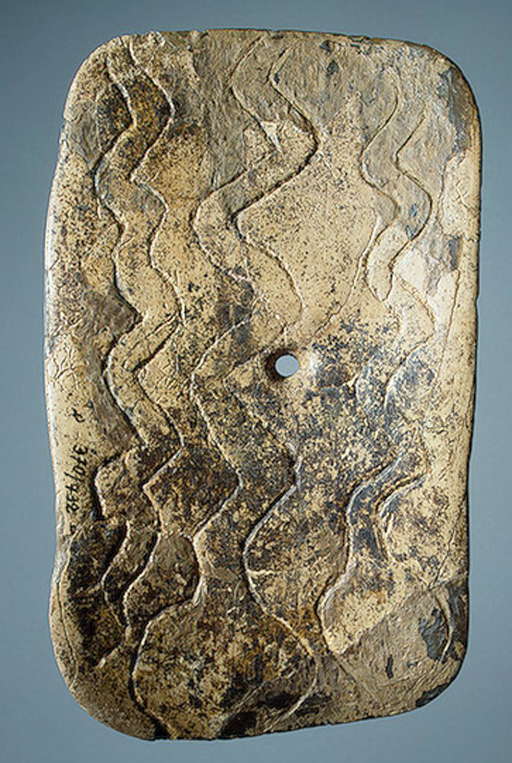
(Mal'ta site had a carving of 3 snakes with large cobra heads)
http://donsmaps.com/images24/maltahermitageplateback.jpg
Compare words: stick/stake/(strength/string) snake/rake/peck/peg/pick/pike/spike/spigot/
dig/pig/pin/punji/punt/poke/push/pull/plug/pluck/plow (bullocks pulling plows originated from pegs driven into soil and sharpened sticks used to pull up tubers, related to pig cloven/claw hoof), and paralleling pig was hog/hock/hoof/hook/crook/hoe/hole/hoick/hoist, related to peg insertion & removal.
Pharoah of Egypt: translated as "great house" or "Dominion of the tent stake" Awtad
"‘Awtad’ comes from the Arabic Root: 'WAW-TA-DAL' [note phonetic similarity to awl, idol & doll] which does indeed mean: Stakes, Pegs, Tent Poles or to drive in a stake (into ground or wall) as a literal understanding."
http://quransmessage.com/articles/pharaoh%20-%20lord%20of%20the%20stakes%20or%20pyramids%20FM3.htm
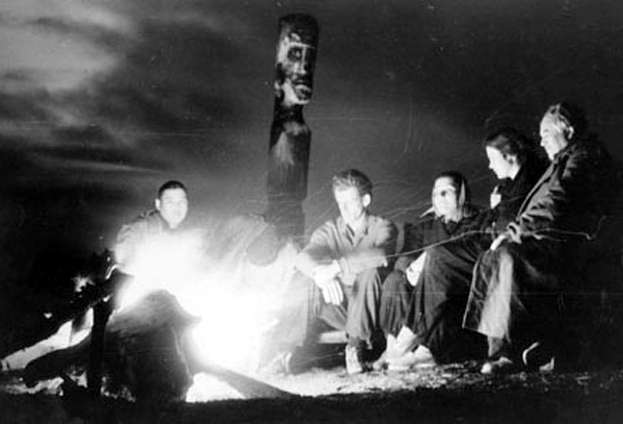
http://donsmaps.com/images11/malta0203.jpg notice photo of people next to "totem pole?" at Mal'ta site.
OBeLisK (OBa [Lith=stone] (am)?), SHiVa LingG(am), Totem pole (OD ooD(em)), Abrams' father Terah's ((O? al?)TeRaPH(im)), similar sounds (doll, idol to "-adal"), all derived from the ancestral humble tent peg (awtad, wAWTaDaL). Note too the similarity in sound in English of mother goddess, mothers' address and home post (-box) & host & guest. Compare Micmac 'aoutem' (kin) to both Eskimo dogsled (komatik) & Cree dog (atim) as that used to pull family's property.
English maypole from maeg bole (kin beam) paralleling Dutch/German mais baum. Bole/bone (rib)/boom/beam used in tents, huts, sleds & boats.
Between Arab awtad and Micmac autim we find English taut/tie/tether (bind) and knot/naut, and in Tamil katu (bind, as in katumaram-catamaran: bound logs) and nao/prahu (boat), and Malay tali (rope) and perau (boat).
Cupola (inverted 'cup-bowl' above roof, chimney cover) relates to BaMbuti mongolu and Sanskrit bungalo dome huts, derived via qupholu/kebhala or so (Persian qupha = bowlboat, Greek hoplon = round shield), where initially the 'cup-bowl' was a portable open round basket & later hidebound roundshield/bullboat.
In Japan, the red Shinto shrine gates are torii, in India, Buddhist temple gates are toran, and in the Jewish torah (see previous post), all represent the (communal) entry (door way/portal), just as the ritually carved symbolic house post/tent peg represented the front door entrance.
Anubis amulets (Amu(rru)/Anu?) of Egypt, probably via Syria/Slovenia:
http://www.flickriver.com/photos/25396001@N04/4248506587/
((D)Anubians: from Blue Danube of Slovenia (Swabia-Slavia) & Anu (Lake Tana & Tana delta) of Blue Nile of Nubia, J(Y)ordan, Sud(d)an, Aldan/Jana rivers of east Siberia, Danes of Denmark, Swedes of Sweden), Ma'dan, Mandan, Dhannu/Denu (OE & Sanskrit) river shore floodplains/terraces/traders.
Compare Anubis 3ka to Lion Man of Hohlenstein (possibly brought from Africa?) cave 32ka:
http://en.wikipedia.org/wiki/File:Anubis_standing.svg
http://www.showcaves.com/english/explain/Archaeology/Loewenfrau.html
Anubis: Associated with funeral/grave/mummification
(Note right hand holds was tent peg remover? Jackal form from older cave lion form (sphynx)?
http://en.wikipedia.org/wiki/Anubis
http://en.wikipedia.org/wiki/Lion_man_of_the_Hohlenstein_Stadel
In N America, the Plains Cree people called the travois-pulling dog atim, [note pole/pull/pulka 1/2sledge-1/2boat of Volga/Bulghar/Saami], the horse misatim "big dog", while the James Bay Cree called the lion misatim. So the Egyptian jackal form of Anubis may have transformed from the ancient cave lion in mythology.
http://moniyawlinguist.wordpress.com/2010/12/27/atimw-animal-that-pulls-your-stuff/
Note bowl/dome basket/hut/boat on travois. Early form of Eskimo sled komatic or Lapp pulka sledge-boat?
http://www.sila.nu/data?atom_id=dogsled_entry&l=en
Komatic: eskimo dog sled ("kam-u-tic")
Kom: (old Dutch) bowl cf kofa/qufa roundboat, koppe/cup
-atic? related to atim?
Northern Plains Cree people called the travois-pulling dog atim ("u-tim")
Choctaw of lower Mississippi: itti homma = boundary marker pole/tree painted red
Muskogee of Florida: yat kitischee = red people (ochre?)
Hebrew, 'staff of life/bread' = matteh lechem http://concordances.org/hebrew/4294.htm
Oldest wheel & axle found in Slovene Ljubjanska/Lyubyana swamp/lake 5.3ka (same neolithic period as Otzi the ice man mummy found 150 miles away), note similarity to travois, but employed "pegs/pins" to hold square axle onto frame allowing rotation of both wheel and axle:
http://www.slovenia.info/pictures%5CTB_attractions%5C1%5C2011%5Ckolo_19.7.2011_351550.jpg
Teraph, Teraphim: Abram's father Terah, before written language, carved figurines represented home dominion & land ownership, later household "idol" or even 'gods', originally from tent pegs.
http://www.biblepicturegallery.com/pictures/pagang/Statuettes%20of%20pagan%20deities%20excavated%20in%20Palestin%20pa.htm
http://www.bible-history.com/ibh/Egyptian+Gods/Teraphims/Teraphim+Figures
(note the was tent peg remover in hand, resemblance to a nail-pulling hammer-claw)
http://jandyongenesis.blogspot.com/2008/12/teraphim-of-genesis-31.html
http://www.google.com/imgres?imgurl=http://www.biblepicturegallery.com/thumbs/la/world/worship/pagan/p_gods/Palestinian%2520Teraphim%2520or%2520household%2520gods.jpg&imgrefurl=http://www.biblepicturegallery.com/pictures/pagang.htm&usg=__u8Adz0orFHKY_J_BhD8Yy4gTstc=&h=120&w=160&sz=4&hl=en&start=3&sig2=4Ph241K-jQfYszCLrj_mCA&zoom=1&tbnid=TvF9HpGyZZ3GwM:&tbnh=74&tbnw=98&ei=TxY8T5HZNo_AtgeCponoCg&prev=/search%3Fq%3Dteraphim%26um%3D1%26hl%3Den%26sa%3DN%26rls%3Dcom.microsoft:en-us%26tbm%3Disch&um=1&itbs=1
(Terah/Terai valley of Nepal terraced taro fields (1st agriculture in Papua) gradually became over run by weedy rice which became the staple, Nepali totems (lingam)
Shivalingam: (note phonetic similarity to 'shaft')
http://en.wikipedia.org/wiki/File:Nepalese_stone_linga_SF_Asian_Art_Museum.JPG
Oba (Yoruba, 'God' cf Russian 'Bog', God)
YHWH/YaHWeH/JeHoVaH (JaH ObaH?)/YesHuWaHa/YesHiVa/Shiva in the same dialectical pattern as we see in LeViTiCus/VaTiCan/VeDiC-MeDiCal/MuSiCal/MyThiCal/MaGiCal; when associated with VeNeTian/VoYaGer/ViKinGer/DaNuBian/PhoeNiCian/PuNiC/FinNiC/AiNu produces a (textile or hide-skinned) summer-tent-based nomadic herd hunting salmon/tuna fishing diaspora with female built sites, peg/post addresses, and a proto-law/medicine system. Veni, Vidi, Vicci!
The letter WaW in Hebrew is a picture of a tent stake, my name in Arab/Hebrew is Daud ~ Dawood which uses WaW after the Da-. In Chinese, Da-wei. In English, David.
Egyptian symbols from nomadic tent past: djed/tet symbol from beduin tent stake, was symbol from tent stake remover, ankh as knot of rope around stake (originally tendon?).
http://www.crystalinks.com/djed.html
Tents derived from hides draped over wigwam/mongolu dome huts where fat & meat was scraped off, then hide was inverted & dried, giving warmth to dwellers in areas outside the tropical rainforests. Tendons/vines held the skins over the wicker frame (first bull/bowl boats), later portable stakes were used/carried in more open tree-less plains country, where the woven wicker frame was replaced by straight poles, pulled behind with the leather cover.
Ancient Hebrew table was a round leather hide on the ground which people sat around.
Is there a link between Komi-Zyrian people of arctic Russia and bowl-boat-using Syrians of Tigris?
http://en.wikipedia.org/wiki/Komi-Zyrian_language
http://llmap.org/languages/kpv.html
related to Finnic & samoyed, name intriguing, related to Hurrian/Assyrian/Syrian?
Syr-yan (cf jor-dan) related to Yana/Jana/Aldana in Siberia etc.?
Did "Sumerian" derive from Su-mer-yana (south mer delta?) or Samoyen/Saamyan? Sumerians are said to have come earlier from the north, they were not Semites.
saami (Lapps of Finland), komi related? three of them are Uralic: Hungarian, Permic Zyrian Komi and Samoyedic Nenets
Beehive dome house of Caddo:
http://caddolegacy.com/grassthatchedhouses.aspx
Investigating whether "Maypole" is a cognate to totem pole/shivalingam/obelisk/tent peg:
apparently so, but the definition changed when Christianity became dominant in Europe. Probably derived from maeg-bole? (cf proto germanic mais baum) "kin tree/beam". The English word tree bole may have been from earlier woven wicker & hide bowl boats (parical/coracle/cup/qufa) being replaced by streamlined shallow dugout canoes cut from tree trunks (compare Dutch kom (bowl) to Dutch boom (tree, pole, beam)
boom (n.)
"long pole," 1540s, from Scottish boun, borrowed from Du. boom "tree, pole, beam," from a M.Du. word analogous to O.E. beam (see beam).
bowsprit
"spar extending from the bow of a ship," late 13c., probably from M.L.G. bochspret, from boch "bow of a ship" (see bow (n.2)) + spret "pole" (cf. O.E. spreot "pole," Du. spriet "spear;" see sprit).
Baton Rouge
city in Louisiana, U.S., a French translation of Choctaw itti homma "red pole," perhaps in reference to a painted boundary marker. [compare to Red Wing & Mississippi river Indians painting red on trees]
yard (2)
"measure of length," O.E. gerd (Mercian), gierd (W.Saxon) "rod, stick, measure of length," from W.Gmc. *gazdijo, from P.Gmc. *gazdaz "stick, rod" (cf. O.S. gerda, O.Fris. ierde, Du. gard "rod;" O.H.G. garta, Ger. gerte "switch, twig," O.N. gaddr "spike, sting, nail"), from PIE *gherdh- "staff, pole" (cf. L. hasta "shaft, staff").
windlass
device for raising weights by winding a rope round a cylinder, c.1400, alteration of wyndase (late 13c.), from Anglo-Fr. windas, and directly from a Scandinavian source such as O.N. vindass, from vinda "to wind" (see wind (v.)) + ass "pole, beam."
totem
animal or natural object considered as the emblem of a family or clan, 1760, from Algonquian (probably Ojibwa) odoodeman "his sibling kin, his group or family," hence, "his family mark;" also attested in French c.1600 in form aoutem among the Micmacs or other Indians of Nova Scotia. Totem pole is 1808, in reference to west coast Canadian Indians.
palanquin
"a covered litter," 1580s, from Port. palanquim (early 16c.), from Malay and Javanese palangki, ultimately from Skt. palyanka-s "couch, bed, litter," from pari "around" + ancati "it bends, curves," related to anka-s "a bend, hook, angle," and meaning, perhaps, "that which bends around the body." Some have noted the "curious coincidence" of Sp. palanca, from L. phalanga "pole to carry a burden."
stake (n)
"pointed stick or post," O.E. staca, from P.Gmc. *stakon (cf. O.N. stiaki, Du. staak, Ger. stake), from PIE root *steg- "pole, stick."
pig
probably from O.E. *picg, found in compounds, ultimate origin unknown. Originally "young pig" (the word for adults was swine). Another O.E. word for "pig" was fearh, related to furh "furrow," from PIE *perk- "dig, furrow" (cf. L. porc-us "pig," see pork).
spigot
late 14c., "plug used to stop the hole of a cask," probably from O.Fr. *espigot (cf. Gascony dialect espigot "core of a fruit, small ear of grain"), dim. of O.Prov. espiga "ear of grain," from L. spica "ear of grain" (see spike (n.2)).
taut
early 14c., tohte, possibly from tog- [compare to 'dog'], pp. stem of O.E. teon "to pull, drag," from P.Gmc. *tugn, from [IMO unlikely] PIE *deuk- "to lead" (see duke).
tone
mid-14c., from O.Fr. ton (13c.), from L. tonus "a sound, tone, accent," lit. "stretching" (in M.L., a term peculiar to music), from Gk. tonos "vocal pitch, raising of voice, accent, key in music," originally "a stretching, taut string," related to teinein "to stretch" (see tenet).
string (n.)
O.E. streng "line, cord, thread," from P.Gmc. *strangiz (cf. O.N. strengr, Dan. streng, M.Du. strenge, Du. streng, O.H.G. strang, Ger. Strang "rope, cord"), from *strang- "taut, stiff," from PIE root *strenk- "tight, narrow; pull tight, twist" (see strain). Gradually restricted by early M.E. to lines that are smaller than a rope. Old English meaning "ligaments, tendons" is preserved in hamstring, heartstrings.
Eskimo skin boat being transported over ice on sleds, childrens, adults:
http://tycoontalk.freelancer.com/photography-forum/148118-children-chasing-a-bowhead-whale.html
St. Laurence island eskimo angyapik umiak boat: http://indigenousboats.blogspot.com/2010_12_01_archive.html
Amur river trading Ainu with 'itaomachip' sewn plank boat and shallow dugout canoe:
http://indigenousboats.blogspot.com/search/label/Ainu
Kanak/Kanaka: Austronesian/Melanesian/Polynesian/Malaysian/Indonesian
http://en.wikipedia.org/wiki/Kanak_people
Kanak Totem poles in New Caledonia, as Great House door posts and roof poles:
http://en.wikipedia.org/wiki/File:Kanak_doorpost_Inv.MH31-50-2.jpg
http://en.wikipedia.org/wiki/File:Kanak_house-2.jpg
Compare the Kanak wood carvings to the Giant Easter Island Moai stone statues:
http://www.easterislandtourism.com/what-to-visit/easter-island-statues/
These Moai had been originally 1 meter tall ("Tiki" in Marquesas isles.), sitting in ahu altars, then enlarged in the same way that US west coast Indians enlarged their totem poles upon establishing sedentary villages and halting nomadism and regulating warfare.
The Maori of New Zealand carved wooden totem poles:
Symbol of 10th month: Pou-tu-te-rangi (pole raise sky, similar to Malay kutub angkat langit)
http://www.astronomynz.org.nz/index.php?option=content&task=view&id=39
Turkish Crescent/jingle/Chinese hat - a long post/walking stick with bells, originally from Central Asian shaman/santa clause
http://en.wikipedia.org/wiki/Turkish_crescent

Manasota canoe in Florida: http://indigenousboats.blogspot.com/search/label/Manasota
http://www.dailymail.co.uk/sciencetech/article-1362138/The-1-000-year-old-canoe-excavated-10-years-discovery-amateur-archaeologist.html
"The Manasota people provided the indigenous culture on the west cost of Florida.
They were a race of hunter-gatherers who lived there from around 550BC until around 900AD.
Weedon Island, where the canoe was discovered, was a key religious ground for the culture, and many people and objects were laid to rest there in sand burial mounds. http://www.dailymail.co.uk/sciencetech/article-1362138/The-1-000-year-old-canoe-excavated-10-years-discovery-amateur-archaeologist.html#ixzz1nhLiniiv
link of manasota to minnesota?
Australian marsh canoes from bark, hand paddled: http://indigenousboats.blogspot.com/2010/05/ten-canoes.html
Yurt & skin boats:
http://skinboatjournal.blogspot.com/2012/02/yurt-or-skin-on-frame-portable-dwelling.html
DDeden
http://www.metmuseum.org/toah/hd/malt/hd_malt.htm
http://en.wikipedia.org/wiki/Mal
http://en.wikipedia.org/wiki/File:Buretj_(venus_figurine).gif
.gif)
http://news.bbc.co.uk/2/hi/south_asia/4381893.stm
"There are many interpretations of the figurines, often based on little argument or fact. Like many prehistoric artifacts, the cultural meaning of these figures may never be known. Archaeologists speculate, however, that they may be emblems of security and success, fertility icons, pornographic imagery, or even direct representations of a mother goddess or various local goddesses. The female figures, as part of Upper Palaeolithic portable art, appear to have no practical use in the context of subsistence. They are mostly discovered in settlement contexts, both in open-air sites and caves; burial contexts are much more rare.
At Gagarino in Russia, seven Venus figurines were found in a hut of 5 m diameter; they have been interpreted as apotropaic amulets, connected with the occupants of the dwelling. At Mal'ta, near Lake Baikal, figurines are only known from the left sides of huts." (wikipedia)
[I think a typical couple's hut had 2, a female venus figurine at left of doorway, a male bird/phallus figurine at right of doorway, both acting as ritual symbolic tent stakes/house posts/totem poles. Possibly the male figurine was kept outside the entry at right, the female figurine just inside at left.]
"unlike those found in Europe, some of the Venus figurines from Mal’ta were sculpted with faces. Most of the figurines were tapered at the bottom, and it is believed that this was done so they could have been stuck into the ground or otherwise placed upright some other way."
This "Tibetan ancient tent peg" has some resemblance to the Mal'ta male & female figurines of ivory, has any similar items been found in Altai or Beringia?
http://alphaclassics.com/product_info.php?cPath=22_31&products_id=136
Except for scale it appears to resemble west coast totem poles:
http://upload.wikimedia.org/wikipedia/commons/thumb/3/32/Wrangell_Kiksadi_Totem_Pole.JPG/250px-Wrangell_Kiksadi_Totem_Pole.JPG

A Tlingit totem pole memorializing a woman (note closed wings, perhaps open wings represent male (cf etymology of ball & wing very similar pali/pari/pela, both fly, both related to 'pair').
http://www.historylink.org/index.cfm?DisplayPage=output.cfm&file_id=2076
" The word totem is derived from the Ojibwe word odoodem, "his kinship group"" (wikipedia) [also odoodeman]
totem
"animal or natural object considered as the emblem of a family or clan, 1760, from Algonquian (probably Ojibwa) odoodeman "his sibling kin, his group or family," hence, "his family mark;" also attested in French c.1600 in form aoutem among the Micmacs or other Indians of Nova Scotia. Totem pole is 1808, in reference to west coast Canadian Indians."
[Very interesting etymology, possibly linked to 'awtad', 'doodad', 'wood', dado (wood cutting blade), dem-duom-domus-home; in many nomad H&G cultures, the woman is responsible for hut/tipi/tent construction, while in sedentary agricultural cultures the man is the home builder while the woman is the caretaker/homemaker.]
The ancient Egyptian djed/tet column was raised annually, symbollically by the Pharoah who had the was staff.
Very likely the European Maypole was based on similar rituals long ago. Compare to the winter yule log and the standing tannenbaum/christmas tree. Perhaps the new (Swedish) midsummerstang/(Dutch/German) maisbaum/(Anglo Saxon) maegbole/(English) maypole was the dried-out tannenbaum of last winter (trimmed of needles and branches and with added symbols/feathers/ribbons), which then became the next winters yule log? This would provide a sensible recycling notion, but I don't know if it was actually done, perhaps authorized and administered by Druids? (Druids: forest-priest watershed managers, see earlier post on Ethiopian church forests). This would parallel the Egyptian priests involved with the Pharoah's djed column raising. The recent cultural practice of girls weaving ribbons around the Maypole might descend from ancestral nomadic (eg. Beduin-like) girls pounding the stakes of the goat-hair tent, while men lifted the poles.
http://en.wikipedia.org/wiki/Yule_log
." James George Frazer in his work on anthropology, The Golden Bough (p. 736) holds that "the ancient fire-festival of the winter solstice appears to survive" in the Yule log custom. Frazer records traditions from England, France, among the South Slavs, in Central Germany (Meiningen) and western Switzerland (the Bernese Jura).
My opinion: Note that tent stake was a kinship signal was traditional for archaic nomadic Hebrew/Arab tent dwellers, and that large totem poles are found only associated with people who lived in split plank houses, not tent/ tipi dwellers. The tent stake signalled "I/we dwell here" (temporary land ownership), and so did the totem pole. Perhaps the narrow figurines indicate active tent use (functional), while fat figurines indicate cave or timber shelters (lost function). Many ornately carved ivory/bone/wood figurines/Venuses/Dakota peace pipes/ritual spears may have originated as kinship signals/symbols, and only later (or never except as interpreted by extra-cultural observers?) became 'spirit/goddess' idol/symbols.
"And, while 18th-century accounts of European explorers along the
coast indicate that poles existed prior to 1800, they were *smaller*
and few in number. The freestanding poles seen by the first European
explorers were likely preceded by a long history of monumental
carving, particularly of interior house posts. The scholar Eddie Malin
has proposed that totem poles progressed from house posts, funerary
containers, and memorial markers into symbols of clan and family
wealth and prestige. He argues that the Haida people of the Queen
Charlotte Islands originated carving of the poles.." (wikipedia)
So were Mal'ta figurines equal to tent stakes & totem poles, or were they dolls, idols or sex objects or what?
Social markers (sign/signal/symbol) identifying spatial/temporal ownership & position within the community seems to be the original function.
Note that at Medit. island of Malta, more venuses existed much later.
Possibly: Mal'ta was old word for "waterside trade dwelling", equal to Ma'dan, Mandan (both used boats & hunted buffalo)
Among great plains Amer Indians, women assembled to craft the Tipi cover, and set it.
Among Beduin tent dwellers: young girls pound in the tent pegs, men lift the poles.
"In Genesis 3:15 God declares that the Woman will bring forth the Seed who will crush the Serpent's head" (just genesis blog)
tent, serpent, tent peg, serpent head ?
(Mal'ta site had a carving of 3 snakes with large cobra heads)
http://donsmaps.com/images24/maltahermitageplateback.jpg
Compare words: stick/stake/(strength/string) snake/rake/peck/peg/pick/pike/spike/spigot/
dig/pig/pin/punji/punt/poke/push/pull/plug/pluck/plow (bullocks pulling plows originated from pegs driven into soil and sharpened sticks used to pull up tubers, related to pig cloven/claw hoof), and paralleling pig was hog/hock/hoof/hook/crook/hoe/hole/hoick/hoist, related to peg insertion & removal.
Pharoah of Egypt: translated as "great house" or "Dominion of the tent stake" Awtad
"‘Awtad’ comes from the Arabic Root: 'WAW-TA-DAL' [note phonetic similarity to awl, idol & doll] which does indeed mean: Stakes, Pegs, Tent Poles or to drive in a stake (into ground or wall) as a literal understanding."
http://quransmessage.com/articles/pharaoh%20-%20lord%20of%20the%20stakes%20or%20pyramids%20FM3.htm
http://donsmaps.com/images11/malta0203.jpg notice photo of people next to "totem pole?" at Mal'ta site.
OBeLisK (OBa [Lith=stone] (am)?), SHiVa LingG(am), Totem pole (OD ooD(em)), Abrams' father Terah's ((O? al?)TeRaPH(im)), similar sounds (doll, idol to "-adal"), all derived from the ancestral humble tent peg (awtad, wAWTaDaL). Note too the similarity in sound in English of mother goddess, mothers' address and home post (-box) & host & guest. Compare Micmac 'aoutem' (kin) to both Eskimo dogsled (komatik) & Cree dog (atim) as that used to pull family's property.
English maypole from maeg bole (kin beam) paralleling Dutch/German mais baum. Bole/bone (rib)/boom/beam used in tents, huts, sleds & boats.
Between Arab awtad and Micmac autim we find English taut/tie/tether (bind) and knot/naut, and in Tamil katu (bind, as in katumaram-catamaran: bound logs) and nao/prahu (boat), and Malay tali (rope) and perau (boat).
Cupola (inverted 'cup-bowl' above roof, chimney cover) relates to BaMbuti mongolu and Sanskrit bungalo dome huts, derived via qupholu/kebhala or so (Persian qupha = bowlboat, Greek hoplon = round shield), where initially the 'cup-bowl' was a portable open round basket & later hidebound roundshield/bullboat.
In Japan, the red Shinto shrine gates are torii, in India, Buddhist temple gates are toran, and in the Jewish torah (see previous post), all represent the (communal) entry (door way/portal), just as the ritually carved symbolic house post/tent peg represented the front door entrance.
Anubis amulets (Amu(rru)/Anu?) of Egypt, probably via Syria/Slovenia:
http://www.flickriver.com/photos/25396001@N04/4248506587/
((D)Anubians: from Blue Danube of Slovenia (Swabia-Slavia) & Anu (Lake Tana & Tana delta) of Blue Nile of Nubia, J(Y)ordan, Sud(d)an, Aldan/Jana rivers of east Siberia, Danes of Denmark, Swedes of Sweden), Ma'dan, Mandan, Dhannu/Denu (OE & Sanskrit) river shore floodplains/terraces/traders.
Compare Anubis 3ka to Lion Man of Hohlenstein (possibly brought from Africa?) cave 32ka:
http://en.wikipedia.org/wiki/File:Anubis_standing.svg

http://www.showcaves.com/english/explain/Archaeology/Loewenfrau.html
Anubis: Associated with funeral/grave/mummification
(Note right hand holds was tent peg remover? Jackal form from older cave lion form (sphynx)?
http://en.wikipedia.org/wiki/Anubis
http://en.wikipedia.org/wiki/Lion_man_of_the_Hohlenstein_Stadel
In N America, the Plains Cree people called the travois-pulling dog atim, [note pole/pull/pulka 1/2sledge-1/2boat of Volga/Bulghar/Saami], the horse misatim "big dog", while the James Bay Cree called the lion misatim. So the Egyptian jackal form of Anubis may have transformed from the ancient cave lion in mythology.
http://moniyawlinguist.wordpress.com/2010/12/27/atimw-animal-that-pulls-your-stuff/
Note bowl/dome basket/hut/boat on travois. Early form of Eskimo sled komatic or Lapp pulka sledge-boat?
http://www.sila.nu/data?atom_id=dogsled_entry&l=en
Komatic: eskimo dog sled ("kam-u-tic")
Kom: (old Dutch) bowl cf kofa/qufa roundboat, koppe/cup
-atic? related to atim?
Northern Plains Cree people called the travois-pulling dog atim ("u-tim")
Choctaw of lower Mississippi: itti homma = boundary marker pole/tree painted red
Muskogee of Florida: yat kitischee = red people (ochre?)
Hebrew, 'staff of life/bread' = matteh lechem http://concordances.org/hebrew/4294.htm
Oldest wheel & axle found in Slovene Ljubjanska/Lyubyana swamp/lake 5.3ka (same neolithic period as Otzi the ice man mummy found 150 miles away), note similarity to travois, but employed "pegs/pins" to hold square axle onto frame allowing rotation of both wheel and axle:
http://www.slovenia.info/pictures%5CTB_attractions%5C1%5C2011%5Ckolo_19.7.2011_351550.jpg

Teraph, Teraphim: Abram's father Terah, before written language, carved figurines represented home dominion & land ownership, later household "idol" or even 'gods', originally from tent pegs.
http://www.biblepicturegallery.com/pictures/pagang/Statuettes%20of%20pagan%20deities%20excavated%20in%20Palestin%20pa.htm
http://www.bible-history.com/ibh/Egyptian+Gods/Teraphims/Teraphim+Figures
(note the was tent peg remover in hand, resemblance to a nail-pulling hammer-claw)
http://jandyongenesis.blogspot.com/2008/12/teraphim-of-genesis-31.html
http://www.google.com/imgres?imgurl=http://www.biblepicturegallery.com/thumbs/la/world/worship/pagan/p_gods/Palestinian%2520Teraphim%2520or%2520household%2520gods.jpg&imgrefurl=http://www.biblepicturegallery.com/pictures/pagang.htm&usg=__u8Adz0orFHKY_J_BhD8Yy4gTstc=&h=120&w=160&sz=4&hl=en&start=3&sig2=4Ph241K-jQfYszCLrj_mCA&zoom=1&tbnid=TvF9HpGyZZ3GwM:&tbnh=74&tbnw=98&ei=TxY8T5HZNo_AtgeCponoCg&prev=/search%3Fq%3Dteraphim%26um%3D1%26hl%3Den%26sa%3DN%26rls%3Dcom.microsoft:en-us%26tbm%3Disch&um=1&itbs=1

(Terah/Terai valley of Nepal terraced taro fields (1st agriculture in Papua) gradually became over run by weedy rice which became the staple, Nepali totems (lingam)
Shivalingam: (note phonetic similarity to 'shaft')
http://en.wikipedia.org/wiki/File:Nepalese_stone_linga_SF_Asian_Art_Museum.JPG

Oba (Yoruba, 'God' cf Russian 'Bog', God)
YHWH/YaHWeH/JeHoVaH (JaH ObaH?)/YesHuWaHa/YesHiVa/Shiva in the same dialectical pattern as we see in LeViTiCus/VaTiCan/VeDiC-MeDiCal/MuSiCal/MyThiCal/MaGiCal; when associated with VeNeTian/VoYaGer/ViKinGer/DaNuBian/PhoeNiCian/PuNiC/FinNiC/AiNu produces a (textile or hide-skinned) summer-tent-based nomadic herd hunting salmon/tuna fishing diaspora with female built sites, peg/post addresses, and a proto-law/medicine system. Veni, Vidi, Vicci!
The letter WaW in Hebrew is a picture of a tent stake, my name in Arab/Hebrew is Daud ~ Dawood which uses WaW after the Da-. In Chinese, Da-wei. In English, David.
Egyptian symbols from nomadic tent past: djed/tet symbol from beduin tent stake, was symbol from tent stake remover, ankh as knot of rope around stake (originally tendon?).
http://www.crystalinks.com/djed.html
Tents derived from hides draped over wigwam/mongolu dome huts where fat & meat was scraped off, then hide was inverted & dried, giving warmth to dwellers in areas outside the tropical rainforests. Tendons/vines held the skins over the wicker frame (first bull/bowl boats), later portable stakes were used/carried in more open tree-less plains country, where the woven wicker frame was replaced by straight poles, pulled behind with the leather cover.
Ancient Hebrew table was a round leather hide on the ground which people sat around.
Is there a link between Komi-Zyrian people of arctic Russia and bowl-boat-using Syrians of Tigris?
http://en.wikipedia.org/wiki/Komi-Zyrian_language
http://llmap.org/languages/kpv.html
related to Finnic & samoyed, name intriguing, related to Hurrian/Assyrian/Syrian?
Syr-yan (cf jor-dan) related to Yana/Jana/Aldana in Siberia etc.?
Did "Sumerian" derive from Su-mer-yana (south mer delta?) or Samoyen/Saamyan? Sumerians are said to have come earlier from the north, they were not Semites.
saami (Lapps of Finland), komi related? three of them are Uralic: Hungarian, Permic Zyrian Komi and Samoyedic Nenets
Beehive dome house of Caddo:
http://caddolegacy.com/grassthatchedhouses.aspx
Investigating whether "Maypole" is a cognate to totem pole/shivalingam/obelisk/tent peg:
apparently so, but the definition changed when Christianity became dominant in Europe. Probably derived from maeg-bole? (cf proto germanic mais baum) "kin tree/beam". The English word tree bole may have been from earlier woven wicker & hide bowl boats (parical/coracle/cup/qufa) being replaced by streamlined shallow dugout canoes cut from tree trunks (compare Dutch kom (bowl) to Dutch boom (tree, pole, beam)
boom (n.)
"long pole," 1540s, from Scottish boun, borrowed from Du. boom "tree, pole, beam," from a M.Du. word analogous to O.E. beam (see beam).
bowsprit
"spar extending from the bow of a ship," late 13c., probably from M.L.G. bochspret, from boch "bow of a ship" (see bow (n.2)) + spret "pole" (cf. O.E. spreot "pole," Du. spriet "spear;" see sprit).
Baton Rouge
city in Louisiana, U.S., a French translation of Choctaw itti homma "red pole," perhaps in reference to a painted boundary marker. [compare to Red Wing & Mississippi river Indians painting red on trees]
yard (2)
"measure of length," O.E. gerd (Mercian), gierd (W.Saxon) "rod, stick, measure of length," from W.Gmc. *gazdijo, from P.Gmc. *gazdaz "stick, rod" (cf. O.S. gerda, O.Fris. ierde, Du. gard "rod;" O.H.G. garta, Ger. gerte "switch, twig," O.N. gaddr "spike, sting, nail"), from PIE *gherdh- "staff, pole" (cf. L. hasta "shaft, staff").
windlass
device for raising weights by winding a rope round a cylinder, c.1400, alteration of wyndase (late 13c.), from Anglo-Fr. windas, and directly from a Scandinavian source such as O.N. vindass, from vinda "to wind" (see wind (v.)) + ass "pole, beam."
totem
animal or natural object considered as the emblem of a family or clan, 1760, from Algonquian (probably Ojibwa) odoodeman "his sibling kin, his group or family," hence, "his family mark;" also attested in French c.1600 in form aoutem among the Micmacs or other Indians of Nova Scotia. Totem pole is 1808, in reference to west coast Canadian Indians.
palanquin
"a covered litter," 1580s, from Port. palanquim (early 16c.), from Malay and Javanese palangki, ultimately from Skt. palyanka-s "couch, bed, litter," from pari "around" + ancati "it bends, curves," related to anka-s "a bend, hook, angle," and meaning, perhaps, "that which bends around the body." Some have noted the "curious coincidence" of Sp. palanca, from L. phalanga "pole to carry a burden."
stake (n)
"pointed stick or post," O.E. staca, from P.Gmc. *stakon (cf. O.N. stiaki, Du. staak, Ger. stake), from PIE root *steg- "pole, stick."
pig
probably from O.E. *picg, found in compounds, ultimate origin unknown. Originally "young pig" (the word for adults was swine). Another O.E. word for "pig" was fearh, related to furh "furrow," from PIE *perk- "dig, furrow" (cf. L. porc-us "pig," see pork).
spigot
late 14c., "plug used to stop the hole of a cask," probably from O.Fr. *espigot (cf. Gascony dialect espigot "core of a fruit, small ear of grain"), dim. of O.Prov. espiga "ear of grain," from L. spica "ear of grain" (see spike (n.2)).
taut
early 14c., tohte, possibly from tog- [compare to 'dog'], pp. stem of O.E. teon "to pull, drag," from P.Gmc. *tugn, from [IMO unlikely] PIE *deuk- "to lead" (see duke).
tone
mid-14c., from O.Fr. ton (13c.), from L. tonus "a sound, tone, accent," lit. "stretching" (in M.L., a term peculiar to music), from Gk. tonos "vocal pitch, raising of voice, accent, key in music," originally "a stretching, taut string," related to teinein "to stretch" (see tenet).
string (n.)
O.E. streng "line, cord, thread," from P.Gmc. *strangiz (cf. O.N. strengr, Dan. streng, M.Du. strenge, Du. streng, O.H.G. strang, Ger. Strang "rope, cord"), from *strang- "taut, stiff," from PIE root *strenk- "tight, narrow; pull tight, twist" (see strain). Gradually restricted by early M.E. to lines that are smaller than a rope. Old English meaning "ligaments, tendons" is preserved in hamstring, heartstrings.
Eskimo skin boat being transported over ice on sleds, childrens, adults:
http://tycoontalk.freelancer.com/photography-forum/148118-children-chasing-a-bowhead-whale.html
St. Laurence island eskimo angyapik umiak boat: http://indigenousboats.blogspot.com/2010_12_01_archive.html
Amur river trading Ainu with 'itaomachip' sewn plank boat and shallow dugout canoe:
http://indigenousboats.blogspot.com/search/label/Ainu
Kanak/Kanaka: Austronesian/Melanesian/Polynesian/Malaysian/Indonesian
http://en.wikipedia.org/wiki/Kanak_people
Kanak Totem poles in New Caledonia, as Great House door posts and roof poles:
http://en.wikipedia.org/wiki/File:Kanak_doorpost_Inv.MH31-50-2.jpg

http://en.wikipedia.org/wiki/File:Kanak_house-2.jpg

Compare the Kanak wood carvings to the Giant Easter Island Moai stone statues:
http://www.easterislandtourism.com/what-to-visit/easter-island-statues/
These Moai had been originally 1 meter tall ("Tiki" in Marquesas isles.), sitting in ahu altars, then enlarged in the same way that US west coast Indians enlarged their totem poles upon establishing sedentary villages and halting nomadism and regulating warfare.
The Maori of New Zealand carved wooden totem poles:
Symbol of 10th month: Pou-tu-te-rangi (pole raise sky, similar to Malay kutub angkat langit)
http://www.astronomynz.org.nz/index.php?option=content&task=view&id=39
Turkish Crescent/jingle/Chinese hat - a long post/walking stick with bells, originally from Central Asian shaman/santa clause
http://en.wikipedia.org/wiki/Turkish_crescent
Manasota canoe in Florida: http://indigenousboats.blogspot.com/search/label/Manasota
http://www.dailymail.co.uk/sciencetech/article-1362138/The-1-000-year-old-canoe-excavated-10-years-discovery-amateur-archaeologist.html
"The Manasota people provided the indigenous culture on the west cost of Florida.
They were a race of hunter-gatherers who lived there from around 550BC until around 900AD.
Weedon Island, where the canoe was discovered, was a key religious ground for the culture, and many people and objects were laid to rest there in sand burial mounds. http://www.dailymail.co.uk/sciencetech/article-1362138/The-1-000-year-old-canoe-excavated-10-years-discovery-amateur-archaeologist.html#ixzz1nhLiniiv
link of manasota to minnesota?
Australian marsh canoes from bark, hand paddled: http://indigenousboats.blogspot.com/2010/05/ten-canoes.html
Yurt & skin boats:
http://skinboatjournal.blogspot.com/2012/02/yurt-or-skin-on-frame-portable-dwelling.html
DDeden
Wednesday, February 8, 2012
amazing drops, plops & props
Drop Art
Corrie White, the artist behind Liquid Drop Art, has a talent for capturing the surreal impact of a water droplet. White’s photographs allow viewers to see something that would normally be “invisible to the human eye.” Most of the water droplets were created with a medicine dropper and food dyes. According to the White’s bio, the “forms of water and milk shapes are pure and unedited.”
link
Corrie White, the artist behind Liquid Drop Art, has a talent for capturing the surreal impact of a water droplet. White’s photographs allow viewers to see something that would normally be “invisible to the human eye.” Most of the water droplets were created with a medicine dropper and food dyes. According to the White’s bio, the “forms of water and milk shapes are pure and unedited.”
link
Friday, January 20, 2012
Ancient Jews in Japan?
http://www5.ocn.ne.jp/~magi9/isracame.htm
http://biblicalanthropology.blogspot.com/2012/01/abrahams-anu-ancestors.html
"Abraham was the son of Terah and the name Terah (Tera) was found among the rulers of the Anu people who inhabited the Upper Nile and migrated widely between 15,000 and 10,000 years ago.... The Anu (Annu or Ainu) were aboriginal peoples of the Upper Nile. They were the first rulers of the Lower Nile. One of their sanctuaries was called Annu, the original name for Heliopolis, to which the great pyramids were aligned. The Anu were seafarers and had a written language which they introduced to the lands where they traveled and settled. The first peoples of Japan were Anu. The Anu alphabet became the basis for the Hebrew and Japanese alphabets." from Biblical Anthropology blog
I find this credible, based on the commonality of anu & dan for river valleys of the ancient trade network. I view it highly probable that the Terai valley of Nepal was connected to both Terah (father of Abraham of the Chaldees) and terraced taro (and later the domesticated weed, rice) floodplains; Terai being linked to Papuan languages & genetics (via Kusunda), and exchange point of sugar cane & taro to Papua.
Anu: Anu existed in Sumerian cosmogony as a sky dome that covered the flat earth (cf Bambuti 'endu' = interior of dome hut)
anu/-dan-/vene/phoeni/dene/tene/finni/den/Lena/Yana river & coastal peoples trading, tuna or salmon fishing, salt mining/brining (Ma'dan - Persian mining town), with dialects of dhanu/dnieper/don/(R or T replaced D: Rhine/Rhone/Thames-temez)
interesting parallels between Hebrew (Yahudi) and Japanese (Nihoni) Shinto culture & script language, and genetic linkage (including Tibet as well).
Perhaps more accurate, Anu that became Phoenician/Venician/Vennicones/Veneti/Fennic/Venne/Vinland voyagers/vikings (from way-go-n/vaya-/vika-/vector-/via-duct)* were a maritime/river trading people that used phonetic script in syllabary form (like Japanese) which was later adapted as alphabetical by western languages & Hebrew. First using wicker & hide punted roundboats (from inverted dome basket huts), then streamlined paddled rafts/canoes/umiaks & dogs, then ribbed-decked-keeled sailing vessels (with livestock) & then wagons/camel caravans, these marine technologies allowed fast dispersals around the old world and then the new world.
http://www.linguistics.ucsb.edu/faculty/gordon/gradation.pdf
Finnish roof: katto (resembles kota, a Lapp conic tent cf tipi)
http://en.wikipedia.org/wiki/Finnic_languages
http://www.paabo.ca/uirala/Farfarers.html
Note: Dan/Jordan/Sudan, anu/ainu, Sweden/Denmark, Danube/Don/Dniester, Fennu/Finn, Khotan/Turpan Turpan oasis (China) means 'the lowest place' in Uygur Language and 'the fertile land' in Turki [a schoolmate of mine from Finland was named Pannu, perhaps related to water voyager?)
Note: Ra/Rhone/Rhine, Dan/Den/Don, Finn/Fenn/Uenn refer to River/Coast valley way, and their harbor trading posts: Samar/Somal/Sumer/Suma, House: Dama/Duomo/Domus.
Dan: honorific "master of" [see Bucky Fuller's navigator-priests], c.1300, from O.Fr. dan/don from dominus; ancient northern Israel tribe Dan; Danaid: Greek myth daughter of Danaus, Argos king, condemned to draw water perpetually in bottomless buckets (origin of watermill?).
Danube: river of Europe (Ger. Donau, Hungarian Duna, Rus. Dunaj), from L. Danuvius, from Celtic *danu(w)-yo-, from PIE *danu- "river" (cf. Don, Dnieper, Dniester).
Dane: "native of Denmark," Daner, (replacing O.E. Dene (pl.) Perhaps ultimately from a source related to O.H.G. tanar "sand bank," [Sanskrit dhanu "sand shore"] or from P.Gmc. *den- "low ground", OE dhennu "river valley", cf anu
Dhanab (serpentine "tail"), Sudan, Red Sea shallows: http://itouchmap.com/?c=su&UF=-4747&UN=-6844&DG=RSV
dene "bare, sandy tract by the sea," late 13c., of uncertain origin, perhaps connected to dune, but the sense difference is difficult. "small valley," from O.E. denu "valley" (see den), PIE den/dan "down, low ground". Dendro (tree) probably related as serpentine form to both tail and river valley.
Before wheeled carts, traders would invert their skinboats to roof their stone/log foundationed market wares ashore along calm shallow waters.
"Note in the following map, the names Vennicones in the British north and Vennicni (obviously an abbreviation of the same Vennicones) in the north of Ireland. I see them as settlements of traders, handling wares from "Picts" on the one hand and visiting VENNE trader ships from "Scythia" on the other"
Rhobogdi: "(We bear in mind that Estonian has a very strong sea-trader tradition and would qualify as being located on the coast of "Scythia"!) The Rho at the front, would be the RA found in Rhone, Rhine, etc. which means 'way, path' and is often seen in the names of the earlier trade waterways (Ptolemy named the Volga Rha) but more often ot appeared as a suffix: Lige-RA, Wese-RA, Od-RA, etc.
There probably were two types of historic Picts. One type were sea-harvesters and used skin boats made from walrus hides, lived nomadically on outer shores and islands, and lived in semi buried circular rock shelters (like igloos, but made of rock and covered with sod)."
From the Bambuti leaf-shingled dome huts to sod-shingled domes to snow-block domes...
* annual: L. annalis form of annus "year," from PIE *at-no-, from base *at- "to go," on notion of "period gone through" (cf. Skt. atati "goes, wanders," as opposed to vasati static/stable/sedentary "stays")
stay: Gk. hestia "hearth," from PIE base *wes- "to dwell, stay" (cf. Skt. vasati "stays, dwells," Goth. wisan, O.E., O.H.G. wesan "to be").
PIE *stai- "stone," also "to thicken, stiffen" (cf. Skt. styayate "curdles, becomes hard;" Avestan stay- "heap;" Gk. stear "fat, tallow," stia, stion "pebble;" O.C.S. stena "wall").
http://biblicalanthropology.blogspot.com/2012/01/abrahams-anu-ancestors.html
"Abraham was the son of Terah and the name Terah (Tera) was found among the rulers of the Anu people who inhabited the Upper Nile and migrated widely between 15,000 and 10,000 years ago.... The Anu (Annu or Ainu) were aboriginal peoples of the Upper Nile. They were the first rulers of the Lower Nile. One of their sanctuaries was called Annu, the original name for Heliopolis, to which the great pyramids were aligned. The Anu were seafarers and had a written language which they introduced to the lands where they traveled and settled. The first peoples of Japan were Anu. The Anu alphabet became the basis for the Hebrew and Japanese alphabets." from Biblical Anthropology blog
I find this credible, based on the commonality of anu & dan for river valleys of the ancient trade network. I view it highly probable that the Terai valley of Nepal was connected to both Terah (father of Abraham of the Chaldees) and terraced taro (and later the domesticated weed, rice) floodplains; Terai being linked to Papuan languages & genetics (via Kusunda), and exchange point of sugar cane & taro to Papua.
Anu: Anu existed in Sumerian cosmogony as a sky dome that covered the flat earth (cf Bambuti 'endu' = interior of dome hut)
anu/-dan-/vene/phoeni/dene/tene/finni/den/Lena/Yana river & coastal peoples trading, tuna or salmon fishing, salt mining/brining (Ma'dan - Persian mining town), with dialects of dhanu/dnieper/don/(R or T replaced D: Rhine/Rhone/Thames-temez)
interesting parallels between Hebrew (Yahudi) and Japanese (Nihoni) Shinto culture & script language, and genetic linkage (including Tibet as well).
Perhaps more accurate, Anu that became Phoenician/Venician/Vennicones/Veneti/Fennic/Venne/Vinland voyagers/vikings (from way-go-n/vaya-/vika-/vector-/via-duct)* were a maritime/river trading people that used phonetic script in syllabary form (like Japanese) which was later adapted as alphabetical by western languages & Hebrew. First using wicker & hide punted roundboats (from inverted dome basket huts), then streamlined paddled rafts/canoes/umiaks & dogs, then ribbed-decked-keeled sailing vessels (with livestock) & then wagons/camel caravans, these marine technologies allowed fast dispersals around the old world and then the new world.
http://www.linguistics.ucsb.edu/faculty/gordon/gradation.pdf
Finnish roof: katto (resembles kota, a Lapp conic tent cf tipi)
http://en.wikipedia.org/wiki/Finnic_languages
http://www.paabo.ca/uirala/Farfarers.html
Note: Dan/Jordan/Sudan, anu/ainu, Sweden/Denmark, Danube/Don/Dniester, Fennu/Finn, Khotan/Turpan Turpan oasis (China) means 'the lowest place' in Uygur Language and 'the fertile land' in Turki [a schoolmate of mine from Finland was named Pannu, perhaps related to water voyager?)
Note: Ra/Rhone/Rhine, Dan/Den/Don, Finn/Fenn/Uenn refer to River/Coast valley way, and their harbor trading posts: Samar/Somal/Sumer/Suma, House: Dama/Duomo/Domus.
Dan: honorific "master of" [see Bucky Fuller's navigator-priests], c.1300, from O.Fr. dan/don from dominus; ancient northern Israel tribe Dan; Danaid: Greek myth daughter of Danaus, Argos king, condemned to draw water perpetually in bottomless buckets (origin of watermill?).
Danube: river of Europe (Ger. Donau, Hungarian Duna, Rus. Dunaj), from L. Danuvius, from Celtic *danu(w)-yo-, from PIE *danu- "river" (cf. Don, Dnieper, Dniester).
Dane: "native of Denmark," Daner, (replacing O.E. Dene (pl.) Perhaps ultimately from a source related to O.H.G. tanar "sand bank," [Sanskrit dhanu "sand shore"] or from P.Gmc. *den- "low ground", OE dhennu "river valley", cf anu
Dhanab (serpentine "tail"), Sudan, Red Sea shallows: http://itouchmap.com/?c=su&UF=-4747&UN=-6844&DG=RSV
dene "bare, sandy tract by the sea," late 13c., of uncertain origin, perhaps connected to dune, but the sense difference is difficult. "small valley," from O.E. denu "valley" (see den), PIE den/dan "down, low ground". Dendro (tree) probably related as serpentine form to both tail and river valley.
Before wheeled carts, traders would invert their skinboats to roof their stone/log foundationed market wares ashore along calm shallow waters.
"Note in the following map, the names Vennicones in the British north and Vennicni (obviously an abbreviation of the same Vennicones) in the north of Ireland. I see them as settlements of traders, handling wares from "Picts" on the one hand and visiting VENNE trader ships from "Scythia" on the other"
Rhobogdi: "(We bear in mind that Estonian has a very strong sea-trader tradition and would qualify as being located on the coast of "Scythia"!) The Rho at the front, would be the RA found in Rhone, Rhine, etc. which means 'way, path' and is often seen in the names of the earlier trade waterways (Ptolemy named the Volga Rha) but more often ot appeared as a suffix: Lige-RA, Wese-RA, Od-RA, etc.
There probably were two types of historic Picts. One type were sea-harvesters and used skin boats made from walrus hides, lived nomadically on outer shores and islands, and lived in semi buried circular rock shelters (like igloos, but made of rock and covered with sod)."
From the Bambuti leaf-shingled dome huts to sod-shingled domes to snow-block domes...
* annual: L. annalis form of annus "year," from PIE *at-no-, from base *at- "to go," on notion of "period gone through" (cf. Skt. atati "goes, wanders," as opposed to vasati static/stable/sedentary "stays")
stay: Gk. hestia "hearth," from PIE base *wes- "to dwell, stay" (cf. Skt. vasati "stays, dwells," Goth. wisan, O.E., O.H.G. wesan "to be").
PIE *stai- "stone," also "to thicken, stiffen" (cf. Skt. styayate "curdles, becomes hard;" Avestan stay- "heap;" Gk. stear "fat, tallow," stia, stion "pebble;" O.C.S. stena "wall").
Tuesday, January 10, 2012
Bowl boats & Bull boats
Vietnamese bamboo bowl boat
http://www.extrasleepy.com/photo/pages/photo-bowl-boat.html
Mandan willow-frame buffalo skin boat
http://www.minnehahacounty.org/museums/exhibits/l_c_gifts_mandan/teachers/artifact_pages/32_buffalo_bull_boat.htm
http://en.wikipedia.org/wiki/File:Catlin_mandan_village.jpg
Tibetan willow-frame yak skin boat (kudru) w/ yak butter grease (ghee) waterproofing
http://upload.wikimedia.org/wikipedia/commons/thumb/0/0e/Kudru.jpg/220px-Kudru.jpg
http://www.theoi.com/Gallery/T17.5.html
-
Large baskets from Yosemite valley Paiute/Miwok (Pen-uti-an) woman:
http://content.cdlib.org/ark:/13030/kt9199q6g6/?layout=metadata&brand=calisphere
http://content.cdlib.org/ark:/13030/kt809nd0gr/ (baskets)
http://content.cdlib.org/ark:/13030/kt15801729/ (Yosemite valley flooded)
http://www.aboutnevadacounty.com/history/maidu/
Words in Penutian, Maidun (water: momim ~ omi -danubian/Yoruba; miwok - kiku/liwa)
http://www.native-languages.org/fampen_words.htm
Penutian from pen (2) and uti (2), not an original tribal name.
http://www.jstor.org/pss/1265869
British Celtic mai-dun, meaning a "great hill." (maidun hill fort, British south coast)
Situla: 7th c BC bronze age bucket/pail (Etruscan, Slovene, Egypt (mammaeform bottom cf Polynesian kavakava coconut bowl), probably derived from pitch-lined basket bowl cf shield)
http://en.wikipedia.org/wiki/Situla_(vessel)
Slovene: adjacent to Venice, 'origin' of Venetian/Veneti/Finnic/Uenn/Phoenician/Punic/Punt/Pun (red sea Ochre trade), linked via Danube to Nile Anu/danubia, always bordering empires (Rome, Austria, Ottoman), had Uralic languages.
http://en.wikipedia.org/wiki/Slovenia
http://en.wikipedia.org/wiki/Slovenia
mapiloa(N)=point/show with finger
Malays point with thumb, not finger (rude)
Maples have hand-like leaves (pentadactyle)
thumbs/fools/uei mapipiltin(N)who shone at small tlacuicuiliztli(N)=sculpture,=taquiyya(Arab)=
sweeping [no tree bark in desert, so cairns/stone markings/sweeping (also Peru)]
similar to shaving/sco(lpt)ring/scrap(pt)ing/stripping bark(beaver/bear/moose/mammoth), possibly related to first scripting/writing/runes/cuneiforms not stamped, cf alif/alpha/elf/eleve/vette|i(spade)
(tre/a/uck-travel/ois-trade-drag-troika) trunk/kudru(tibet coracle)/thung chai(Viet coracle)/thumb; first tropical coracle/hut-tent from plants, first ex-tropical coracle/hut-tent) may have been mammoth/elephant pelt, only much later defurred waxed/yak-buttered sewn leathers.
-
Giant art gallery yacht, Seafair, stops in Miami: http://www.expoships.com/
http://www.extrasleepy.com/photo/pages/photo-bowl-boat.html
Mandan willow-frame buffalo skin boat
http://www.minnehahacounty.org/museums/exhibits/l_c_gifts_mandan/teachers/artifact_pages/32_buffalo_bull_boat.htm
http://en.wikipedia.org/wiki/File:Catlin_mandan_village.jpg

Tibetan willow-frame yak skin boat (kudru) w/ yak butter grease (ghee) waterproofing
http://upload.wikimedia.org/wikipedia/commons/thumb/0/0e/Kudru.jpg/220px-Kudru.jpg
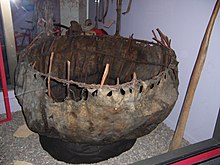
http://www.theoi.com/Gallery/T17.5.html
-
Large baskets from Yosemite valley Paiute/Miwok (Pen-uti-an) woman:
http://content.cdlib.org/ark:/13030/kt9199q6g6/?layout=metadata&brand=calisphere
http://content.cdlib.org/ark:/13030/kt809nd0gr/ (baskets)
http://content.cdlib.org/ark:/13030/kt15801729/ (Yosemite valley flooded)
http://www.aboutnevadacounty.com/history/maidu/
Words in Penutian, Maidun (water: momim ~ omi -danubian/Yoruba; miwok - kiku/liwa)
http://www.native-languages.org/fampen_words.htm
Penutian from pen (2) and uti (2), not an original tribal name.
http://www.jstor.org/pss/1265869
British Celtic mai-dun, meaning a "great hill." (maidun hill fort, British south coast)
Situla: 7th c BC bronze age bucket/pail (Etruscan, Slovene, Egypt (mammaeform bottom cf Polynesian kavakava coconut bowl), probably derived from pitch-lined basket bowl cf shield)
http://en.wikipedia.org/wiki/Situla_(vessel)
Slovene: adjacent to Venice, 'origin' of Venetian/Veneti/Finnic/Uenn/Phoenician/Punic/Punt/Pun (red sea Ochre trade), linked via Danube to Nile Anu/danubia, always bordering empires (Rome, Austria, Ottoman), had Uralic languages.
http://en.wikipedia.org/wiki/Slovenia
http://en.wikipedia.org/wiki/Slovenia
mapiloa(N)=point/show with finger
Malays point with thumb, not finger (rude)
Maples have hand-like leaves (pentadactyle)
thumbs/fools/uei mapipiltin(N)who shone at small tlacuicuiliztli(N)=sculpture,=taquiyya(Arab)=
sweeping [no tree bark in desert, so cairns/stone markings/sweeping (also Peru)]
similar to shaving/sco(lpt)ring/scrap(pt)ing/stripping bark(beaver/bear/moose/mammoth), possibly related to first scripting/writing/runes/cuneiforms not stamped, cf alif/alpha/elf/eleve/vette|i(spade)
(tre/a/uck-travel/ois-trade-drag-troika) trunk/kudru(tibet coracle)/thung chai(Viet coracle)/thumb; first tropical coracle/hut-tent from plants, first ex-tropical coracle/hut-tent) may have been mammoth/elephant pelt, only much later defurred waxed/yak-buttered sewn leathers.
-
Giant art gallery yacht, Seafair, stops in Miami: http://www.expoships.com/
Subscribe to:
Posts (Atom)