Diabetes II: only in humans and dolphins? Large brain needs O2 & energy balance:
-
Model for human health
“While some people may eat a high protein diet to help control diabetes, dolphins appear to have developed a diabetes-like state to support a high protein diet,” veterinary epidemiologist Stephanie Venn-Watson, director of clinical research at the NMMF, told a meeting of the American Association for the Advancement of Science (AAAS) in San Diego.
It’s the first time researchers have found a natural animal model for type II diabetes in humans.
This not only allows scientists to explore diabetes-like functions in an animal model, but studying their genome may help find a completely new treatment.
Large brain demand high blood glucose
“Shared large brains that have high blood glucose demands may explain why two completely different species - humans and dolphins - have developed similar physiological mechanisms to handle sugar,” she added.
There are also hints that humans and dolphins may share similar chronic conditions associated with diabetes, such as insulin resistance, haemochromatosis (or iron overload) and kidney stones.
dolphin diabetes
Dolphins have harmless diabetic fast during sleep which pumps up blood glucose levels. Most animals get their glucose from eating carbs, but not dolphins. Brains need suhgar to function, but fish has none. 3 dolphins with abnormal insulin levels also had iron overload, a condition associated with diabetes in people. While humans and dolphins aren't closely related, both have big brains and blood cells that can move large amounts of glucose, so both may have a switch.
Whale carcass muscles contain so much iron-rich myoglobin that they smell metallic until they rot.
-
Stone age Norway: sealers, whalers stone age
-
Red Sea Reefs had freshwater templates
reef
-
Hormones-neurotransmitters: vasopressin, oxytocin, serotonin
http://zinjanthropus.wordpress.com/2010/02/21/eating-disorders-oxytocin-and-vasopressin/#comment-494
http://www.lucasbrouwers.nl/blog/2010/03/on-the-origin-of-animals/
http://scienceblogs.com/tetrapodzoology/2010/01/redbellies_harlequins_plump_toads.php
-
chimps: stones & sticks in food processing in trees and on ground
gorillas: sticks in wading water, stones in food processing nuts on ground
orangs: small sticks in food processing (neesia seeds between lips) in trees
humans: sticks, stones, shells for domes, dams, food processing, in water and on ground
capuchins: shells, stones for food processing on ground and waterside trees
sea otters: stones in food processing in water
beavers: sticks in food processing, dome huts, dams, in water and on ground
Tuesday, March 2, 2010


Tuesday, February 23, 2010
Ancient calendars?
Is there more than just a chance resemblance shared by Göbekli Tepe, the Anykthera mechanism, and stonehenge, regarding earth solunar cycles? Check it out for yourself:
Göbekli Tepe, Anatolia

Gobekli Tepe
Antikythera Mechanism, Greek island

Antikythera mechanism
http://en.wikipedia.org/wiki/Antikythera_mechanism
Stonehenge from birds eye view: (rotated)

stonehenge
Stonehenge (rotated) overlapped on the Antikthera mechanism:

Tepe showing supposed calender:

Aside from some similar angles I don't see too much overlap, but interesting to compare 10,000 & 5,000 year old large earthworks to a small astronomic 'computer' from the Archimedes Greek period of 2,100 years ago.
BTW, words from very different languages overlap via common descent:
top/tip/up/alp - above
tipi/teepee - Dakota cone tent
topi - Malay, Hindu - dome skullcap
tepe - Turkish (hill)
tepec - Aztec (hill)
tila - Assamese (hillock)
o'por - Assamese (upper/over/above/upon)
http://www.chinahistoryforum.com/index.php?/topic/29041-tepec-nahuatl-tepe-turkish-hill/
tip top vs pit pot (sound & position inversion) bottom, boat, bottle, butt, tub
tip chip vs top chop (small vs large)
-
The Ends of the Earth
Field notes by Barry Evans, describing the difference between direction and position
polarity

(Earth has no end, only cycles)
xkcd pieces
Göbekli Tepe, Anatolia

Gobekli Tepe
Antikythera Mechanism, Greek island

Antikythera mechanism
http://en.wikipedia.org/wiki/Antikythera_mechanism
Stonehenge from birds eye view: (rotated)

stonehenge

Stonehenge (rotated) overlapped on the Antikthera mechanism:

Tepe showing supposed calender:

Aside from some similar angles I don't see too much overlap, but interesting to compare 10,000 & 5,000 year old large earthworks to a small astronomic 'computer' from the Archimedes Greek period of 2,100 years ago.
BTW, words from very different languages overlap via common descent:
top/tip/up/alp - above
tipi/teepee - Dakota cone tent
topi - Malay, Hindu - dome skullcap
tepe - Turkish (hill)
tepec - Aztec (hill)
tila - Assamese (hillock)
o'por - Assamese (upper/over/above/upon)
http://www.chinahistoryforum.com/index.php?/topic/29041-tepec-nahuatl-tepe-turkish-hill/
tip top vs pit pot (sound & position inversion) bottom, boat, bottle, butt, tub
tip chip vs top chop (small vs large)
-
The Ends of the Earth
Field notes by Barry Evans, describing the difference between direction and position
polarity

(Earth has no end, only cycles)
xkcd pieces
Monday, February 22, 2010
Air Air everywhere
Diving physiology bio-chem: respiration, apnea
Divers should not hyperventilate causing alkalosis in blood, due to susceptibility to sudden black-out from lack of oxygen (with no chemoreceptor warning).
Rather they should be neutral pH, during dive the accumulation of carbon dioxide produces acidosis in the blood (even if there is abundant oxygen) which in MDR (mammalian divers reflex) is a safer mode, high CO2 triggers air hunger (oxygen conservation) and diaphragmatic contractions pump O2 & CO2 around efficiently.
REFINING THE BREATH by DOUG KELLER 2007
And then there are times when we anticipate physical stress and begin to breathe harder, using the chest muscles. The problem is that this situation of persistent mental and emotional stress has become more the rule of daily life than the exception. The body is on constant alert via the sympathetic nervous system, but the physical exertion — and the need for accelerated breathing — never comes. As a result, we’ve both pumped in more oxygen and pumped out carbon dioxide in this process of hyperventilation, and a vital chemical balance in the body has been seriously upset.
Here begins the vicious cycle that is so familiar to hyperventilators. The harder we breathe, the more oxygen-starved we feel, and we can’t ‘catch’ our breath. This is not for lack of oxygen, but because so much carbon dioxide has been forced out in the process of overbreathing. The presence of carbon dioxide in our blood allows the hemoglobins to transport oxygen to the body’s tissues. If too much carbon dioxide is ‘blown off’ by hyperventilation, the blood becomes alkaline, and the hemoglobin can’t release the oxygen molecules, which are chemically ‘stuck’ to it. The blood is carrying around plenty of oxygen: the problem is that the body can’t get any of it!
Carbon dioxide also provides the chemical message in the blood that leads us to take our next breath. At the end of the exhalation, there is a natural, restful pause before we breathe in again. During that pause, carbon dioxide builds up in the blood at the same time that oxygen is being released into the tissues. When it reaches a certain level, the respiratory center of the brain sends a signal through the phrenic nerve to the diaphragm to take another breath.
In the normal course of breathing, the entire process of respiration is driven by carbon dioxide, from the first neurochemical impulse that initiates the inhalation, to the chemical balancing act in the blood that delivers oxygen to the body. All of this happens without our having to think about or consciously direct the process, and the whole process works astoundingly well, with carbon dioxide playing a central role from beginning to end.
That, of course, describes the natural process of the breath, in which the conscious mind, with its slurry of desire, emotion and expectation, is not factored in. But what happens when we overbreathe? Usually an excess of carbon dioxide in the blood tells us to take another breath in, and the process is quite relaxed. But when carbon dioxide drops below a certain level (due to anticipatory fast hard breathing), the message from the body — which is now not receiving the oxygen it needs — is that we are suffocating! And so the breath is driven by the body’s panic, and we breathe harder, making the situation worse instead of better. A subtle chemical imbalance soon becomes a full-blown panic attack. The age-old cure for panic attacks — to breathe into a paper bag — has a very good biochemical basis: it’s meant to increase the levels of carbon dioxide by re-breathing the same air, until the proper balance is restored.
When it comes to stressful breathing patterns, or patterns of ‘overbreathing, certainly the vicious cycle of the biochemistry of hyperventilation plays the part of gasoline thrown on the fire. Mental anticipation and anxiety, however, is the match that lights the fire.
-
So relax, and just glow a little. ;)
h/t kelp princess @ Deeper Blue
Divers should not hyperventilate causing alkalosis in blood, due to susceptibility to sudden black-out from lack of oxygen (with no chemoreceptor warning).
Rather they should be neutral pH, during dive the accumulation of carbon dioxide produces acidosis in the blood (even if there is abundant oxygen) which in MDR (mammalian divers reflex) is a safer mode, high CO2 triggers air hunger (oxygen conservation) and diaphragmatic contractions pump O2 & CO2 around efficiently.
REFINING THE BREATH by DOUG KELLER 2007
And then there are times when we anticipate physical stress and begin to breathe harder, using the chest muscles. The problem is that this situation of persistent mental and emotional stress has become more the rule of daily life than the exception. The body is on constant alert via the sympathetic nervous system, but the physical exertion — and the need for accelerated breathing — never comes. As a result, we’ve both pumped in more oxygen and pumped out carbon dioxide in this process of hyperventilation, and a vital chemical balance in the body has been seriously upset.
Here begins the vicious cycle that is so familiar to hyperventilators. The harder we breathe, the more oxygen-starved we feel, and we can’t ‘catch’ our breath. This is not for lack of oxygen, but because so much carbon dioxide has been forced out in the process of overbreathing. The presence of carbon dioxide in our blood allows the hemoglobins to transport oxygen to the body’s tissues. If too much carbon dioxide is ‘blown off’ by hyperventilation, the blood becomes alkaline, and the hemoglobin can’t release the oxygen molecules, which are chemically ‘stuck’ to it. The blood is carrying around plenty of oxygen: the problem is that the body can’t get any of it!
Carbon dioxide also provides the chemical message in the blood that leads us to take our next breath. At the end of the exhalation, there is a natural, restful pause before we breathe in again. During that pause, carbon dioxide builds up in the blood at the same time that oxygen is being released into the tissues. When it reaches a certain level, the respiratory center of the brain sends a signal through the phrenic nerve to the diaphragm to take another breath.
In the normal course of breathing, the entire process of respiration is driven by carbon dioxide, from the first neurochemical impulse that initiates the inhalation, to the chemical balancing act in the blood that delivers oxygen to the body. All of this happens without our having to think about or consciously direct the process, and the whole process works astoundingly well, with carbon dioxide playing a central role from beginning to end.
That, of course, describes the natural process of the breath, in which the conscious mind, with its slurry of desire, emotion and expectation, is not factored in. But what happens when we overbreathe? Usually an excess of carbon dioxide in the blood tells us to take another breath in, and the process is quite relaxed. But when carbon dioxide drops below a certain level (due to anticipatory fast hard breathing), the message from the body — which is now not receiving the oxygen it needs — is that we are suffocating! And so the breath is driven by the body’s panic, and we breathe harder, making the situation worse instead of better. A subtle chemical imbalance soon becomes a full-blown panic attack. The age-old cure for panic attacks — to breathe into a paper bag — has a very good biochemical basis: it’s meant to increase the levels of carbon dioxide by re-breathing the same air, until the proper balance is restored.
When it comes to stressful breathing patterns, or patterns of ‘overbreathing, certainly the vicious cycle of the biochemistry of hyperventilation plays the part of gasoline thrown on the fire. Mental anticipation and anxiety, however, is the match that lights the fire.
-
So relax, and just glow a little. ;)
h/t kelp princess @ Deeper Blue
Thursday, February 18, 2010
water water everywhere
A few hotels in Eureka have small guest swimming pools. A local fitness club has a lap pool.
-
Eureka High School swimming pool closed
Superintendent Haulk reported the Eureka High School pool has been closed. It was the desire of Eureka City Schools to work cooperatively with the non-profit group raising money to keep the pool open. Due to the Federal Swimming Pool and Spa Drain Cover Standard established by the Virginia Graeme Baker Pool and Spa Safety Act, beginning December 19, 2008, all public pools, like the EHS pool, are required to meet the new drain cover standard. The Director of the North Coast School's Insurance Group has stated that knowing failure to comply with laws such as the Act could void liability coverage for the district. Legal counsel has advised that "it would be prudent to close the pool and permit no one to use it on or after December 19, 2009..." To bring the pool up to compliance would cost an estimated $100,000-$200,000. If this amount of work were to be invested in the pool, it would kick in compliance with the Americans with Disabilities Act for the building that would require mandated upgrades that would be cost prohibitive. In addition to the non-compliant drain, the heater for the pool broke down and is difficult to repair. (EHS news)
-
The Eureka warm water Easter Seals therapy pool is closing.
http://www.times-standard.com/localnews/ci_14424955
State budget cuts, the loss of a major business sponsor and exorbitant fixes needed at its pool facility have all combined to leave the Humboldt County chapter of Easter Seals no options other than to shut its doors, officials say. Effective April 30, Easter Seals will cease operations after six decades on the North Coast.
-
College of the Redwoods swimming pool is closed.
http://www.redwoods.edu/sports/pool/
http://www.redwoods.edu/District/Maintenance/Pool%20Study%20Rev%202.pdf
-
The Arcata community pool and Arcata's Humboldt State University new Natatorium pool (20 minute drive, 2 hr walk from Eureka) are open but heavily used by students, swim clubs, scuba & kayak/sculling groups. For a combined urban population of 45,000 residents, not much swimming available except ocean rough coldwater surfing and summer river swimming holes.
http://www.northcoastjournal.com/issues/2008/06/19/cant-swim/
http://www.athleticbusiness.com/articles/printpreview.aspx?a=2470&template=print-article.htm
http://now.humboldt.edu/news/hsu-opens-new-kinesiology-and-athletics-building/
-
Eureka High School swimming pool closed
Superintendent Haulk reported the Eureka High School pool has been closed. It was the desire of Eureka City Schools to work cooperatively with the non-profit group raising money to keep the pool open. Due to the Federal Swimming Pool and Spa Drain Cover Standard established by the Virginia Graeme Baker Pool and Spa Safety Act, beginning December 19, 2008, all public pools, like the EHS pool, are required to meet the new drain cover standard. The Director of the North Coast School's Insurance Group has stated that knowing failure to comply with laws such as the Act could void liability coverage for the district. Legal counsel has advised that "it would be prudent to close the pool and permit no one to use it on or after December 19, 2009..." To bring the pool up to compliance would cost an estimated $100,000-$200,000. If this amount of work were to be invested in the pool, it would kick in compliance with the Americans with Disabilities Act for the building that would require mandated upgrades that would be cost prohibitive. In addition to the non-compliant drain, the heater for the pool broke down and is difficult to repair. (EHS news)
-
The Eureka warm water Easter Seals therapy pool is closing.
http://www.times-standard.com/localnews/ci_14424955
State budget cuts, the loss of a major business sponsor and exorbitant fixes needed at its pool facility have all combined to leave the Humboldt County chapter of Easter Seals no options other than to shut its doors, officials say. Effective April 30, Easter Seals will cease operations after six decades on the North Coast.
-
College of the Redwoods swimming pool is closed.
http://www.redwoods.edu/sports/pool/
http://www.redwoods.edu/District/Maintenance/Pool%20Study%20Rev%202.pdf
-
The Arcata community pool and Arcata's Humboldt State University new Natatorium pool (20 minute drive, 2 hr walk from Eureka) are open but heavily used by students, swim clubs, scuba & kayak/sculling groups. For a combined urban population of 45,000 residents, not much swimming available except ocean rough coldwater surfing and summer river swimming holes.
http://www.northcoastjournal.com/issues/2008/06/19/cant-swim/
http://www.athleticbusiness.com/articles/printpreview.aspx?a=2470&template=print-article.htm
http://now.humboldt.edu/news/hsu-opens-new-kinesiology-and-athletics-building/
Friday, February 12, 2010
interim
"Every physical body has four basic sides, or four comers: two points alone are only collinear, and three are only coplanar; not until there are four comers can the property of spatial existence be recognized. As a result, any physical body must be held at four noncoplanar points (triangulated distally), with three torque restraints at each point (triangulated locally), in order to be stabilized.
There are four fundamental corners in every system, and each must be triangulated: 4 × 3 = 12. Thus there are twelve degrees of freedom, tetrahedrally organized." Amy Edmondson, A Fuller Explanation, Re. R. Buckminster Fuller, vector equilibrium


Relative Volume Table: (tetra volumes) | (cube volumes)
Icosa = 18.51 tv +
Vector edge Cube = 8.49 tv =
Icosa + Vector edge Cube = 27 tv -
Vector diagonal Cube = 3 tv (2 small duotets) =
2F lattice Cube = 24 tv (2 big duotets) -
Octa = 4 tv =
Star Icosa ext = 20 tv or
Cubocta = 20 tv + 8 ext tetra =
Star Cubocta Cube = 28 tv + 6 ext sq pyramids =
Cmpd Cubocta = 40 tv - 8 ext tetra =
Superocta = 6 octa & 8 tetra = 32 tv
compound of (1st stellation of) cube & octahedron (not star cubocta)

Cumulation: tet, octa, cube, icosa, dodeca can be cumulated 4 times
CUMULATION
(Cube & tet can't be stellated but both can be cumulated)
tetra, triakis tetra, cube, 12-faced star deltahedron (star tetra)
cube, tetrakis hexahedron, rhomb dodeca, 24 face star deltahedron (star cube)
octa, sm triakis octa, stella octangula/duotet (star octa)
star tetra, star octa (domain net of cubocta), star icosa


Now excluding the nucleic polyhedron volume:
View of surface tets as skeletal structure, equi length struts
Star Tet: nuc tet void, 4 tets, 6 circ + 12 ext struts = 18
Star Octa: nuc octa void, 8 tets, 12 circ + 24 ext struts = 36
Star Icosa: nuc icosa void, 20 tets, 30 circ + 60 ext struts = 90
I think the star tetra, star octa and star icosa qualify as 'VE', if the central polyhedra (reg tet, reg octa, reg icosa) is considered to be the nucleus. All the connecting vectors are same length AFAICT. Eg. the star icosa has all equal length vectors and has no centroid vectors (which would be a different length). So you need to specify which VE:
VE cubocta
VE star tetra
VE star octa
VE star icosa
The star tetra has 12 face planes
Multiplication by division: http://synergeticists.org/synergetics/plates/figs/plate03.html
Noting Kirby's & Alan's relative volume tables here:
math
Eschers solid
The volume of the cuboctahedron is 5/6 of that of the enclosing cube and 5/8 of that of the enclosing octahedron. The cuboctahedron shares its edges and vertex arrangement with two nonconvex uniform polyhedra: the cubohemioctahedron (having the square faces in common) and the octahemioctahedron (having the triangular faces in common).
I suggest adding one more, some star polyhedra with identical regular tetrahedra, the internal central polyhedron is a void*, since the external tetras produce the structure, so no additional struts required:
star tetra: 4 tetras (star tet - tet nucleus)
star octa: 8 tetras (duotet - octa nucleus)
star cubocta: 8 tetras (cube - cubocta nucleus)
=====================
star icosa: 20 tetras (4 + 8 + 8) * jitterbug transformation
*These exclude the nuclear polyhedron, since it is a void built by the exoskeleton of structural tets and overlapped struts are unnecessary.
I haven't checked if the orientation of the 20 tets of the star icosa match with those of the others, or if they need to be rotated or jitterbugged to fit the icosa.
compound cubocta & 120 cell
What can fit into an icosa? a tet. an octa. a star tet? a star octa?
unknown.
rhombic dodeca (cube with pyramidal faces combine coplanar pairs of triangles into rhombi) rhomdodeca from cube+6pyramid (differs from star cube with noncoplanar pairs of triangles)
star rhombic dodeca & star octa:
star vol


C60 Carbon buckyball fullerene: 60 vertices divided into 12 pentagon sets; 32 faces of 12 pentas and 20 hexas, 90 edges of 60 pentagonal edges (single bonds)and 30 hexagonal edges (double bonds), each hexagon has alternating single and double bonds. Dual of truncated icosahedron C60 with 32 faces and 60 vertices is the pentakis dodecahedron (triangulated C60) of 60 faces and 32 vertices.
syn
1033.53 The vector equilibrium jitterbug provides the articulative model for demonstrating the always omnisymmetrical, divergently expanding or convergently contracting intertransformability of the entire primitive polyhedral hierarchy, structuring as you go in an omnitriangularly oriented evolution.
1033.54 As we explore the interbonding (valencing) of the evolving structural components, we soon discover that the universal interjointing of systems__and their foldability__permit their angularly hinged convergence into congruence of vertexes (single bonding), vectors (double bonding), faces (triple bonding), and volumetric congruence (quadri-bonding). Each of these multicongruences appears only as one vertex or one edge or one face aspect. The Eulerean topological accounting as presently practiced__innocent of the inherent synergetical hierarchy of intertransformability__accounts each of these multicongruent topological aspects as consisting of only one of such aspects. This misaccounting has prevented the physicists and chemists from conceptual identification of their data with synergetics' disclosure of nature's comprehensively rational, intercoordinate mathematical system.
1033.55 Only the topological analysis of synergetics can account for all the multicongruent__doubled, tripled, fourfolded__topological aspects by accounting for the initial tetravolume inventories of the comprehensive rhombic dodecahedron and vector equilibrium. The comprehensive rhombic dodecahedron has an initial tetravolume of 48; the vector equilibrium has an inherent tetravolume of 20; their respective initial or primitive inventories of vertexes, vectors, and faces are always present__though often imperceptibly so__at all stages in nature's comprehensive convergence transformation.
2 fold: triangle octavalent
3 fold: tetra quadruvalent
4 fold: cube, octa, apparent cubocta, rhom dodeca
5 fold: icosa, penta dodeca
6 fold: actual cubocta in motion when surface squares collapse
7 axes of symmetry, 14 faces of bubbles & cells: 14faces
Carbon C60 buckyball: truncated icosahedron C60
Boron B80 buckyball: truncated rhombic triacontahedron B80
Tetrakaidecahedron: 14 sided polyhedra includes VE, truncated octahedra (space filler) and hexagonal truncated trapezohedron (14 sided soap foam)
http://en.wikipedia.org/wiki/Tetrakaidecahedron
The more regular honeycombs dualise neatly:
* The cubic honeycomb is self-dual.
* That of octahedra and tetrahedra is dual to that of rhombic dodecahedra.
Check: quasicrystal matrix composed of icosa & star tetra, where the icosa contain nuclei of star tetra.
Da Vincis' star tetrahedron & icosahedron: star tet
Jitterbug transformation: from 4 fold VE through 5 fold icosa to 3 fold tetra VV
The nucleated cubocta is a unique 3D system in Vector Equilibrium, where all 24 circumferential vectors (edges) are the same length as the 12 nuclear radiating vectors (rays). The non-nucleated VE is not structurally rigid with rubber joints (unlike the tetra, octa and icosa of 60 degrees) due to the 6 collapsable square faces of 90 degrees, but with polarised kinetic energy applied (compressed, extended or torqued at opposing triangle or square faces) will transform as follows:
Compressing polar triangles inward: spins through an incomplete icosa to an octa.
Extending polar triangles outward: unstable convex-concave tri-prism, which if equatorially compressed (at evertices or invertices) or polarly torqued forms a webbed pin-hinged double tetra hourglass.
Torqueing polar triangles laterally: 2f (nuc) triangle, folds to tetra.
Compressing polar squares inward: star square, folds to 1/2-octa to 1f triangle.
Extending polar squares outward produces stretched cube, which if equatorially compressed or polarly torqued forms a pin-hinged double 1/2-octa hourglass, folds to a single 1/2-octa to 1f triangle.
Torqueing polar squares laterally: incomplete 2f tetra, folds to saddle form or hexagon or 2f (nuc) triangle to tetra.
Jitterbug collapse to tetra: http://www.rwgrayprojects.com/synergetics/s04/figs/f6108.html
Jitterbug collapse to octa:
6 loops circumscribe a spherical VE: 6 loop VE
Relative Volumes at Grunch: http://grunch.net/archives/47
Concentric hierarchy: here
Quintet dodeca: http://www.newciv.org/Synergetic_Geometry/Quintet_Dodeca.JPEG
http://www.newciv.org/Synergetic_Geometry/amoeba.htm
xkcd symmetree
-
Octet truss IVM virtual space frame allows tourists to see ancient artifacts without disturbing them at Java, Indonesia.
Time & Space Perspective
-
On spherical gravity "attraction" & EM radial wave "repulsion" relationships
2 round objects have more surface area than 1, so they are "attracted" to each other, collision reduces total surface area. Energy has no surface area so is independent of gravity, (it 'curves' around bodies due to reflection pressure?) it radiates outwardly in periodic (tidal) waves linearly from sphere center.
circumferential vectors & great circles: icosa edge vectors 30, icosa great circles 31; cubocta edge vectors 24, cubocta great circles 25
1052.21 Isaac Newton discovered the celestial gravitation interrelationship and expressed it in terms of the second power of the relative distance between the different masses as determined by reference to the radius of one of the interattracted masses. The gravitational relationship is also synergetically statable in terms of the second power of relative frequency of volumetric quanta concentrations of the respectively interattracted masses. Newton's gravitational constant is a radially (frequency) measured rate of spherical surface contraction, while Einstein's radiational constant is a radial (frequency) rate of spherical expansion. (See Secs. 960.12, 1009.31 and 1052.44.)
1052.30 Gravitational Constant: Excess of One Great Circle over Edge Vectors in Vector Equilibrium and Icosahedron: Pondering on Einstein's last problem of the Unified Field Theory, in which he sought to identify and explain the mathematical differentiations between electromagnetics and gravity__the two prime attractive forces of Universe__and recalling in that connection the conclusion of synergetics that gravity operates in spherical embracement, not by direct radial vectors, and recalling that electromagnetics follows the high-tension convex surfaces, possibly the great-circle trunk system of railroad tracks (see Secs. 452 and 458); led to pondering, in surprise, over the fact that the vector equilibrium, which identifies the gravitational behaviors, discloses 25 great circles for the vector equilibrium in respect to its 24 external vector edges, and the icosahedron, which identifies the electron behaviors of electromagnetics, discloses 31 great circles in respect to its 30 external vector edges.
1052.31 In each case, there is an excess of one great circle over the edge vectors. Recalling that the circumferential vector edges of the vector equilibrium exactly equal the radial explosive/implosive forces, while the icosahedron's 30 external edges are longer and more powerful than its 30 radial vectors [What 30 radial vectors?? A star icosa has external equilength pentalateral-bond tets, a cubocta has equilength quadrilateral-bond & equilength mono-radial vectors.], yet each has an excess of one great circle, which great circles must have two polar axes of spin, we encounter once more the excess two polar vertexes characterizing all topological systems, and witness the excess of embracingly cohering forces in contradistinction to the explosively disintegrative forces of Universe.
-
A star tetra, a star octa, and a star icosa each contain a nuclear void (empty space tet, octa, icosa) polyhedron surrounded and structured by reg ext tets. A star cubocta does not contain a void nucleus. A star rh dodeca and star non-nucleated cubocta contain void polyhedron nuclei, but lacking full tet surfaces are not structured. Empty stars can be nucleated by structures: star icosa accepts a nuclear star tetra (free spinning? quasicrystal matrix), star cubocta accepts a nuclear star octa (IVM crystal matrix).
-

domed dive mask
I'd like to get this dive mask, great vision underwater for those who are nearsighted (myopic) like me, and lack sufficient visual accomodation for clear dark adapted acuity.
Vortices in dragonfly flight animation:
http://www.news.cornell.edu/releases/March00/APS_Wang.hrs.html
Spiral column foldable origami: spiral
Fish bones, fermented fish vs cooked fish, calcium carbonate in sea water, sleep
http://journals.cambridge.org/action/displayAbstract?fromPage=online&aid=921452
Fish-bone peptides (FBP) with a high affinity to Ca were isolated using hydroxyapatite affinity chromatography, and FBP II with a high ratio of phosphopeptide was fractionated in the range of molecular weight 5·0–1·0kDa by ultramembrane filtration. In vitro study elucidated that FBP II could inhibit the formation of insoluble Ca salts in neutral pH. In vivo effects of FBP II on Ca bioavailability were further examined in the ovariectomised rat. During the experimental period, Ca retention was increased and loss of bone mineral was decreased by FBP II supplementation in ovariectomised rats. After the low-Ca diet, the FBP II diet, including both normal level of Ca and vitamin D, significantly decreased Ca loss in faeces and increased Ca retention compared with the control diet. The levels of femoral total Ca, bone mineral density, and strength were also significantly increased by the FBP II diet to levels similar to those of the casein phosphopeptide diet group (no difference; P>0·05). In the present study, the results proved the beneficial effects of fish-meal in preventing Ca deficiency due to increased Ca bioavailability by FBP intake
ocean alkalinity & fish
New research reveals the major influence of fish on maintaining the delicate pH balance of our oceans, vital for the health of coral reefs and other marine life.
The discovery, made by a team of scientists from the UK, US and Canada, could help solve a mystery that has puzzled marine chemists for decades. Published 16 January 2009 in Science, the study provides new insights into the marine carbon cycle, which is undergoing rapid change as a result of global CO2 emissions.
Until now, scientists have believed that the oceans' calcium carbonate, which dissolves to make seawater alkaline, came from the external 'skeletons' of microscopic marine plankton. This study estimates that three to 15 per cent of marine calcium carbonate is in fact produced by fish in their intestines and then excreted. This is a conservative estimate and the team believes it has the potential to be three times higher.
Fish are therefore responsible for contributing a major but previously unrecognised portion of the inorganic carbon that maintains the ocean's acidity balance. The researchers predict that future increases in sea temperature and rising CO2 will cause fish to produce even more calcium carbonate.
To reach these results, the team created two independent computer models which for the first time estimated the total mass of fish in the ocean. They found there are between 812 and 2050 million tonnes (between 812 billion and 2050 billion kilos) of bony fish in the ocean. They then used lab research to establish that these fish produce around 110 million tonnes (110 billion kilos) of calcium carbonate per year.
Calcium carbonate is a white, chalky material that helps control the delicate acidity balance, or pH, of sea water. pH balance is vital for the health of marine ecosystems, including coral reefs, and important in controlling how easily the ocean will absorb and buffer future increases in atmospheric CO2.
This calcium carbonate is being produced by bony fish, a group that includes 90% of marine fish species but not sharks or rays. These fish continuously drink seawater to avoid dehydration. This exposes them to an excess of ingested calcium, which they precipitate into calcium carbonate crystals in the gut. The fish then simply excrete these unwanted chalky solids, sometimes called 'gut rocks', in a process that is separate from digestion and production of faeces.
The study reveals that carbonates excreted by fish are chemically quite different from those produced by plankton. This helps explain a phenomenon that has perplexed oceanographers: the sea becomes more alkaline at much shallower depths than expected. The carbonates produced by microscopic plankton should not be responsible for this alkalinity change, because they sink to much deeper depths intact, often becoming locked up in sediments and rocks for millions of years. In contrast, fish excrete more soluble forms of calcium carbonate that are likely to completely dissolve at much shallower depths (e.g. 500 to 1,000 metres).
Lead author Dr Rod Wilson of the University of Exeter (UK) said: "Our most conservative estimates suggest three to 15 per cent of the oceans' carbonates come from fish, but this range could be up to three times higher. We also know that fish carbonates differ considerably from those produced by plankton"
toads, fish, sharks, CaCO3, etc.
reefs
Photic Sneeze
Photic sneeze: vestige of past tropical lagoon diving ancestors? Aqua-photic Respiratory Cycle forage divers, fast dark-adapted sunlight exhalations...
Y DNA Haplogroup T: Salt trade, boiling brine to trade via dugout for inland goods?
coastal transit/trade 30ka
Upper Rift seasonal fishing camp 770ka: carp, acorn, olive pit, raisin, bark
carp fishing with acorn bait & crabbing 770ka at Lake Hula
23ka bedding, salt and freshwater springs at Sea of Galillee
http://www.ncbi.nlm.nih.gov/pmc/articles/PMC409895/
http://www.ncbi.nlm.nih.gov/pubmed/19125919?ordinalpos=1&itool=PPMCLayout.PPMCAppController.PPMCArticlePage.PPMCPubmedRA&linkpos=2
Similarities between Hs & Pt: proteins, DNA, chromosome
http://academic.reed.edu/biology/professors/srenn/pages/teaching/431S05/431S05_readings/431s05_examples/king_wilson_1975(classic).pdf
numeric sequences
There are four fundamental corners in every system, and each must be triangulated: 4 × 3 = 12. Thus there are twelve degrees of freedom, tetrahedrally organized." Amy Edmondson, A Fuller Explanation, Re. R. Buckminster Fuller, vector equilibrium


Relative Volume Table: (tetra volumes) | (cube volumes)
| form | = tv|cv | form | = tv | cv |
| tetra/coupler | = 1 | 1/3 | star octa | = 12 | 4 |
| double tetra | = 2 | 2/3 | star rh dodeca | = 12 | 4 |
| duo-tet cube | = 3 | 1 | cmpd cubocta ext | = 20 | ~7 |
| reg octa | = 4 | 4/3 | reg icosa int | :~18 | ~6 |
| star tetra | = 5 | 5/3 | star icosa ext | = 20 | ~7 |
| rhom dodeca | = 6 | 2 | cubocta int | = 20 | ~7 |
| 2F coupler | = 8 | 8/3 | 2F cube | = 24 | 8 |
Icosa = 18.51 tv +
Vector edge Cube = 8.49 tv =
Icosa + Vector edge Cube = 27 tv -
Vector diagonal Cube = 3 tv (2 small duotets) =
2F lattice Cube = 24 tv (2 big duotets) -
Octa = 4 tv =
Star Icosa ext = 20 tv or
Cubocta = 20 tv + 8 ext tetra =
Star Cubocta Cube = 28 tv + 6 ext sq pyramids =
Cmpd Cubocta = 40 tv - 8 ext tetra =
Superocta = 6 octa & 8 tetra = 32 tv

compound of (1st stellation of) cube & octahedron (not star cubocta)

Cumulation: tet, octa, cube, icosa, dodeca can be cumulated 4 times
CUMULATION
(Cube & tet can't be stellated but both can be cumulated)
tetra, triakis tetra, cube, 12-faced star deltahedron (star tetra)
cube, tetrakis hexahedron, rhomb dodeca, 24 face star deltahedron (star cube)
octa, sm triakis octa, stella octangula/duotet (star octa)
star tetra, star octa (domain net of cubocta), star icosa


Now excluding the nucleic polyhedron volume:
View of surface tets as skeletal structure, equi length struts
Star Tet: nuc tet void, 4 tets, 6 circ + 12 ext struts = 18
Star Octa: nuc octa void, 8 tets, 12 circ + 24 ext struts = 36
Star Icosa: nuc icosa void, 20 tets, 30 circ + 60 ext struts = 90
I think the star tetra, star octa and star icosa qualify as 'VE', if the central polyhedra (reg tet, reg octa, reg icosa) is considered to be the nucleus. All the connecting vectors are same length AFAICT. Eg. the star icosa has all equal length vectors and has no centroid vectors (which would be a different length). So you need to specify which VE:
VE cubocta
VE star tetra
VE star octa
VE star icosa
The star tetra has 12 face planes
Multiplication by division: http://synergeticists.org/synergetics/plates/figs/plate03.html
Noting Kirby's & Alan's relative volume tables here:
math
Eschers solid
A 1F cube has 3 tv. First stellation of a cube is a rhombic dodeca of 6 tv.
First stellation of a rhombic dodeca is Escher's Solid, of 12 tv,
half the volume of the 2F cube, same as the star octa.
The volume of the cuboctahedron is 5/6 of that of the enclosing cube and 5/8 of that of the enclosing octahedron. The cuboctahedron shares its edges and vertex arrangement with two nonconvex uniform polyhedra: the cubohemioctahedron (having the square faces in common) and the octahemioctahedron (having the triangular faces in common).
I suggest adding one more, some star polyhedra with identical regular tetrahedra, the internal central polyhedron is a void*, since the external tetras produce the structure, so no additional struts required:
star tetra: 4 tetras (star tet - tet nucleus)
star octa: 8 tetras (duotet - octa nucleus)
star cubocta: 8 tetras (cube - cubocta nucleus)
=====================
star icosa: 20 tetras (4 + 8 + 8) * jitterbug transformation
*These exclude the nuclear polyhedron, since it is a void built by the exoskeleton of structural tets and overlapped struts are unnecessary.
I haven't checked if the orientation of the 20 tets of the star icosa match with those of the others, or if they need to be rotated or jitterbugged to fit the icosa.
compound cubocta & 120 cell
What can fit into an icosa? a tet. an octa. a star tet? a star octa?
unknown.
rhombic dodeca (cube with pyramidal faces combine coplanar pairs of triangles into rhombi) rhomdodeca from cube+6pyramid (differs from star cube with noncoplanar pairs of triangles)
star rhombic dodeca & star octa:
star vol


C60 Carbon buckyball fullerene: 60 vertices divided into 12 pentagon sets; 32 faces of 12 pentas and 20 hexas, 90 edges of 60 pentagonal edges (single bonds)and 30 hexagonal edges (double bonds), each hexagon has alternating single and double bonds. Dual of truncated icosahedron C60 with 32 faces and 60 vertices is the pentakis dodecahedron (triangulated C60) of 60 faces and 32 vertices.
syn
1033.53 The vector equilibrium jitterbug provides the articulative model for demonstrating the always omnisymmetrical, divergently expanding or convergently contracting intertransformability of the entire primitive polyhedral hierarchy, structuring as you go in an omnitriangularly oriented evolution.
1033.54 As we explore the interbonding (valencing) of the evolving structural components, we soon discover that the universal interjointing of systems__and their foldability__permit their angularly hinged convergence into congruence of vertexes (single bonding), vectors (double bonding), faces (triple bonding), and volumetric congruence (quadri-bonding). Each of these multicongruences appears only as one vertex or one edge or one face aspect. The Eulerean topological accounting as presently practiced__innocent of the inherent synergetical hierarchy of intertransformability__accounts each of these multicongruent topological aspects as consisting of only one of such aspects. This misaccounting has prevented the physicists and chemists from conceptual identification of their data with synergetics' disclosure of nature's comprehensively rational, intercoordinate mathematical system.
1033.55 Only the topological analysis of synergetics can account for all the multicongruent__doubled, tripled, fourfolded__topological aspects by accounting for the initial tetravolume inventories of the comprehensive rhombic dodecahedron and vector equilibrium. The comprehensive rhombic dodecahedron has an initial tetravolume of 48; the vector equilibrium has an inherent tetravolume of 20; their respective initial or primitive inventories of vertexes, vectors, and faces are always present__though often imperceptibly so__at all stages in nature's comprehensive convergence transformation.
2 fold: triangle octavalent
3 fold: tetra quadruvalent
4 fold: cube, octa, apparent cubocta, rhom dodeca
5 fold: icosa, penta dodeca
6 fold: actual cubocta in motion when surface squares collapse
7 axes of symmetry, 14 faces of bubbles & cells: 14faces
Carbon C60 buckyball: truncated icosahedron C60
Boron B80 buckyball: truncated rhombic triacontahedron B80
Tetrakaidecahedron: 14 sided polyhedra includes VE, truncated octahedra (space filler) and hexagonal truncated trapezohedron (14 sided soap foam)
http://en.wikipedia.org/wiki/Tetrakaidecahedron
The more regular honeycombs dualise neatly:
* The cubic honeycomb is self-dual.
* That of octahedra and tetrahedra is dual to that of rhombic dodecahedra.
Check: quasicrystal matrix composed of icosa & star tetra, where the icosa contain nuclei of star tetra.
Da Vincis' star tetrahedron & icosahedron: star tet
Jitterbug transformation: from 4 fold VE through 5 fold icosa to 3 fold tetra VV
The nucleated cubocta is a unique 3D system in Vector Equilibrium, where all 24 circumferential vectors (edges) are the same length as the 12 nuclear radiating vectors (rays). The non-nucleated VE is not structurally rigid with rubber joints (unlike the tetra, octa and icosa of 60 degrees) due to the 6 collapsable square faces of 90 degrees, but with polarised kinetic energy applied (compressed, extended or torqued at opposing triangle or square faces) will transform as follows:
Compressing polar triangles inward: spins through an incomplete icosa to an octa.
Extending polar triangles outward: unstable convex-concave tri-prism, which if equatorially compressed (at evertices or invertices) or polarly torqued forms a webbed pin-hinged double tetra hourglass.
Torqueing polar triangles laterally: 2f (nuc) triangle, folds to tetra.
Compressing polar squares inward: star square, folds to 1/2-octa to 1f triangle.
Extending polar squares outward produces stretched cube, which if equatorially compressed or polarly torqued forms a pin-hinged double 1/2-octa hourglass, folds to a single 1/2-octa to 1f triangle.
Torqueing polar squares laterally: incomplete 2f tetra, folds to saddle form or hexagon or 2f (nuc) triangle to tetra.
Jitterbug collapse to tetra: http://www.rwgrayprojects.com/synergetics/s04/figs/f6108.html
Jitterbug collapse to octa:
6 loops circumscribe a spherical VE: 6 loop VE

Relative Volumes at Grunch: http://grunch.net/archives/47
Concentric hierarchy: here
Quintet dodeca: http://www.newciv.org/Synergetic_Geometry/Quintet_Dodeca.JPEG
http://www.newciv.org/Synergetic_Geometry/amoeba.htm
xkcd symmetree
-
Octet truss IVM virtual space frame allows tourists to see ancient artifacts without disturbing them at Java, Indonesia.
Time & Space Perspective
-
On spherical gravity "attraction" & EM radial wave "repulsion" relationships
2 round objects have more surface area than 1, so they are "attracted" to each other, collision reduces total surface area. Energy has no surface area so is independent of gravity, (it 'curves' around bodies due to reflection pressure?) it radiates outwardly in periodic (tidal) waves linearly from sphere center.
circumferential vectors & great circles: icosa edge vectors 30, icosa great circles 31; cubocta edge vectors 24, cubocta great circles 25
1052.21 Isaac Newton discovered the celestial gravitation interrelationship and expressed it in terms of the second power of the relative distance between the different masses as determined by reference to the radius of one of the interattracted masses. The gravitational relationship is also synergetically statable in terms of the second power of relative frequency of volumetric quanta concentrations of the respectively interattracted masses. Newton's gravitational constant is a radially (frequency) measured rate of spherical surface contraction, while Einstein's radiational constant is a radial (frequency) rate of spherical expansion. (See Secs. 960.12, 1009.31 and 1052.44.)
1052.30 Gravitational Constant: Excess of One Great Circle over Edge Vectors in Vector Equilibrium and Icosahedron: Pondering on Einstein's last problem of the Unified Field Theory, in which he sought to identify and explain the mathematical differentiations between electromagnetics and gravity__the two prime attractive forces of Universe__and recalling in that connection the conclusion of synergetics that gravity operates in spherical embracement, not by direct radial vectors, and recalling that electromagnetics follows the high-tension convex surfaces, possibly the great-circle trunk system of railroad tracks (see Secs. 452 and 458); led to pondering, in surprise, over the fact that the vector equilibrium, which identifies the gravitational behaviors, discloses 25 great circles for the vector equilibrium in respect to its 24 external vector edges, and the icosahedron, which identifies the electron behaviors of electromagnetics, discloses 31 great circles in respect to its 30 external vector edges.
1052.31 In each case, there is an excess of one great circle over the edge vectors. Recalling that the circumferential vector edges of the vector equilibrium exactly equal the radial explosive/implosive forces, while the icosahedron's 30 external edges are longer and more powerful than its 30 radial vectors [What 30 radial vectors?? A star icosa has external equilength pentalateral-bond tets, a cubocta has equilength quadrilateral-bond & equilength mono-radial vectors.], yet each has an excess of one great circle, which great circles must have two polar axes of spin, we encounter once more the excess two polar vertexes characterizing all topological systems, and witness the excess of embracingly cohering forces in contradistinction to the explosively disintegrative forces of Universe.
-
A star tetra, a star octa, and a star icosa each contain a nuclear void (empty space tet, octa, icosa) polyhedron surrounded and structured by reg ext tets. A star cubocta does not contain a void nucleus. A star rh dodeca and star non-nucleated cubocta contain void polyhedron nuclei, but lacking full tet surfaces are not structured. Empty stars can be nucleated by structures: star icosa accepts a nuclear star tetra (free spinning? quasicrystal matrix), star cubocta accepts a nuclear star octa (IVM crystal matrix).
-

domed dive mask
I'd like to get this dive mask, great vision underwater for those who are nearsighted (myopic) like me, and lack sufficient visual accomodation for clear dark adapted acuity.
Vortices in dragonfly flight animation:
http://www.news.cornell.edu/releases/March00/APS_Wang.hrs.html
Spiral column foldable origami: spiral
Fish bones, fermented fish vs cooked fish, calcium carbonate in sea water, sleep
http://journals.cambridge.org/action/displayAbstract?fromPage=online&aid=921452
Fish-bone peptides (FBP) with a high affinity to Ca were isolated using hydroxyapatite affinity chromatography, and FBP II with a high ratio of phosphopeptide was fractionated in the range of molecular weight 5·0–1·0kDa by ultramembrane filtration. In vitro study elucidated that FBP II could inhibit the formation of insoluble Ca salts in neutral pH. In vivo effects of FBP II on Ca bioavailability were further examined in the ovariectomised rat. During the experimental period, Ca retention was increased and loss of bone mineral was decreased by FBP II supplementation in ovariectomised rats. After the low-Ca diet, the FBP II diet, including both normal level of Ca and vitamin D, significantly decreased Ca loss in faeces and increased Ca retention compared with the control diet. The levels of femoral total Ca, bone mineral density, and strength were also significantly increased by the FBP II diet to levels similar to those of the casein phosphopeptide diet group (no difference; P>0·05). In the present study, the results proved the beneficial effects of fish-meal in preventing Ca deficiency due to increased Ca bioavailability by FBP intake
ocean alkalinity & fish
New research reveals the major influence of fish on maintaining the delicate pH balance of our oceans, vital for the health of coral reefs and other marine life.
The discovery, made by a team of scientists from the UK, US and Canada, could help solve a mystery that has puzzled marine chemists for decades. Published 16 January 2009 in Science, the study provides new insights into the marine carbon cycle, which is undergoing rapid change as a result of global CO2 emissions.
Until now, scientists have believed that the oceans' calcium carbonate, which dissolves to make seawater alkaline, came from the external 'skeletons' of microscopic marine plankton. This study estimates that three to 15 per cent of marine calcium carbonate is in fact produced by fish in their intestines and then excreted. This is a conservative estimate and the team believes it has the potential to be three times higher.
Fish are therefore responsible for contributing a major but previously unrecognised portion of the inorganic carbon that maintains the ocean's acidity balance. The researchers predict that future increases in sea temperature and rising CO2 will cause fish to produce even more calcium carbonate.
To reach these results, the team created two independent computer models which for the first time estimated the total mass of fish in the ocean. They found there are between 812 and 2050 million tonnes (between 812 billion and 2050 billion kilos) of bony fish in the ocean. They then used lab research to establish that these fish produce around 110 million tonnes (110 billion kilos) of calcium carbonate per year.
Calcium carbonate is a white, chalky material that helps control the delicate acidity balance, or pH, of sea water. pH balance is vital for the health of marine ecosystems, including coral reefs, and important in controlling how easily the ocean will absorb and buffer future increases in atmospheric CO2.
This calcium carbonate is being produced by bony fish, a group that includes 90% of marine fish species but not sharks or rays. These fish continuously drink seawater to avoid dehydration. This exposes them to an excess of ingested calcium, which they precipitate into calcium carbonate crystals in the gut. The fish then simply excrete these unwanted chalky solids, sometimes called 'gut rocks', in a process that is separate from digestion and production of faeces.
The study reveals that carbonates excreted by fish are chemically quite different from those produced by plankton. This helps explain a phenomenon that has perplexed oceanographers: the sea becomes more alkaline at much shallower depths than expected. The carbonates produced by microscopic plankton should not be responsible for this alkalinity change, because they sink to much deeper depths intact, often becoming locked up in sediments and rocks for millions of years. In contrast, fish excrete more soluble forms of calcium carbonate that are likely to completely dissolve at much shallower depths (e.g. 500 to 1,000 metres).
Lead author Dr Rod Wilson of the University of Exeter (UK) said: "Our most conservative estimates suggest three to 15 per cent of the oceans' carbonates come from fish, but this range could be up to three times higher. We also know that fish carbonates differ considerably from those produced by plankton"
toads, fish, sharks, CaCO3, etc.
reefs
Photic Sneeze
Photic sneeze: vestige of past tropical lagoon diving ancestors? Aqua-photic Respiratory Cycle forage divers, fast dark-adapted sunlight exhalations...
Y DNA Haplogroup T: Salt trade, boiling brine to trade via dugout for inland goods?
coastal transit/trade 30ka
Upper Rift seasonal fishing camp 770ka: carp, acorn, olive pit, raisin, bark
carp fishing with acorn bait & crabbing 770ka at Lake Hula
23ka bedding, salt and freshwater springs at Sea of Galillee
http://www.ncbi.nlm.nih.gov/pmc/articles/PMC409895/
http://www.ncbi.nlm.nih.gov/pubmed/19125919?ordinalpos=1&itool=PPMCLayout.PPMCAppController.PPMCArticlePage.PPMCPubmedRA&linkpos=2
Similarities between Hs & Pt: proteins, DNA, chromosome
http://academic.reed.edu/biology/professors/srenn/pages/teaching/431S05/431S05_readings/431s05_examples/king_wilson_1975(classic).pdf
numeric sequences
Saturday, January 9, 2010
Earthquake offshore Eureka
Chile earthquake/tsunami: http://wcatwc.arh.noaa.gov/2010/02/27/725245/08/ttvu725245-08.jpg
New Update: Feb 4
The Jan 9th quake caused our Muni building to be red tagged, forcing us to move to another building in downtown Eureka. This morning at our meeting, I mentioned being grateful that we didn't have more quakes lately. Half an hour later, we had another earthquake! A small one offshore, 5.9 on Richter scale although it felt like a 4.0 locally. Now we have a bad windstorm blowing outside, the big trees blown sideways... what a day!
Update: Jan 10
shake & quake
A strong earthquake occurred at 4:27:38 PM (PST) on Saturday, January 9, 2010.
The magnitude 6.5 event occurred 43 km (27 miles) W of Ferndale, CA.
The hypocentral depth is 22 km (14 miles).
Magnitude 6.5 - regional moment magnitude (Mw)
Time Saturday, January 9, 2010 at 4:27:38 PM (PST)
Distance from Ferndale, CA - 43 km (27 miles) W (280 degrees)
Humboldt Hill, Eureka, CA - 48 km (30 miles) W (259 degrees)
- Jan 9
We had a quake about 5pm, more roller than rocker, either a 6 or 6.5, I had estimated a 5.5 - 6.0 on Richter scale. Haven't heard of any tsunamis.
Rockers are worst, when 2 waves collide at an angle, very jolting.
Rollers are single directional, so unless very large they just move like a normal surf wave.
I happened to be outside near the garden, so no problem except possible electric wires breaking (they were whipsnapping a lot). No external cracks in the Muni bldg [except a crack in the ramp], a window fell out, lots of plaster fell from the ceiling, books and art fell, etc. no injuries here. Lights back on by 11pm. [Part of the building shifted up a bit.]
After working so hard on the new wood floor and painting the galleries... alas.
New Update: Feb 4
The Jan 9th quake caused our Muni building to be red tagged, forcing us to move to another building in downtown Eureka. This morning at our meeting, I mentioned being grateful that we didn't have more quakes lately. Half an hour later, we had another earthquake! A small one offshore, 5.9 on Richter scale although it felt like a 4.0 locally. Now we have a bad windstorm blowing outside, the big trees blown sideways... what a day!
Update: Jan 10
shake & quake
A strong earthquake occurred at 4:27:38 PM (PST) on Saturday, January 9, 2010.
The magnitude 6.5 event occurred 43 km (27 miles) W of Ferndale, CA.
The hypocentral depth is 22 km (14 miles).
Magnitude 6.5 - regional moment magnitude (Mw)
Time Saturday, January 9, 2010 at 4:27:38 PM (PST)
Distance from Ferndale, CA - 43 km (27 miles) W (280 degrees)
Humboldt Hill, Eureka, CA - 48 km (30 miles) W (259 degrees)
- Jan 9
We had a quake about 5pm, more roller than rocker, either a 6 or 6.5, I had estimated a 5.5 - 6.0 on Richter scale. Haven't heard of any tsunamis.
Rockers are worst, when 2 waves collide at an angle, very jolting.
Rollers are single directional, so unless very large they just move like a normal surf wave.
I happened to be outside near the garden, so no problem except possible electric wires breaking (they were whipsnapping a lot). No external cracks in the Muni bldg [except a crack in the ramp], a window fell out, lots of plaster fell from the ceiling, books and art fell, etc. no injuries here. Lights back on by 11pm. [Part of the building shifted up a bit.]
After working so hard on the new wood floor and painting the galleries... alas.
Wednesday, January 6, 2010
Tetrapods: 400ma coral lagoon ancestors
Tetrapod tracks
"Another key surprise from the research is the recognition that these tetrapods lived in a marine environment, perhaps a coral lagoon. The favoured origin before now for the emergence of tetrapods had been marshy environments, such as deltas or lakes where freshwater dominated. The team behind the latest research said the new explanation made sense because it would have allowed marine ancestors of tetrapods gradually to acquire terrestrial competence while accessing a new and essentially untouched resource of food washed up with the tides.
"In the intertidal setting, you've got a smorgasbord laid out twice a day," said Dr Ahlberg. "Every time the tide goes out, it leaves behind this drift-line of dead and moribund animals. All this was just left there for vertebrates - our ancestors - to emerge on to land and pick them off."
-
Cape clawless otter vs cape clawed toad?
Definition of Toads versus Frogs from the " Encyclopedia of Animals A complete Visual Guide"
Univ of Cal Press ISBN 0-520-24406-0
Toads family ( Bufonidae) have short legs for hopping, dry warty skin and are terrestrial. Frogs( Family Ranidae) have long, slender legs for leaping great distances, moist skin, and are aquatic. The use of the term "Toad" depends on the region of the world you are in. in Africa, the smooth and moist- skinned aquatic Cape clawed frog ( Xenopus gilli) is called a clawed Toad."
-
Sea otter: note similarity to human backfloating with arms behind head
sea otter
-
Swimming sloths: aqua-arboreal sloths
-
Size of eyes, Snake eyes
"The habits of Snakes can be seen in their eyes: small degenerate eyes suggest burrowers, vertical elliptical pupils are nocturnal/[crepuscular] species, large round eyes are active diurnal/[crepuscular?] predators that chase down their prey"
Posted by: Bob Michaels at Tet zoo
http://scienceblogs.com/tetrapodzoology/2010/01/micropechis_ikaheka_snake.php
Neandertal eyes vs sapien eyes
Neandertal orbits were larger than modern human orbits, is this due to more nocturnal activity, as parallel in new world tarsier-like nocturnal owl monkeys vs other new world monkeys? Did neandertals specialize in crepuscular (early morning/late evening) ambushes at waterside? Was dark adaptation an aquatic feature, as seen in seals and sea lions with large orbits? See page 15 of this pdf:
them and us article
Perhaps erectines were more shellfish gatherers (dive partners at tropical lagoons) and only opportunistic hunters/scavengers, neandertals were more waterside ambushers (groups with jabbing spears in cooler climates) and sapiens were high-tech fishermen and trappers (including herding into traps/canyons).
Did neandertals have slit pupil eyes, like cats and some nocturnal primates (galagos, owl monkey)? The large orbit and occipital bun might indicate that. Note that aquatic animals do not have slit eyes, despite their dark hunting environment, since the refractive value of light in water differs from air.
Did neandertals retain a fur coat, growing longer in winter and shedding in spring, as in other paleoarctic fauna? Did only erectines lose this fur, due to basking on tropical shorelines? Did sapiens develop clothes and animal furs only as they moved away from the tropics, or in addition/substitution to body paints/perfumes for insect repellants?
Convergent evolution of echolocation in bats and whales
high freq hearing
"Another key surprise from the research is the recognition that these tetrapods lived in a marine environment, perhaps a coral lagoon. The favoured origin before now for the emergence of tetrapods had been marshy environments, such as deltas or lakes where freshwater dominated. The team behind the latest research said the new explanation made sense because it would have allowed marine ancestors of tetrapods gradually to acquire terrestrial competence while accessing a new and essentially untouched resource of food washed up with the tides.
"In the intertidal setting, you've got a smorgasbord laid out twice a day," said Dr Ahlberg. "Every time the tide goes out, it leaves behind this drift-line of dead and moribund animals. All this was just left there for vertebrates - our ancestors - to emerge on to land and pick them off."
-
Cape clawless otter vs cape clawed toad?
Definition of Toads versus Frogs from the " Encyclopedia of Animals A complete Visual Guide"
Univ of Cal Press ISBN 0-520-24406-0
Toads family ( Bufonidae) have short legs for hopping, dry warty skin and are terrestrial. Frogs( Family Ranidae) have long, slender legs for leaping great distances, moist skin, and are aquatic. The use of the term "Toad" depends on the region of the world you are in. in Africa, the smooth and moist- skinned aquatic Cape clawed frog ( Xenopus gilli) is called a clawed Toad."
-
Sea otter: note similarity to human backfloating with arms behind head
sea otter

-
Swimming sloths: aqua-arboreal sloths
-
Size of eyes, Snake eyes
"The habits of Snakes can be seen in their eyes: small degenerate eyes suggest burrowers, vertical elliptical pupils are nocturnal/[crepuscular] species, large round eyes are active diurnal/[crepuscular?] predators that chase down their prey"
Posted by: Bob Michaels at Tet zoo
http://scienceblogs.com/tetrapodzoology/2010/01/micropechis_ikaheka_snake.php
Neandertal eyes vs sapien eyes
Neandertal orbits were larger than modern human orbits, is this due to more nocturnal activity, as parallel in new world tarsier-like nocturnal owl monkeys vs other new world monkeys? Did neandertals specialize in crepuscular (early morning/late evening) ambushes at waterside? Was dark adaptation an aquatic feature, as seen in seals and sea lions with large orbits? See page 15 of this pdf:
them and us article
Perhaps erectines were more shellfish gatherers (dive partners at tropical lagoons) and only opportunistic hunters/scavengers, neandertals were more waterside ambushers (groups with jabbing spears in cooler climates) and sapiens were high-tech fishermen and trappers (including herding into traps/canyons).
Did neandertals have slit pupil eyes, like cats and some nocturnal primates (galagos, owl monkey)? The large orbit and occipital bun might indicate that. Note that aquatic animals do not have slit eyes, despite their dark hunting environment, since the refractive value of light in water differs from air.
Did neandertals retain a fur coat, growing longer in winter and shedding in spring, as in other paleoarctic fauna? Did only erectines lose this fur, due to basking on tropical shorelines? Did sapiens develop clothes and animal furs only as they moved away from the tropics, or in addition/substitution to body paints/perfumes for insect repellants?
Convergent evolution of echolocation in bats and whales
high freq hearing
Sunday, January 3, 2010
Shellfish saved humans but not AAT!!??
Humans: Mammals of the Seashores
Video
Shellfish fed human ancestors
map & photo of Buia & Djibouti bays
(Note similarity and nearness to Djibouti harbor just south along coast, with islands offshore rich in coral reefs and mangroves. During a slightly wetter period, paradise, but now desert isles.)
1ma beef at Buia, Eritrea: Surf & Turf at tropical lagoons
Surf & Turf @ coast
Dahlak archipelago settled 2ka, speak Dahalik dialect of Tigrinya, pastoral/fishing/pearl diving
-
Epic of Gilgamesh/Noah's ark was round
http://www.guardian.co.uk/uk/2010/jan/01/noahs-ark-was-circular
similar to the marsh Arab barns or coracles?
Finkel's research throws light on the familiar Mesopotamian story, which became the account in Genesis, in the Old Testament, of Noah and the ark that saved his menagerie from the waters which drowned every other living thing on earth.
In his translation, the god who has decided to spare one just man speaks to Atram-Hasis, a Sumerian king who lived before the flood and who is the Noah figure in earlier versions of the ark story. "Wall, wall! Reed wall, reed wall! Atram-Hasis, pay heed to my advice, that you may live forever! Destroy your house, build a boat; despise possessions And save life! Draw out the boat that you will built with a circular design; Let its length and breadth be the same."
The tablet goes on to command the use of plaited palm fibre, waterproofed with bitumen, before the construction of cabins for the people and wild animals.
-
50,000 year old pigments in shells for body paint
paint or mosquito repellant?
Scientists unearthed the shells at two archaeological sites in the Murcia province of southern Spain. Professor Joao Zilhao, the archaeologist from Bristol University in the UK, who led the study, said that he and his team had examined shells that were used as containers to mix and store pigments. Black sticks of the pigment manganese, which may have been used as body paint by Neanderthals, have previously been discovered in Africa. "[But] this is the first secure evidence for their use of cosmetics," he told BBC News. "The use of these complex recipes is new. It's more than body painting." The scientists found lumps of a yellow pigment, that they say was possibly used as a foundation. They also found red powder mixed up with flecks of a reflective brilliant black mineral. The shells were coated with residues of mixed pigments
Some of the sculpted, brightly coloured shells may also have been worn by Neanderthals as jewellery. [I think this was H sapiens, not neandertals.]
-
My dear sir, in this world it is not so easy to settle these plain things. I have ever found your plain things the knottiest of all.
- Moby-Dick by Herman Melville
________
'We are coming now rather into the region of guesswork', said Dr Mortimer.
'Say, rather, into the region where we balance probabilities and choose the most likely. It is the scientific use of the imagination, but we have always some material basis on which to start our speculation', [replied Holmes].
- The Hound of the Baskervilles by Arthur Conan Doyle
-----------
"The whole aim of practical politics is to keep the populace alarmed -- and
thus clamorous to be led to safety -- by menacing it with an endless series
of hobglobins, all of them imaginary." -- H.L. Mencken
-
Some years ago — it was February, 1955, late in the southern summer — I was introduced by Professor Raymond A. Dart to a room filled with fossil bones in the basement of Johannesburg's Medical School. In that room I met more than bones, for I encountered a variety of things that I had never heard of. I had never heard of man's origin on the continent of Africa. I had never heard of our probable ancestors, the australopithecines, a zoological group of small-brained erect-running creatures, hesitating between the roles of ape and man, who haunted the high African savannahs a million or two years ago.
Authors, being shameless, tend to rush into print. So fathomless was my ignorance, however, and so oceanic were the dimensions of scientific accomplishment while my back had been turned, that the rush consumed six years of my life, and even then I learned only to float. For it was not just a matter of Australopithecus and the predatory transition; there were alpha fish and pecking orders, gene pools and displacement activities, exploratory behavior and ritualized aggression, and all had bearing on the human condition. Above all, there was territory.
Robert Ardrey - The Territoreal Imperative
-
Babble from Bab-El, syllabic phonetic language roots in Hebrew/Arabic/Phoenician/Venetian
http://www.edenics.org/
-
SS Earth http://en.wikipedia.org/wiki/Operating_Manual_for_Spaceship_Earth
Spaceship earth: The idea that the earth is a spaceship, with the sun as our energy supplier.
General systems theory: The idea of the earth is as a mechanical vehicle that requires maintenance, and that if you do not keep it in good order it will cease to function.
Synergy: Likens humanity to a chick that has just broken out of its shell and is now ready to enter the next phase of its existence. Suggests "How big can we think?"
Integral functions: Where the whole of a system is greater than the sum of its parts. "Ergo, only complete world desovereignization can permit the realization of an all humanity high standard support."
Regenerative landscape: Wealth is expanded by the development of tools which go beyond what was integral to man. States that the highest priority need of world society is a realistic accounting system, instead of one where a top toolmaker in India gets paid in a month what he would make in a day in Detroit. Defines tools as either craft tools that can be invented by one man such as bows and arrows and industrial tools that can not be produced by one man such as the S.S. Queen Mary. Finds language to be the first industrial tool. States that craft tools were used to create industrial tools. States that to take advantage of potential wealth we must give life fellowships to each person who is or becomes unemployed, and states that for every 100,000 fellowships given out one person will come up with something so valuable that it will pay for the remaining 99,999 fellowships. Predicts that soon the great office buildings will be turned into residences and that all the work that had been done in them will be done in the basements of a few buildings. States that we "must operate exclusively on our vast daily energy income from the powers of wind, tide, water, and the direct Sun radiation energy".
This quotation, referring to fossil fuels, reflects his approach:
"...can make all of humanity successful through science's world-engulfing industrial evolution provided that we are not so foolish as to continue to exhaust in a split second of astronomical history the orderly energy savings of billions of years' energy conservation aboard our Spaceship Earth. These energy savings have been put into our Spaceship's life-regeneration-guaranteeing bank account for use only in self-starter functions."
"Spaceship earth" may have been derived from a passage in Henry George's best known work, Progress and Poverty[1] (1879). From book IV, chapter 2:
It is a well-provisioned ship, this on which we sail through space. If the bread and beef above decks seem to grow scarce, we but open a hatch and there is a new supply, of which before we never dreamed. And very great command over the services of others comes to those who as the hatches are opened are permitted to say, "This is mine!"
-
Darwin's Origin of Species, David Winters @ Atavism blog:
http://sciblogs.co.nz/the-atavism/2009/12/31/the-origin-of-species-and-the-origin-of-species/
Biological speciation vs Social specialization.
species: separate full-time from parent group type due to divergent geo/bio-niche
specialists: separate part-time from parent group type
"You can see where my number came from once you consider that only about 4% of the genome is functional DNA - 150 mutations in your genome will lead to about 6 mutations in functional regions."
Video
Shellfish fed human ancestors
map & photo of Buia & Djibouti bays
(Note similarity and nearness to Djibouti harbor just south along coast, with islands offshore rich in coral reefs and mangroves. During a slightly wetter period, paradise, but now desert isles.)
1ma beef at Buia, Eritrea: Surf & Turf at tropical lagoons
Surf & Turf @ coast
Dahlak archipelago settled 2ka, speak Dahalik dialect of Tigrinya, pastoral/fishing/pearl diving
-
Epic of Gilgamesh/Noah's ark was round
http://www.guardian.co.uk/uk/2010/jan/01/noahs-ark-was-circular
similar to the marsh Arab barns or coracles?
Finkel's research throws light on the familiar Mesopotamian story, which became the account in Genesis, in the Old Testament, of Noah and the ark that saved his menagerie from the waters which drowned every other living thing on earth.
In his translation, the god who has decided to spare one just man speaks to Atram-Hasis, a Sumerian king who lived before the flood and who is the Noah figure in earlier versions of the ark story. "Wall, wall! Reed wall, reed wall! Atram-Hasis, pay heed to my advice, that you may live forever! Destroy your house, build a boat; despise possessions And save life! Draw out the boat that you will built with a circular design; Let its length and breadth be the same."
The tablet goes on to command the use of plaited palm fibre, waterproofed with bitumen, before the construction of cabins for the people and wild animals.
-
50,000 year old pigments in shells for body paint
paint or mosquito repellant?
Scientists unearthed the shells at two archaeological sites in the Murcia province of southern Spain. Professor Joao Zilhao, the archaeologist from Bristol University in the UK, who led the study, said that he and his team had examined shells that were used as containers to mix and store pigments. Black sticks of the pigment manganese, which may have been used as body paint by Neanderthals, have previously been discovered in Africa. "[But] this is the first secure evidence for their use of cosmetics," he told BBC News. "The use of these complex recipes is new. It's more than body painting." The scientists found lumps of a yellow pigment, that they say was possibly used as a foundation. They also found red powder mixed up with flecks of a reflective brilliant black mineral. The shells were coated with residues of mixed pigments
Some of the sculpted, brightly coloured shells may also have been worn by Neanderthals as jewellery. [I think this was H sapiens, not neandertals.]
-
My dear sir, in this world it is not so easy to settle these plain things. I have ever found your plain things the knottiest of all.
- Moby-Dick by Herman Melville
________
'We are coming now rather into the region of guesswork', said Dr Mortimer.
'Say, rather, into the region where we balance probabilities and choose the most likely. It is the scientific use of the imagination, but we have always some material basis on which to start our speculation', [replied Holmes].
- The Hound of the Baskervilles by Arthur Conan Doyle
-----------
"The whole aim of practical politics is to keep the populace alarmed -- and
thus clamorous to be led to safety -- by menacing it with an endless series
of hobglobins, all of them imaginary." -- H.L. Mencken
-
Some years ago — it was February, 1955, late in the southern summer — I was introduced by Professor Raymond A. Dart to a room filled with fossil bones in the basement of Johannesburg's Medical School. In that room I met more than bones, for I encountered a variety of things that I had never heard of. I had never heard of man's origin on the continent of Africa. I had never heard of our probable ancestors, the australopithecines, a zoological group of small-brained erect-running creatures, hesitating between the roles of ape and man, who haunted the high African savannahs a million or two years ago.
Authors, being shameless, tend to rush into print. So fathomless was my ignorance, however, and so oceanic were the dimensions of scientific accomplishment while my back had been turned, that the rush consumed six years of my life, and even then I learned only to float. For it was not just a matter of Australopithecus and the predatory transition; there were alpha fish and pecking orders, gene pools and displacement activities, exploratory behavior and ritualized aggression, and all had bearing on the human condition. Above all, there was territory.
Robert Ardrey - The Territoreal Imperative
-
Babble from Bab-El, syllabic phonetic language roots in Hebrew/Arabic/Phoenician/Venetian
http://www.edenics.org/
-
SS Earth http://en.wikipedia.org/wiki/Operating_Manual_for_Spaceship_Earth
Spaceship earth: The idea that the earth is a spaceship, with the sun as our energy supplier.
General systems theory: The idea of the earth is as a mechanical vehicle that requires maintenance, and that if you do not keep it in good order it will cease to function.
Synergy: Likens humanity to a chick that has just broken out of its shell and is now ready to enter the next phase of its existence. Suggests "How big can we think?"
Integral functions: Where the whole of a system is greater than the sum of its parts. "Ergo, only complete world desovereignization can permit the realization of an all humanity high standard support."
Regenerative landscape: Wealth is expanded by the development of tools which go beyond what was integral to man. States that the highest priority need of world society is a realistic accounting system, instead of one where a top toolmaker in India gets paid in a month what he would make in a day in Detroit. Defines tools as either craft tools that can be invented by one man such as bows and arrows and industrial tools that can not be produced by one man such as the S.S. Queen Mary. Finds language to be the first industrial tool. States that craft tools were used to create industrial tools. States that to take advantage of potential wealth we must give life fellowships to each person who is or becomes unemployed, and states that for every 100,000 fellowships given out one person will come up with something so valuable that it will pay for the remaining 99,999 fellowships. Predicts that soon the great office buildings will be turned into residences and that all the work that had been done in them will be done in the basements of a few buildings. States that we "must operate exclusively on our vast daily energy income from the powers of wind, tide, water, and the direct Sun radiation energy".
This quotation, referring to fossil fuels, reflects his approach:
"...can make all of humanity successful through science's world-engulfing industrial evolution provided that we are not so foolish as to continue to exhaust in a split second of astronomical history the orderly energy savings of billions of years' energy conservation aboard our Spaceship Earth. These energy savings have been put into our Spaceship's life-regeneration-guaranteeing bank account for use only in self-starter functions."
"Spaceship earth" may have been derived from a passage in Henry George's best known work, Progress and Poverty[1] (1879). From book IV, chapter 2:
It is a well-provisioned ship, this on which we sail through space. If the bread and beef above decks seem to grow scarce, we but open a hatch and there is a new supply, of which before we never dreamed. And very great command over the services of others comes to those who as the hatches are opened are permitted to say, "This is mine!"
-
Darwin's Origin of Species, David Winters @ Atavism blog:
http://sciblogs.co.nz/the-atavism/2009/12/31/the-origin-of-species-and-the-origin-of-species/
Biological speciation vs Social specialization.
species: separate full-time from parent group type due to divergent geo/bio-niche
specialists: separate part-time from parent group type
"You can see where my number came from once you consider that only about 4% of the genome is functional DNA - 150 mutations in your genome will lead to about 6 mutations in functional regions."
5 digits primitive, others derived from ancestral form
fish & tetrapods (article missing)
Pentadactyly (from Greek pente- = "five" plus δακτυλος = "finger") is the condition of having five digits on each limb. It is believed that all living tetrapods are descended from an ancestor with a pentadactyl limb, although many species have now lost or transformed some or all of their digits by the process of evolution
"Major branching events in vertebrate evolution occurred long ago. Sharks branched off the human lineage at least 430 million years ago.
The ray-finned fishes, technically known as Actinopterygians, branched off 420 million years ago.
"Teleosts, the largest subgroup of Actinopterygians, include the vast majority of fishes today," Coates said.
Acanthostega looked like "a large, grotesque salamander," Coates said. It had legs and digits, with rudimentary ankles and wrists, but also internal gills and a large tail fin. Acanthostega, along with new work by Coates and Clack on other previously discovered early tetrapods, contradicted long-held paleontological beliefs that early tetrapods all had five digits on each limb. But, Acanthostega had eight, while other creatures of the same period had seven and six digits."
[DD: Ancanthostega derived 8 from 5 primary digits for better swimming (just as the ray finned fish did), it probably lacked interdigital skin webbing (unlike todays' frogs and salamanders, think sturgeon) so more digits were selected, with multiple extra digits, some becoming mere t
hin needle-like bones in teleosts. Tiktaalik had 5 digits, and was ancestral to tetrapods.]
Interesting note:
Didactyly (from Greek di-="two" plus δακτυλος = "finger") or bidactyly is the condition of having two digits on each limb, as in the Hypertragulidae and Two-toed Sloth, Choloepus didactylus. In humans this name is used for an abnormality in which the middle digits are missing, leaving only the thumb and fifth finger, or big and little toes.
Pentadactyly (from Greek pente- = "five" plus δακτυλος = "finger") is the condition of having five digits on each limb. It is believed that all living tetrapods are descended from an ancestor with a pentadactyl limb, although many species have now lost or transformed some or all of their digits by the process of evolution
"Major branching events in vertebrate evolution occurred long ago. Sharks branched off the human lineage at least 430 million years ago.
The ray-finned fishes, technically known as Actinopterygians, branched off 420 million years ago.
"Teleosts, the largest subgroup of Actinopterygians, include the vast majority of fishes today," Coates said.
Acanthostega looked like "a large, grotesque salamander," Coates said. It had legs and digits, with rudimentary ankles and wrists, but also internal gills and a large tail fin. Acanthostega, along with new work by Coates and Clack on other previously discovered early tetrapods, contradicted long-held paleontological beliefs that early tetrapods all had five digits on each limb. But, Acanthostega had eight, while other creatures of the same period had seven and six digits."
[DD: Ancanthostega derived 8 from 5 primary digits for better swimming (just as the ray finned fish did), it probably lacked interdigital skin webbing (unlike todays' frogs and salamanders, think sturgeon) so more digits were selected, with multiple extra digits, some becoming mere t
hin needle-like bones in teleosts. Tiktaalik had 5 digits, and was ancestral to tetrapods.]
Interesting note:
Didactyly (from Greek di-="two" plus δακτυλος = "finger") or bidactyly is the condition of having two digits on each limb, as in the Hypertragulidae and Two-toed Sloth, Choloepus didactylus. In humans this name is used for an abnormality in which the middle digits are missing, leaving only the thumb and fifth finger, or big and little toes.
Tuesday, December 22, 2009
197th post: Hey, Its Ant-a Claws !!
South of Spain: Mar Menor Lagoon
Ant-a Claws
-
In honor of Darwins' anniversary of On the Origin of Species.
New Papyrus: Darwin
it takes 20 000 genes to make a nematode and 25 000 to make a human
http://www.livescience.com/technology/technovelgy_eyes_041104.html
Charles Darwin recognized that the eye would be a real test of the theory of evolution. He suggested that it might be possible to evolve an eye from "imperfect and simple" forms:
"To suppose that the eye, with all its inimitable contrivances for adjusting the focus to different distances, for admitting different amounts of light, and for the correction of spherical and chromatic aberration, could have been formed by natural selection, seems, I freely confess, absurd in the highest possible degree.
"Yet reason tells me, that if numerous gradations from a perfect and complex eye to one very imperfect and simple, each grade being useful to its possessor, can be shown to exist; if further, the eye does vary ever so slightly, and the variations be inherited, which is certainly the case; and if variation or modification in the organ be ever useful to an animal under changing conditions of life, then the difficulty of believing that a perfect and complex eye could be formed by natural selection, though insuperable by our imagination, can hardly be considered real."
Scientists today believe that the eye could evolve from a single light-sensing cell. Scientists disagree over whether it evolved just once, or many times.
It turns out that Nature is both creative and generous with her gifts. Recent research has shown that the tiny marine worm Platynereis dumerilii has two types of light-sensing cells. The eyes of the worm have rhabdomeric photoreceptors, a compound lens formation that is seen almost exclusively in insect eyes. Rhabdomeric photoreceptors are covered in little finger-like protrusions. In its brain, however, it has a different kind of light-sensing cells - ciliary cells that are seen in vertebrate animals. Ciliary cells have hair-like cilia that extend outward and branch out like tiny umbrellas. Two different ways of sensing light in a single organism! images
http://scienceblogs.com/pharyngula/2006/09/rhabdomeric_and_ciliary_eyes.php
Researcher Joachim Wittbrodt of the European Molecular Biology Laboratory in Heidelberg, Germany speculates that the ciliary cells may regulate the worm's daily activity cycle, saying "We think they are related to circadian rhythms. We have found that there is a direct connection to the area used for locomotion... In the beginning we had a toolbox... what was in the brain in the worm ends up in our eye." If the animal had two copies of the genes needed to make one kind of photoreceptor, speculates Wittbrodt, then the extra set would have been free to evolve into the other photoreceptor. Different animals would subsequently evolve to use the two options in different ways.
-
Genome: Ramen noodle folding form (no knots) is fractal globule based on icosa-dodecahedron.
"perfect" genome code
empirical genome code
"perfect" periodic table
-
I have speculated earlier here and elsewhere, that the human thumb's missing bone and associated muscle evolutionarily moved to become the fused mandible (lower jaw) and tongue.
-
I posted this comment at a biology website (RDF), in response to why flies have 6 legs and most vertebrates have only 4 [clue - beetles have 4 wings/jaws, reptiles have 4 legs]:
bilateral pentadactyle digits (insect legs/"hands"/wings/"jaws")*
bilateral pentadactyle digits (invertebrate squid tentacles)*
bilateral pentadactyle digits (vertebrate fingers/toes)*
(larval bilateral) pentadactyle digits (starfish or sand dollar)*
icosahedral/pentameric (eg. virus) symmetry (12 oral/anal sets of five cilia)
*digits can be asexually replicated (due to incomplete meiosis?) or mutatively lost, body segments also, so bilateral millipedes simply have axial multiple copies of their earlier rear set, while bilateral vertebrates have axial duplicated the pelvis from the forelimb carriage or axial duplicated the rear limbs on a rear part of the primitive forelimb carriage which eventually moved caudally.
Flies have 6 legs, 2 wings, 2 wing knobs = 10 digits (no jaws just sharp tubes, larval jaws are forelimbs)
Spiders/crabs have 8 legs, 2 pedipalps ("jawclaws") = 10 digits (no wings)
Squid have 8 regular tentacles, 2 long "thumb" tentacles = 10 digits
Reptiles, fish, mammals (primitive) have 10 digits (forelimbs), 10 digits (rear limbs)
Evo-devo, human mandible/tongue associates with the missing thumb bone and muscle, while the maxillae associates with the four fingers (before mandibular separation, all five fingers).
Probably, due to the developmental order, a fly would be more likely born without wing knobs or wings than to be born without legs, since legs seem to be more ancient. One born without a leg pair probably also has other more severe genetic mutations, especially in internal segmental replication. While a reptile with 6 legs must oxygenate them with lungs, sufficient oxygenation is critical (dolphins lost their legs as oxygen conservation became more significant) while small insects' spiracles provide enough O2 for many legs, and wings help gain more O2. Perhaps.
-
There is an invertebrate (marine proto-crustacean?) which cannot eat unless it locomotes all limbs, its jaws can't chew unless its digits are moving. This would seem very primitive, since lobster claws and fish jaws operate independently from the legs or fins. Note that while larval caterpillars chew using their 4 forelegs/jaws, adult butterflies only suck nectar while still.
Caterpillars chew with forelimbs modified into jaws, during pupation these jaws reform into webbed wings, so butterflies can fly but can't chew. Grasshoppers do not pupate, they go through stages of enlargement and add wings at a certain instar stage (they can't eat at this stage). The adult grasshopper can both leap and fly. Humans have webbing between thumb and forefinger and between maxillae and mandible (cheeks), in flying insects the same genes form webbed wings associated with jaws; initially (ancestrally) this webbing assisted in filter feeding in early marine invertebrate, moving food particles closer to the mouth orifice.
The primitive invertebrate ancestor had an oral-GI-anal pore/tube with 5 mobile cilia, with variable degrees of rigidity (tentacle vs tendon/bone) and inter-digital webbing, depending on whether the food drifted by current (river) or was static and required cilia pulsation and attachment.
Interesting news confirms earlier speculations
link
Public release date: 20-Apr-2007
[ Print Article | E-mail Article | Close Window ]
Contact: Anna-Lynn Wegener
wegener@embl.de
49-622-138-7452
European Molecular Biology Laboratory
Researchers discover that the centralised nervous system of
vertebrates is much older than expected
The rise of the central nervous system (CNS) in animal evolution has
puzzled scientists for centuries. Vertebrates, insects and worms
evolved from the same ancestor, but their CNSs are different and were
thought to have evolved only after their lineages had split during
evolution. Researchers from the European Molecular Biology Laboratory
(EMBL) in Heidelberg now reveal that the vertebrate nervous system is
probably much older than expected. The study, which is published in
the current issue of Cell, suggests that the last common ancestor of
vertebrates, insects and worms already had a centralised nervous
system resembling that of vertebrates today.
Many animals have evolved complex nervous systems throughout the
course of evolution, but their architectures can differ substantially
between species. ...all these species descend from a common ancestor
called Urbilateria. If this ancestor already possessed a nervous
system, what it might have looked like and how it gave rise to the
diversity of nervous systems seen in animals today is what Detlev
Arendt and his group study at EMBL. To do so, they investigate the
nervous system of a marine annelid worm called Platynereis dumerilii.
"Platynereis can be considered a living fossil," says Arendt, "it
still lives in the same environment as the last common ancestors used
to and has preserved many ancestral features, including a prototype
invertebrate CNS. Comparing the molecular fingerpint of Platynereis
nerve cells with what is known about vertebrates revealed surprising
similarities.
"Our findings were overwhelming," says Alexandru Denes, who carried
out the research in Arendt's lab. "The molecular anatomy of the
developing CNS turned out to be virtually the same in vertebrates and
Platynereis. Corresponding regions give rise to neuron types with
similar molecular fingerprints and these neurons also go on to form
the same neural structures in annelid worm and vertebrate."...
The findings provide strong evidence for a theory that was first put
forward by zoologist Anton Dohrn in 1875. It states that vertebrate
and annelid CNS are of common descent and vertebrates have turned
themselves upside down throughout the course of evolution.
"This explains perfectly why we find the same centralised CNS on the
backside of vertebrates and the bellyside of Platynereis," Arendt
says. "How the inversion occurred and how other invertebrates have
modified the ancestral CNS throughout evolution are the next exciting
questions for evolutionary biologists."
http://chancenecessity.blogspot.com/2009/02/geoffroys-lobster-and-animal-common.html
-
urbilateria
A similar study involving Platynereis dumerlii comes to much the same conclusion. PZ Meyers has a explanation of this bit of research. This result, that humans are evolutionarily slow has been portrayed as a bit of a surprise, but is something that has been in the works for awhile. For example, as early as 1992 it was known that insulin genes in humans and apes evolved at a slower rate than in monkeys. The phenomena, called the “Hominid-rate-slowdown hypothesis”. was first suggested by Goodman in a 1961 paper entitled “The Role of Immunochemical Differences in the Phyletic Development of Human Behavior” (published in Human Biology) and led to papers being published on the subject up to the present (here and here for example).
http://www.hoxfulmonsters.com/2008/12/living-fossil-platynereis-dumerilii-unraveling-the-first-steps-of-eye-evolution
-
updated from earlier post (Vertebrates are inverted invertebrates).
To continue, with slight clarification, if interested:
See Neil Shubins slideshow, especially page 6 slide 5, to compare Hox gene positions in human and fruit fly.
http://tiktaalik.uchicago.edu/book-tools.html
My earlier explanation of primitive pentadactylity (5 digits) didn't well cover the duplication of reptile/mammal rear limbs from the forelimb carriage, this duplication is actually the same as the duplication of (beetle) 4 wings / 4 jaw mouthparts from the primitive frontal digits.
-
(I've briefed the text)
Dragonflies & damselflies (Odonates) can chew but they can't walk, their 6 legs are for perching and grabbing.
http://theatavism.blogspot.com/2009/11/sunday-spinelessness-damselflies.html
"You can tell a damselfly from a dragonfly thanks to the way they hold their wings - damselflies fold them up over their body when they land (butterfly-like) while dragonflies hold them open (moth-like)..." Interesting, butterflies or moths can walk a bit but can't chew, beetles & grasshoppers can walk and chew but their flight is not so well controlled.
wiki lacewings/netwings/antlions
The insect order Neuroptera, or net-winged insects, includes the lacewings, mantidflies, antlions, and their relatives. The adults of this order possess four membranous wings, with the forewings and hindwings about the same size, and with many veins. They have chewing mouthparts, and undergo complete metamorphosis. Neuropterans are soft-bodied insects with relatively few specialised features. They have large lateral compound eyes, and may or may not also have ocelli. Their mouthparts have strong mandibles suitable for chewing, and lack the various adaptations found in most other endopterygote insect groups.
They have four wings, which are usually similar in size and shape, have a generalised pattern of veins. Some Neuropterans have specialised sense organs in their wings, or have bristles or other structures to link their wings together during flight.[4]
The larvae are specialised predators, with elongated mandibles adapted for piercing and sucking. The larval body form varies between different families, depending on the nature of their prey. In general, however, they have three pairs of thoracic legs, each ending in two claws. The abdomen often has adhesive discs on the last two segments.[4] ...ant lions, which bury themselves completely out of sight and ambush prey from "pits" in the soil. Larvae of some Ithonidae are root feeders, and larvae of Sisyridae are aquatic, and feed on freshwater sponges. A few mantispids are parasites of spider egg sacs.
As in other holometabolic orders, there is a pupal stage, generally enclosed in some form of cocoon composed of silk and soil or other debris. The pupa eventually cuts its way out of the cocoon with its mandibles, and may even move about for a short while before undergoing the moult to the adult form.[4] Adults of many groups are also predatory, but some do not feed, or consume only nectar. They are delicate or cumbersome flyers, the spoon wings have rear wings like birds of paradise. Nemoptera
Nemoptera larvae
http://theatavism.blogspot.com/search/label/sci-blogs
It's a springtail (Collembola) - a member of a group of arthropods closely related to (but distinct from insects). They get their common name from a long forked organ, the furcula, that usually sits folded up under the abdomen. The earliest fossil hexapod, and one of the first terrestrial animals, Rhyniella praecursor, is a springtail...'Gomph's live in Antarctic mainland, springtails importantly make soil. Tail derived from crab/crayfish folded tail?
Orobophana pacifica: They are tiny, live on coral rubble on Cook Islands. Even though they live on land they aren't closely related to the "true" landsnails in the order Stylommatophora. To see the difference you need to look into their eyes. If you click on the image above to get a high resolution version you might just be able to see the eye - it's a black dot just underneath the tentacles ("feelers"). In true landsnails like the ones you find in you garden the eyes sit on the ommatophores, a second set of tentacles which are retractable.
bird feet, talons, webbing
Can you walk and talk and chew gum at the same time ?
The mechanics of being Human: a self-balancing, 28-jointed adaptor-based biped; an electro-chemical reduction plant, integral with segregated stowages of special energy extracts in storage batteries, for subsequent actuation of thousands of hydraulic and pneumatic pumps, with motors attached; 62,000 miles of capillaries.... R. Buckminster Fuller-
Bucky: Dictators never create their own opportunities.
A neat series of articles on human facial expressions (non-verbal communication), especially interesting after having read that human cheeks are merely muscular/fatty webbing connecting the mandible to maxilla like butterfly wings. Makes me wonder about the link of the smile to the crinkling of the eyelids or the tightening of the eyebrows, all these facial muscles which communicate internal feelings instantly which are usually masked by reflexive social gestures. They must have evolved in deep time, and gradually fine tuned in humans, a super-social species.
facing others
Human social traits: anonymous, cooperative, infants
Hrdy sociality hypothesis
Corneal blink reflex: trigeminal nerve senses, facial nerve motors to blink at bright light or loud sound or irritating particle in eye.
Corneal reflex
Accomodation reflex
Pupillary light reflex
-
Pigmentation in desert lizards
white lizards
Pigmentation in humans: Baltic blonde & blue eyes from Gulf stream & grain?
pigment
"There is only one spot on the planet where grains will grow despite sub-arctic sunlight.
It is where the warm waters of the Gulf Stream wash ashore. The Baltic is the only place on earth where ocean currents keep it warm enough to grow grain despite dim sunlight. When the inhabitants of this region switched to grain about 6 KYA, they suddenly got insufficient vitamin D to survive. They had stopped eating mostly meat and fish in a place where sunlight was too dim to produce vitamin D in normally pigmented skin. And so they adapted by retaining into adulthood the infantile trait of extreme paleness. Blonde hair and blue eyes were other infantile traits that were just swept along accidentally."
Why did they shift from hunting/gathering (grain processing sorghum in Mozambique 100ka) to complete absolute dependence on grain? What about their cattle/goats/dogs? Fishing seems to have increased rather than decreased amongst Baltic sea peoples with better boat/net technology. Camouflage is always important, whether for predator, prey or combat, but less for farmers. Clothing in cold? Baltic was warm in winter? Europeans also adapted by retaining the ability to digest lactose in adulthood, obtaining vitamin D from milk.
-
Medieval rural Briton women had wider thicker bones than city women
http://www.guardian.co.uk/science/2009/dec/17/women-yorkshire-archeaology-find
Language evolution
http://schott.blogs.nytimes.com/2009/12/16/q-and-a-the-death-of-languages/
-
Whale fossil 4.5ma in Spain: deposited on seafloor 50m deep, now 80m above ground 24km inland. So 4.5ma Medit was high, or tectonic uplifting or both.
http://www.sciencedaily.com/releases/2009/12/091215101716.htm
Dwarf suction-feeding Australian baleen whale
http://news.bbc.co.uk/2/hi/science/nature/8430402.stm
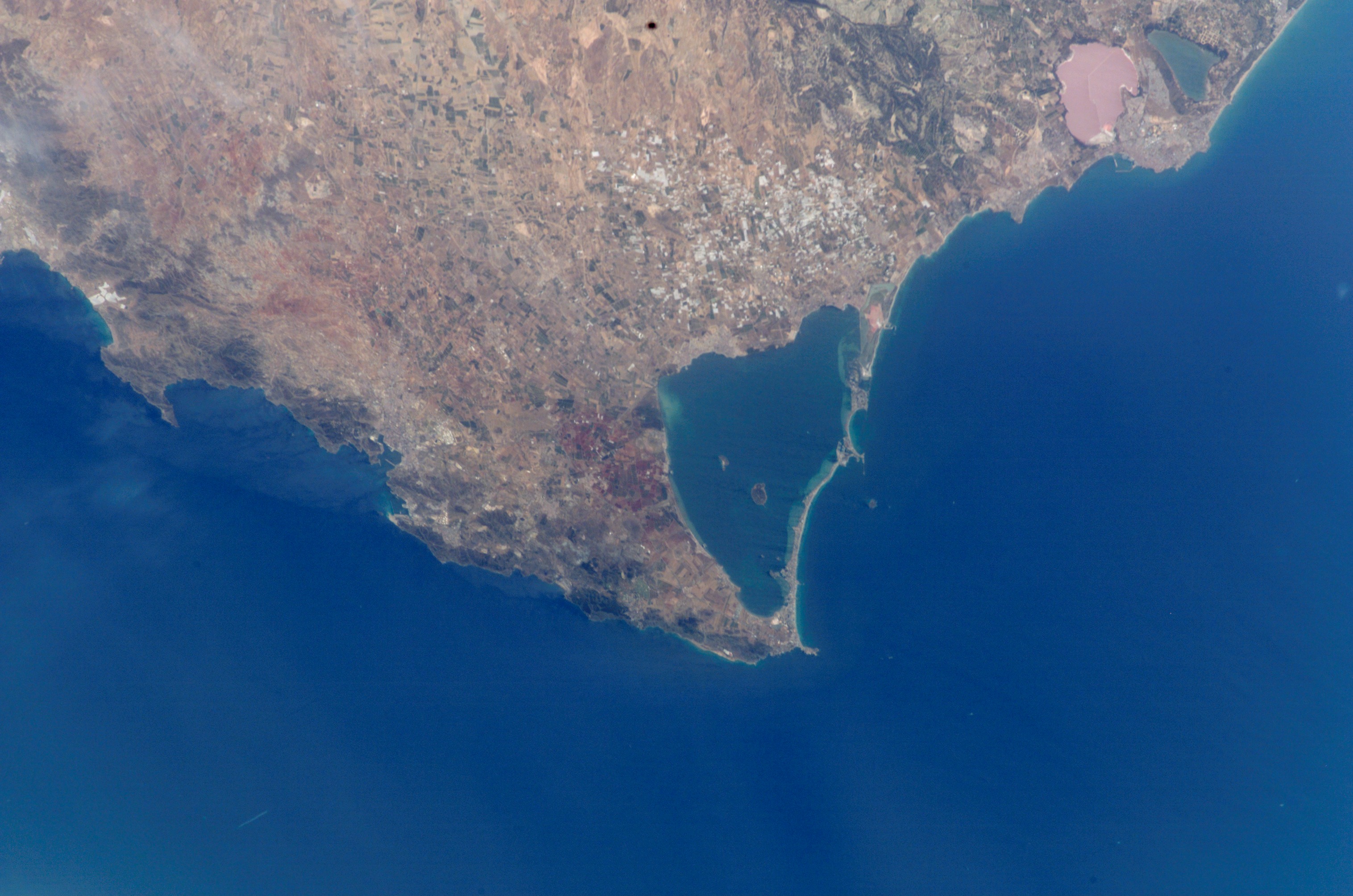
Ant-a Claws
-
In honor of Darwins' anniversary of On the Origin of Species.
New Papyrus: Darwin
it takes 20 000 genes to make a nematode and 25 000 to make a human
http://www.livescience.com/technology/technovelgy_eyes_041104.html
Charles Darwin recognized that the eye would be a real test of the theory of evolution. He suggested that it might be possible to evolve an eye from "imperfect and simple" forms:
"To suppose that the eye, with all its inimitable contrivances for adjusting the focus to different distances, for admitting different amounts of light, and for the correction of spherical and chromatic aberration, could have been formed by natural selection, seems, I freely confess, absurd in the highest possible degree.
"Yet reason tells me, that if numerous gradations from a perfect and complex eye to one very imperfect and simple, each grade being useful to its possessor, can be shown to exist; if further, the eye does vary ever so slightly, and the variations be inherited, which is certainly the case; and if variation or modification in the organ be ever useful to an animal under changing conditions of life, then the difficulty of believing that a perfect and complex eye could be formed by natural selection, though insuperable by our imagination, can hardly be considered real."
Scientists today believe that the eye could evolve from a single light-sensing cell. Scientists disagree over whether it evolved just once, or many times.
It turns out that Nature is both creative and generous with her gifts. Recent research has shown that the tiny marine worm Platynereis dumerilii has two types of light-sensing cells. The eyes of the worm have rhabdomeric photoreceptors, a compound lens formation that is seen almost exclusively in insect eyes. Rhabdomeric photoreceptors are covered in little finger-like protrusions. In its brain, however, it has a different kind of light-sensing cells - ciliary cells that are seen in vertebrate animals. Ciliary cells have hair-like cilia that extend outward and branch out like tiny umbrellas. Two different ways of sensing light in a single organism! images
http://scienceblogs.com/pharyngula/2006/09/rhabdomeric_and_ciliary_eyes.php
Researcher Joachim Wittbrodt of the European Molecular Biology Laboratory in Heidelberg, Germany speculates that the ciliary cells may regulate the worm's daily activity cycle, saying "We think they are related to circadian rhythms. We have found that there is a direct connection to the area used for locomotion... In the beginning we had a toolbox... what was in the brain in the worm ends up in our eye." If the animal had two copies of the genes needed to make one kind of photoreceptor, speculates Wittbrodt, then the extra set would have been free to evolve into the other photoreceptor. Different animals would subsequently evolve to use the two options in different ways.
-
Genome: Ramen noodle folding form (no knots) is fractal globule based on icosa-dodecahedron.
"perfect" genome code
empirical genome code
"perfect" periodic table
-
I have speculated earlier here and elsewhere, that the human thumb's missing bone and associated muscle evolutionarily moved to become the fused mandible (lower jaw) and tongue.
-
I posted this comment at a biology website (RDF), in response to why flies have 6 legs and most vertebrates have only 4 [clue - beetles have 4 wings/jaws, reptiles have 4 legs]:
bilateral pentadactyle digits (insect legs/"hands"/wings/"jaws")*
bilateral pentadactyle digits (invertebrate squid tentacles)*
bilateral pentadactyle digits (vertebrate fingers/toes)*
(larval bilateral) pentadactyle digits (starfish or sand dollar)*
icosahedral/pentameric (eg. virus) symmetry (12 oral/anal sets of five cilia)
*digits can be asexually replicated (due to incomplete meiosis?) or mutatively lost, body segments also, so bilateral millipedes simply have axial multiple copies of their earlier rear set, while bilateral vertebrates have axial duplicated the pelvis from the forelimb carriage or axial duplicated the rear limbs on a rear part of the primitive forelimb carriage which eventually moved caudally.
Flies have 6 legs, 2 wings, 2 wing knobs = 10 digits (no jaws just sharp tubes, larval jaws are forelimbs)
Spiders/crabs have 8 legs, 2 pedipalps ("jawclaws") = 10 digits (no wings)
Squid have 8 regular tentacles, 2 long "thumb" tentacles = 10 digits
Reptiles, fish, mammals (primitive) have 10 digits (forelimbs), 10 digits (rear limbs)
Evo-devo, human mandible/tongue associates with the missing thumb bone and muscle, while the maxillae associates with the four fingers (before mandibular separation, all five fingers).
Probably, due to the developmental order, a fly would be more likely born without wing knobs or wings than to be born without legs, since legs seem to be more ancient. One born without a leg pair probably also has other more severe genetic mutations, especially in internal segmental replication. While a reptile with 6 legs must oxygenate them with lungs, sufficient oxygenation is critical (dolphins lost their legs as oxygen conservation became more significant) while small insects' spiracles provide enough O2 for many legs, and wings help gain more O2. Perhaps.
-
There is an invertebrate (marine proto-crustacean?) which cannot eat unless it locomotes all limbs, its jaws can't chew unless its digits are moving. This would seem very primitive, since lobster claws and fish jaws operate independently from the legs or fins. Note that while larval caterpillars chew using their 4 forelegs/jaws, adult butterflies only suck nectar while still.
Caterpillars chew with forelimbs modified into jaws, during pupation these jaws reform into webbed wings, so butterflies can fly but can't chew. Grasshoppers do not pupate, they go through stages of enlargement and add wings at a certain instar stage (they can't eat at this stage). The adult grasshopper can both leap and fly. Humans have webbing between thumb and forefinger and between maxillae and mandible (cheeks), in flying insects the same genes form webbed wings associated with jaws; initially (ancestrally) this webbing assisted in filter feeding in early marine invertebrate, moving food particles closer to the mouth orifice.
The primitive invertebrate ancestor had an oral-GI-anal pore/tube with 5 mobile cilia, with variable degrees of rigidity (tentacle vs tendon/bone) and inter-digital webbing, depending on whether the food drifted by current (river) or was static and required cilia pulsation and attachment.
Interesting news confirms earlier speculations
link
Public release date: 20-Apr-2007
[ Print Article | E-mail Article | Close Window ]
Contact: Anna-Lynn Wegener
wegener@embl.de
49-622-138-7452
European Molecular Biology Laboratory
Researchers discover that the centralised nervous system of
vertebrates is much older than expected
The rise of the central nervous system (CNS) in animal evolution has
puzzled scientists for centuries. Vertebrates, insects and worms
evolved from the same ancestor, but their CNSs are different and were
thought to have evolved only after their lineages had split during
evolution. Researchers from the European Molecular Biology Laboratory
(EMBL) in Heidelberg now reveal that the vertebrate nervous system is
probably much older than expected. The study, which is published in
the current issue of Cell, suggests that the last common ancestor of
vertebrates, insects and worms already had a centralised nervous
system resembling that of vertebrates today.
Many animals have evolved complex nervous systems throughout the
course of evolution, but their architectures can differ substantially
between species. ...all these species descend from a common ancestor
called Urbilateria. If this ancestor already possessed a nervous
system, what it might have looked like and how it gave rise to the
diversity of nervous systems seen in animals today is what Detlev
Arendt and his group study at EMBL. To do so, they investigate the
nervous system of a marine annelid worm called Platynereis dumerilii.
"Platynereis can be considered a living fossil," says Arendt, "it
still lives in the same environment as the last common ancestors used
to and has preserved many ancestral features, including a prototype
invertebrate CNS. Comparing the molecular fingerpint of Platynereis
nerve cells with what is known about vertebrates revealed surprising
similarities.
"Our findings were overwhelming," says Alexandru Denes, who carried
out the research in Arendt's lab. "The molecular anatomy of the
developing CNS turned out to be virtually the same in vertebrates and
Platynereis. Corresponding regions give rise to neuron types with
similar molecular fingerprints and these neurons also go on to form
the same neural structures in annelid worm and vertebrate."...
The findings provide strong evidence for a theory that was first put
forward by zoologist Anton Dohrn in 1875. It states that vertebrate
and annelid CNS are of common descent and vertebrates have turned
themselves upside down throughout the course of evolution.
"This explains perfectly why we find the same centralised CNS on the
backside of vertebrates and the bellyside of Platynereis," Arendt
says. "How the inversion occurred and how other invertebrates have
modified the ancestral CNS throughout evolution are the next exciting
questions for evolutionary biologists."
http://chancenecessity.blogspot.com/2009/02/geoffroys-lobster-and-animal-common.html
-
urbilateria
A similar study involving Platynereis dumerlii comes to much the same conclusion. PZ Meyers has a explanation of this bit of research. This result, that humans are evolutionarily slow has been portrayed as a bit of a surprise, but is something that has been in the works for awhile. For example, as early as 1992 it was known that insulin genes in humans and apes evolved at a slower rate than in monkeys. The phenomena, called the “Hominid-rate-slowdown hypothesis”. was first suggested by Goodman in a 1961 paper entitled “The Role of Immunochemical Differences in the Phyletic Development of Human Behavior” (published in Human Biology) and led to papers being published on the subject up to the present (here and here for example).
http://www.hoxfulmonsters.com/2008/12/living-fossil-platynereis-dumerilii-unraveling-the-first-steps-of-eye-evolution
-
updated from earlier post (Vertebrates are inverted invertebrates).
To continue, with slight clarification, if interested:
See Neil Shubins slideshow, especially page 6 slide 5, to compare Hox gene positions in human and fruit fly.
http://tiktaalik.uchicago.edu/book-tools.html
My earlier explanation of primitive pentadactylity (5 digits) didn't well cover the duplication of reptile/mammal rear limbs from the forelimb carriage, this duplication is actually the same as the duplication of (beetle) 4 wings / 4 jaw mouthparts from the primitive frontal digits.
-
(I've briefed the text)
Dragonflies & damselflies (Odonates) can chew but they can't walk, their 6 legs are for perching and grabbing.
http://theatavism.blogspot.com/2009/11/sunday-spinelessness-damselflies.html
"You can tell a damselfly from a dragonfly thanks to the way they hold their wings - damselflies fold them up over their body when they land (butterfly-like) while dragonflies hold them open (moth-like)..." Interesting, butterflies or moths can walk a bit but can't chew, beetles & grasshoppers can walk and chew but their flight is not so well controlled.
wiki lacewings/netwings/antlions
The insect order Neuroptera, or net-winged insects, includes the lacewings, mantidflies, antlions, and their relatives. The adults of this order possess four membranous wings, with the forewings and hindwings about the same size, and with many veins. They have chewing mouthparts, and undergo complete metamorphosis. Neuropterans are soft-bodied insects with relatively few specialised features. They have large lateral compound eyes, and may or may not also have ocelli. Their mouthparts have strong mandibles suitable for chewing, and lack the various adaptations found in most other endopterygote insect groups.
They have four wings, which are usually similar in size and shape, have a generalised pattern of veins. Some Neuropterans have specialised sense organs in their wings, or have bristles or other structures to link their wings together during flight.[4]
The larvae are specialised predators, with elongated mandibles adapted for piercing and sucking. The larval body form varies between different families, depending on the nature of their prey. In general, however, they have three pairs of thoracic legs, each ending in two claws. The abdomen often has adhesive discs on the last two segments.[4] ...ant lions, which bury themselves completely out of sight and ambush prey from "pits" in the soil. Larvae of some Ithonidae are root feeders, and larvae of Sisyridae are aquatic, and feed on freshwater sponges. A few mantispids are parasites of spider egg sacs.
As in other holometabolic orders, there is a pupal stage, generally enclosed in some form of cocoon composed of silk and soil or other debris. The pupa eventually cuts its way out of the cocoon with its mandibles, and may even move about for a short while before undergoing the moult to the adult form.[4] Adults of many groups are also predatory, but some do not feed, or consume only nectar. They are delicate or cumbersome flyers, the spoon wings have rear wings like birds of paradise. Nemoptera
Nemoptera larvae

http://theatavism.blogspot.com/search/label/sci-blogs
It's a springtail (Collembola) - a member of a group of arthropods closely related to (but distinct from insects). They get their common name from a long forked organ, the furcula, that usually sits folded up under the abdomen. The earliest fossil hexapod, and one of the first terrestrial animals, Rhyniella praecursor, is a springtail...'Gomph's live in Antarctic mainland, springtails importantly make soil. Tail derived from crab/crayfish folded tail?
Orobophana pacifica: They are tiny, live on coral rubble on Cook Islands. Even though they live on land they aren't closely related to the "true" landsnails in the order Stylommatophora. To see the difference you need to look into their eyes. If you click on the image above to get a high resolution version you might just be able to see the eye - it's a black dot just underneath the tentacles ("feelers"). In true landsnails like the ones you find in you garden the eyes sit on the ommatophores, a second set of tentacles which are retractable.
bird feet, talons, webbing
Can you walk and talk and chew gum at the same time ?
The mechanics of being Human: a self-balancing, 28-jointed adaptor-based biped; an electro-chemical reduction plant, integral with segregated stowages of special energy extracts in storage batteries, for subsequent actuation of thousands of hydraulic and pneumatic pumps, with motors attached; 62,000 miles of capillaries.... R. Buckminster Fuller-
Bucky: Dictators never create their own opportunities.
A neat series of articles on human facial expressions (non-verbal communication), especially interesting after having read that human cheeks are merely muscular/fatty webbing connecting the mandible to maxilla like butterfly wings. Makes me wonder about the link of the smile to the crinkling of the eyelids or the tightening of the eyebrows, all these facial muscles which communicate internal feelings instantly which are usually masked by reflexive social gestures. They must have evolved in deep time, and gradually fine tuned in humans, a super-social species.
facing others
Human social traits: anonymous, cooperative, infants
Hrdy sociality hypothesis
Corneal blink reflex: trigeminal nerve senses, facial nerve motors to blink at bright light or loud sound or irritating particle in eye.
Corneal reflex
Accomodation reflex
Pupillary light reflex
-
Pigmentation in desert lizards
white lizards
Pigmentation in humans: Baltic blonde & blue eyes from Gulf stream & grain?
pigment
"There is only one spot on the planet where grains will grow despite sub-arctic sunlight.
It is where the warm waters of the Gulf Stream wash ashore. The Baltic is the only place on earth where ocean currents keep it warm enough to grow grain despite dim sunlight. When the inhabitants of this region switched to grain about 6 KYA, they suddenly got insufficient vitamin D to survive. They had stopped eating mostly meat and fish in a place where sunlight was too dim to produce vitamin D in normally pigmented skin. And so they adapted by retaining into adulthood the infantile trait of extreme paleness. Blonde hair and blue eyes were other infantile traits that were just swept along accidentally."
Why did they shift from hunting/gathering (grain processing sorghum in Mozambique 100ka) to complete absolute dependence on grain? What about their cattle/goats/dogs? Fishing seems to have increased rather than decreased amongst Baltic sea peoples with better boat/net technology. Camouflage is always important, whether for predator, prey or combat, but less for farmers. Clothing in cold? Baltic was warm in winter? Europeans also adapted by retaining the ability to digest lactose in adulthood, obtaining vitamin D from milk.
-
Medieval rural Briton women had wider thicker bones than city women
http://www.guardian.co.uk/science/2009/dec/17/women-yorkshire-archeaology-find
Language evolution
http://schott.blogs.nytimes.com/2009/12/16/q-and-a-the-death-of-languages/
-
Whale fossil 4.5ma in Spain: deposited on seafloor 50m deep, now 80m above ground 24km inland. So 4.5ma Medit was high, or tectonic uplifting or both.
http://www.sciencedaily.com/releases/2009/12/091215101716.htm
Dwarf suction-feeding Australian baleen whale
http://news.bbc.co.uk/2/hi/science/nature/8430402.stm
Monday, December 21, 2009
Bittersweet: genes for taste
The bitter taster gene, I hadn't known that it is stronger in some groups. How does it fit with increased eating of mint/mustard? Cooking? Adding salt? Alcohol? Fermented milk vs fresh milk - lactase persistence? PTC/PROP? Malaria?
Some Neandertals and some humans lack it, some have multiple copies.
http://www.newscientist.com/article/dn16335-genes-give-africans-a-better-sense-of-taste.html
New research suggests that Africans have more sensitive palates than Europeans and Asians - at least for bitter tastes. A survey of numerous African populations in Kenya and Cameroon found a striking amount of diversity in a gene responsible for sensing bitter tastes. "If they have more genetic diversity, there's more variation in their ability to taste," says Sarah Tishkoff, a geneticist at the University of Pennsylvania in Philadelphia, who presented the findings at a recent conference. Europeans and Asians typically have only one of two forms of a gene called TAS2R38, which detects a bitter-tasting compound called PTC and similar chemicals in vegetables such as broccoli and Brussels sprouts. The gene makes the difference between people tasting a weak dilution of the compound or not, with little nuance in between.
However, the compounds that cause bitter tastes can be thyroid-damaging, notes Paul Breslin, a neuroscientist at Monell Chemical Senses Center in Philadelphia. If you have a healthy thyroid you want to eat these things because they're packed with vitamins, he says. [Cooking?]
Seafood benefits : A diet high in iodine - common in coastal-dwelling people - protects against such thyroid damage, but, iodine intake typically drops off the further people live from the ocean. So bitter-sensitive genes could help these people avoid toxic veggies, Breslin speculates. Tishkoff wonders why, then, Europeans lost some the ability to sense bitterness. Different diets and evolutionary forces offer one explanation, she says. Their lack of bitter taste diversity could also be due to a paucity of genetic variation in the small number of African migrants that became ancestors to the Europeans. In general, sub-Saharan Africans boast more genetic diversity than people native to Europe and other continents.
Avoiding potentially toxic plants might not be the only reason for diversity in bitter taste genes, says Theodore Schurr, an anthropologist at the University of Pennsylvania, who was not involved in the study. His team found lots of variation in bitter taste genes in a Siberian population that has historically eaten few vegetables.
http://www.newscientist.com/article/dn6668-genetic-variation-gives-a-taste-for-alcohol.html
People with a gene variation that dulls their taste buds to bitter flavours drink twice as much alcohol as those with more sensitive palates, suggests a US study. The bitter chemical 6-n-propylthiouracil (PROP) is often used in taste tests and in 2003 a gene influencing the sensitivity to PROP was discovered. The gene, TAS2R38, codes for a taste bud receptor and has several natural variations.
TAS2R38. About half of the world's population have at least one copy of the low-sensitivity variant AVI, he says.
A new study of ancient DNA offers preliminary support for that conclusion. Neanderthals possessed a gene mutation that would have meant they couldn't taste bitter chemicals found in many plants. There has been speculation that this mutation, which occurs in a taste receptor gene called TAS2R38, is beneficial to humans because it makes vitamin-packed vegetables more palatable. It probably arose in the common ancestor of modern humans and Neanderthals more than a million years ago. The gene encodes a receptor that detects a chemical called phenylthiocarbamide, which is closely related to compounds produced by broccoli, cabbage and Brussels sprouts.
http://www.newscientist.com/article/dn17595-seafood-gave-us-the-edge-on-the-neanderthals.html
He and colleague Erik Trinkaus at Washington University in St Louis, Missouri, compiled chemical measurements taken from bone collagen protein belonging to 13 Neanderthals and 13 modern humans, all recovered in Europe. They also added data collected from a 40,000-year-old human recovered in Romania's Oase cave.
Because our bones are constantly destroyed and rebuilt while we are alive, the atoms that make up collagen hold a record of what we've eaten. "When you take a sample of a bone you're getting all those breakfasts, lunches and dinners for 20 years," Richards says.
Telltale atoms
Measurements of the abundance of heavy isotopes of carbon and nitrogen hold the key. Marine environments contain a higher proportion of heavy carbon atoms (carbon-13) than land ecosystems, so lots of carbon-13 in the recovered collagen points to a seafood diet. Meanwhile, heavy nitrogen (nitrogen-15) tends to build up as the atom moves up the food chain, from plants to herbivores to carnivores.
High levels of heavy nitrogen can also come from a diet with lots of freshwater fish. Aquatic food webs tend to contain more steps than terrestrial ecosystems, so large fish often have higher levels of heavy nitrogen than land predators.
-
A very unusual mammal: the short tailed shrew, echolocates, clicks, venomous, cannibalistic...
http://en.wikipedia.org/wiki/Northern_Short-tailed_Shrew
Some Neandertals and some humans lack it, some have multiple copies.
http://www.newscientist.com/article/dn16335-genes-give-africans-a-better-sense-of-taste.html
New research suggests that Africans have more sensitive palates than Europeans and Asians - at least for bitter tastes. A survey of numerous African populations in Kenya and Cameroon found a striking amount of diversity in a gene responsible for sensing bitter tastes. "If they have more genetic diversity, there's more variation in their ability to taste," says Sarah Tishkoff, a geneticist at the University of Pennsylvania in Philadelphia, who presented the findings at a recent conference. Europeans and Asians typically have only one of two forms of a gene called TAS2R38, which detects a bitter-tasting compound called PTC and similar chemicals in vegetables such as broccoli and Brussels sprouts. The gene makes the difference between people tasting a weak dilution of the compound or not, with little nuance in between.
However, the compounds that cause bitter tastes can be thyroid-damaging, notes Paul Breslin, a neuroscientist at Monell Chemical Senses Center in Philadelphia. If you have a healthy thyroid you want to eat these things because they're packed with vitamins, he says. [Cooking?]
Seafood benefits : A diet high in iodine - common in coastal-dwelling people - protects against such thyroid damage, but, iodine intake typically drops off the further people live from the ocean. So bitter-sensitive genes could help these people avoid toxic veggies, Breslin speculates. Tishkoff wonders why, then, Europeans lost some the ability to sense bitterness. Different diets and evolutionary forces offer one explanation, she says. Their lack of bitter taste diversity could also be due to a paucity of genetic variation in the small number of African migrants that became ancestors to the Europeans. In general, sub-Saharan Africans boast more genetic diversity than people native to Europe and other continents.
Avoiding potentially toxic plants might not be the only reason for diversity in bitter taste genes, says Theodore Schurr, an anthropologist at the University of Pennsylvania, who was not involved in the study. His team found lots of variation in bitter taste genes in a Siberian population that has historically eaten few vegetables.
http://www.newscientist.com/article/dn6668-genetic-variation-gives-a-taste-for-alcohol.html
People with a gene variation that dulls their taste buds to bitter flavours drink twice as much alcohol as those with more sensitive palates, suggests a US study. The bitter chemical 6-n-propylthiouracil (PROP) is often used in taste tests and in 2003 a gene influencing the sensitivity to PROP was discovered. The gene, TAS2R38, codes for a taste bud receptor and has several natural variations.
TAS2R38. About half of the world's population have at least one copy of the low-sensitivity variant AVI, he says.
A new study of ancient DNA offers preliminary support for that conclusion. Neanderthals possessed a gene mutation that would have meant they couldn't taste bitter chemicals found in many plants. There has been speculation that this mutation, which occurs in a taste receptor gene called TAS2R38, is beneficial to humans because it makes vitamin-packed vegetables more palatable. It probably arose in the common ancestor of modern humans and Neanderthals more than a million years ago. The gene encodes a receptor that detects a chemical called phenylthiocarbamide, which is closely related to compounds produced by broccoli, cabbage and Brussels sprouts.
http://www.newscientist.com/article/dn17595-seafood-gave-us-the-edge-on-the-neanderthals.html
He and colleague Erik Trinkaus at Washington University in St Louis, Missouri, compiled chemical measurements taken from bone collagen protein belonging to 13 Neanderthals and 13 modern humans, all recovered in Europe. They also added data collected from a 40,000-year-old human recovered in Romania's Oase cave.
Because our bones are constantly destroyed and rebuilt while we are alive, the atoms that make up collagen hold a record of what we've eaten. "When you take a sample of a bone you're getting all those breakfasts, lunches and dinners for 20 years," Richards says.
Telltale atoms
Measurements of the abundance of heavy isotopes of carbon and nitrogen hold the key. Marine environments contain a higher proportion of heavy carbon atoms (carbon-13) than land ecosystems, so lots of carbon-13 in the recovered collagen points to a seafood diet. Meanwhile, heavy nitrogen (nitrogen-15) tends to build up as the atom moves up the food chain, from plants to herbivores to carnivores.
High levels of heavy nitrogen can also come from a diet with lots of freshwater fish. Aquatic food webs tend to contain more steps than terrestrial ecosystems, so large fish often have higher levels of heavy nitrogen than land predators.
-
A very unusual mammal: the short tailed shrew, echolocates, clicks, venomous, cannibalistic...
http://en.wikipedia.org/wiki/Northern_Short-tailed_Shrew
Wednesday, December 16, 2009
Skull density in hominids
Gauld SC 1996 AJPA 100:411-426
Allometric patterns of cranial bone thickness in fossil hominids
Skull thickness in He is more than twice that of other primates of
comparable body size, Hn is intermediate, Hs is still above most other
primates, and A.africanus is somewhat above other equally-sized primates,
but I need more figures of other apiths, esp. robust ones.
Extraordinarily thick skull vaults are typically (AFAIK exclusively) seen in
shallow slow parttime diving animals. Slow divers in sea water (density c
1.024) are expected to have much thicker skulls than those in freshwater.
Alan Shabel found that in dentitions & enamel thickness apiths resembled
mungoes & other carnivores that fed (partly) on hard-shelled invertebrates.
Might africanus (& other apiths??) have parttime dived (or ducked) for
bottom shell+crayfish in the wetlands & swamp forests where they lived??
We need a lot more measurements of skull thicknesses esp. of fossil
hominids, but also of other animals.
I made a graph (somebody did it for me) with
- x-axis = the cubic root of the body weight of different primate spp,
- y-axis = their skull thickness.
It was almost a straight line, with small spp a bit below that line,
medium-sized a bit above (esp.orang & chimp), and very large ones (gorilla)
a bit lower.
But there were 3 obvious exceptions:
- He was far above that line (but it might have been heavier than the usual
estimation of c 50 kg),
- Hs was clearly above it,
- A.africanus was also clearly above it (depending on its body weight, which
might be a bit higher IMO than usu.estimated).
Other data suggest Hn was intermediate between He & Hn, but I still lack
enough comparable data on apiths, Ardipith etc.
Does anybody know where to find more data? MV @ AAT
-
This fits the pattern -
early hominoid, foraging on pond surface AHV aquatic herbs, congo lowland gorillas raking high-protein hydrocharis and yanking up sedges for their rhyzomes, not dunking their faces nor seeking benthic foods, with large inflatable laryngeal air sacs for partial flotation, with lightweight skulls. Apith afarensis similar, but in Rift valley, less fruit trees, more sedges.
Apith africanus ate more water lily rhyzomes, reaching below water so smaller air sacs and denser skull, more invertebrate foods crayfish/snails and small vertebrates, more high fruit trees. Rift - So. Africa shallow lakes?
Human ancestors similar, but more tidal saltwater, lost air sacs and gained dense skull, ate tidal mangrove oysters at lagoons, more shrub berries, less high fruit trees, Medit. zone?
-
Myrica gale is a flowering plant native to Europe, with sweet resinous scent, and is a traditional insect repellent, used by campers to keep biting insects out of tents. Sweet Gale can grow in a narrow band in the intertidal zone, especially if it has some logs, washed down into the estuary on which to establish itself. It is a favorite food of beavers and low beaver dams can be found in the intertidal zone if sufficient sweet gale is present. The ponds thus formed are often completely submerged at high tide but retain water at low tide and provide deep enough water to provide a refuge for fish, including juvenile salmon where the water is too deep for predation by wading birds. wiki
-
Ear wax & Scent: Difference of appocrine sweat glands in Europeans, Africans and Asians
scent, ear wax
rice, milk, alcohol in ancient Eurasians
-
Gorilla hybrids, Ardi party @ Lawnchair anthropology
-
Molars in hominoids
Gorilla and chimp molars evert earlier than orang and human due to more forest ground foraging (parallel with knucklewalking), orang probably has primitive hominoid condition, human also but even more so do to beaver lodge - hut/cave nesting & aquatic foraging & mainly food processing & cooking.
Speaking of dense bones and waterside herbivores, article on neolithic dugong & fishing rituals:
http://gulfnews.com/news/gulf/uae/general/excavation-uncovers-ritual-site-1.523925
Allometric patterns of cranial bone thickness in fossil hominids
Skull thickness in He is more than twice that of other primates of
comparable body size, Hn is intermediate, Hs is still above most other
primates, and A.africanus is somewhat above other equally-sized primates,
but I need more figures of other apiths, esp. robust ones.
Extraordinarily thick skull vaults are typically (AFAIK exclusively) seen in
shallow slow parttime diving animals. Slow divers in sea water (density c
1.024) are expected to have much thicker skulls than those in freshwater.
Alan Shabel found that in dentitions & enamel thickness apiths resembled
mungoes & other carnivores that fed (partly) on hard-shelled invertebrates.
Might africanus (& other apiths??) have parttime dived (or ducked) for
bottom shell+crayfish in the wetlands & swamp forests where they lived??
We need a lot more measurements of skull thicknesses esp. of fossil
hominids, but also of other animals.
I made a graph (somebody did it for me) with
- x-axis = the cubic root of the body weight of different primate spp,
- y-axis = their skull thickness.
It was almost a straight line, with small spp a bit below that line,
medium-sized a bit above (esp.orang & chimp), and very large ones (gorilla)
a bit lower.
But there were 3 obvious exceptions:
- He was far above that line (but it might have been heavier than the usual
estimation of c 50 kg),
- Hs was clearly above it,
- A.africanus was also clearly above it (depending on its body weight, which
might be a bit higher IMO than usu.estimated).
Other data suggest Hn was intermediate between He & Hn, but I still lack
enough comparable data on apiths, Ardipith etc.
Does anybody know where to find more data? MV @ AAT
-
This fits the pattern -
early hominoid, foraging on pond surface AHV aquatic herbs, congo lowland gorillas raking high-protein hydrocharis and yanking up sedges for their rhyzomes, not dunking their faces nor seeking benthic foods, with large inflatable laryngeal air sacs for partial flotation, with lightweight skulls. Apith afarensis similar, but in Rift valley, less fruit trees, more sedges.
Apith africanus ate more water lily rhyzomes, reaching below water so smaller air sacs and denser skull, more invertebrate foods crayfish/snails and small vertebrates, more high fruit trees. Rift - So. Africa shallow lakes?
Human ancestors similar, but more tidal saltwater, lost air sacs and gained dense skull, ate tidal mangrove oysters at lagoons, more shrub berries, less high fruit trees, Medit. zone?
-
Myrica gale is a flowering plant native to Europe, with sweet resinous scent, and is a traditional insect repellent, used by campers to keep biting insects out of tents. Sweet Gale can grow in a narrow band in the intertidal zone, especially if it has some logs, washed down into the estuary on which to establish itself. It is a favorite food of beavers and low beaver dams can be found in the intertidal zone if sufficient sweet gale is present. The ponds thus formed are often completely submerged at high tide but retain water at low tide and provide deep enough water to provide a refuge for fish, including juvenile salmon where the water is too deep for predation by wading birds. wiki
-
Ear wax & Scent: Difference of appocrine sweat glands in Europeans, Africans and Asians
scent, ear wax
rice, milk, alcohol in ancient Eurasians
-
Gorilla hybrids, Ardi party @ Lawnchair anthropology
-
Molars in hominoids
Gorilla and chimp molars evert earlier than orang and human due to more forest ground foraging (parallel with knucklewalking), orang probably has primitive hominoid condition, human also but even more so do to beaver lodge - hut/cave nesting & aquatic foraging & mainly food processing & cooking.
Speaking of dense bones and waterside herbivores, article on neolithic dugong & fishing rituals:
http://gulfnews.com/news/gulf/uae/general/excavation-uncovers-ritual-site-1.523925
Monday, December 14, 2009
Natural mosquito repellents
Bog Myrtle/Myrica Gale
Myrica gale is a species of flowering plant in the genus Myrica, native to northern and western Europe and parts of northern North America. The foliage has a sweet resinous scent, and is a traditional insect repellent, used by campers to keep biting insects out of tents.It is also marketed by Totally Herby of Scotland [3] as an insect repellent, and by The Highland Soap Company [4] as a soap.In Scotland it has been traditionally used to ward off the dreaded midge.Sweet Gale can grow in a narrow band in the intertidal zone, especially if it has some logs, washed down into the estuary on which to establish itself. It is a favorite food of beavers and low beaver dams can be found in the intertidal zone if sufficient sweet gale is present. The ponds thus formed are often completely submerged at high tide but retain water at low tide and provide deep enough water to provide a refuge for fish, including juvenile salmon where the water is too deep for predation by wading birds. Thus the presence of Sweet Gale can enhance salmon recruitment. Myrica gale is listed as an abortifacient and, therefore, should not be consumed by women who are, or might be, pregnant.[6][7] wikipedia
Swedish scientists have found that Achillea_millefolium/ yarrow extract repels mosquitoes.[1]
A Thai study found both clove oil and celery seed extract to be effective mosquito repellants:
study
Carvacrol Carvacrol inhibits the growth of several bacteria strains, e.g. Escherichia coli[5] and Bacillus cereus. Its low toxicity together with its pleasant taste and smell suggests its use as a food additive to prevent bacterial contamination.
The cause of the antimicrobial properties is believed to be disruption of the bacteria membrane.
It is a potent activator of the human ion channels transient receptor potential V3 (TRPV3) and A1 (TRPA1).
Physiology of TRPV3 channel: TRPV3, is a human gene encoding the protein of the same name.
The TRPV3 protein belongs to a family of nonselective cation channels that function in a variety of processes, including temperature sensation and vasoregulation. The thermosensitive members of this family are expressed in subsets of sensory neurons that terminate in the skin, and are activated at distinct physiological temperatures. This channel is activated at temperatures between 22 and 40 degrees C.
The TRPV3 channel is widely expressed in the human body, especially in the skin in keratinocytes, but also in the brain. It functions as a molecular sensor for innocuous warm temperatures.[2] Mice lacking these protein are unable to sense elevated temperatures (>33 °C) but are able to sense cold and noxious heat.[3] In addition to thermosenstation TRPV3 channels seem to play a role in hair growth because mutations in the TRPV3 gene cause hair loss in mice.[4] The role of TRPV3 channels in the brain is unclear.
The TRPV3 channel is directly activated by various natural compounds like carvacrol, thymol and eugenol.[5] Several other monoterpenoids which cause either feeling of warmth or are skin sensitizers can also open the channel.
Herbal insect repellents (caution, see medical information for possible side-effects)
insect repellents
* Achillea alpina (mosquitos)
* alpha-terpinene (mosquitos)[17]
* Basil[18] Further information: Ocimum basilicum
* Callicarpa americana (Beautyberry)[19]
* Camphor (moths)[20]
* Carvacrol (mosquitos)[17]
* Castor oil (Ricinus communis) (mosquitos)[21]
* Catnip oil (Nepeta species) (nepetalactone against mosquitos)[22]
* Cedar oil (mosquitos)[21]
* Celery extract (Apium graveolens) (mosquitos)
* Cinnamon[24] (leaf oil kills mosquito larvae)[25]
* Citronella oil (repels mosquitos)[21]
* Clove oil (mosquitoes)[21]
* Eucalyptus oil (70%+ eucalyptol), (cineol is a synonym), mosquitos, flies, dust mites[26])
* Fennel oil (Foeniculum vulgare) (mosquitos)[17]
* Garlic (Allium sativum) (rice weevil, wheat flour beetle)[27] (NB: a dose similar to the one as a food ingredient should be used for the time being)
* Geranium oil (also known as Pelargonium graveolens) [28], [21]
* Lavender[29][30]
* Lemon eucalyptus (Corymbia citriodora) essential oil and its active ingredient p-menthane-3,8-diol (PMD)
* Lemongrass oil (Cymbopogon species) (mosquitos)[21]
* Marigolds (Tagetes species)
* Marjoram (Spider mites Tetranychus urticae and Eutetranychus orientalis)[32]
* Neem oil (Azadirachta indica) (Repels or kills mosquitos, their larvae and a plethora of other insects including those in agriculture)
* Peppermint (Mentha x piperita) (mosquitos)[34]
* Pennyroyal (Mentha pulegium) (mosquitos,[26] fleas[35]), but very toxic to pets.[35]
* Pyrethrum (from Chrysanthemum species, particularly C. cinerariifolium and C. coccineum)
* Rosemary (Rosmarinus officinalis) [32] (mosquitos)[21]
* Spanish Flag Lantana camara (against Tea Mosquito Bug, Helopeltis theivora) [36]
* Solanum villosum berry juice (against Stegomyia aegypti mosquitos)[37]
* Tea tree[38]
* Thyme (Thymus species)(mosquitos)[17]
Also note that chimps consume noxious herbs to remove stomach parasites, capuchin monkeys rub citrus rinds on their backs to protect against insects, and spider monkeys use twigs/chewed foliage as body rubs. http://dsc.discovery.com/news/2009/07/31/spider-monkey-scratcher.html
-
Butterfly wings & typhoon probability
flap
These proponents of chaos theory never mention that flying insects/birds/bats cause stratified gases in sub-canopy humid rainforests to mix, improving photosynthesis & respiration efficiency.
Ants & plants: plants control guardian ants with chemicals, repellants & food
ants & plants
Cycads (pre-conifers) & thrips (ant-like), chemicals attract & repulse, push-pull pollination
cycad attraction/repulsion
flower color changes
Myrica gale is a species of flowering plant in the genus Myrica, native to northern and western Europe and parts of northern North America. The foliage has a sweet resinous scent, and is a traditional insect repellent, used by campers to keep biting insects out of tents.It is also marketed by Totally Herby of Scotland [3] as an insect repellent, and by The Highland Soap Company [4] as a soap.In Scotland it has been traditionally used to ward off the dreaded midge.Sweet Gale can grow in a narrow band in the intertidal zone, especially if it has some logs, washed down into the estuary on which to establish itself. It is a favorite food of beavers and low beaver dams can be found in the intertidal zone if sufficient sweet gale is present. The ponds thus formed are often completely submerged at high tide but retain water at low tide and provide deep enough water to provide a refuge for fish, including juvenile salmon where the water is too deep for predation by wading birds. Thus the presence of Sweet Gale can enhance salmon recruitment. Myrica gale is listed as an abortifacient and, therefore, should not be consumed by women who are, or might be, pregnant.[6][7] wikipedia
Swedish scientists have found that Achillea_millefolium/ yarrow extract repels mosquitoes.[1]
A Thai study found both clove oil and celery seed extract to be effective mosquito repellants:
study
Carvacrol Carvacrol inhibits the growth of several bacteria strains, e.g. Escherichia coli[5] and Bacillus cereus. Its low toxicity together with its pleasant taste and smell suggests its use as a food additive to prevent bacterial contamination.
The cause of the antimicrobial properties is believed to be disruption of the bacteria membrane.
It is a potent activator of the human ion channels transient receptor potential V3 (TRPV3) and A1 (TRPA1).
Physiology of TRPV3 channel: TRPV3, is a human gene encoding the protein of the same name.
The TRPV3 protein belongs to a family of nonselective cation channels that function in a variety of processes, including temperature sensation and vasoregulation. The thermosensitive members of this family are expressed in subsets of sensory neurons that terminate in the skin, and are activated at distinct physiological temperatures. This channel is activated at temperatures between 22 and 40 degrees C.
The TRPV3 channel is widely expressed in the human body, especially in the skin in keratinocytes, but also in the brain. It functions as a molecular sensor for innocuous warm temperatures.[2] Mice lacking these protein are unable to sense elevated temperatures (>33 °C) but are able to sense cold and noxious heat.[3] In addition to thermosenstation TRPV3 channels seem to play a role in hair growth because mutations in the TRPV3 gene cause hair loss in mice.[4] The role of TRPV3 channels in the brain is unclear.
The TRPV3 channel is directly activated by various natural compounds like carvacrol, thymol and eugenol.[5] Several other monoterpenoids which cause either feeling of warmth or are skin sensitizers can also open the channel.
Herbal insect repellents (caution, see medical information for possible side-effects)
insect repellents
* Achillea alpina (mosquitos)
* alpha-terpinene (mosquitos)[17]
* Basil[18] Further information: Ocimum basilicum
* Callicarpa americana (Beautyberry)[19]
* Camphor (moths)[20]
* Carvacrol (mosquitos)[17]
* Castor oil (Ricinus communis) (mosquitos)[21]
* Catnip oil (Nepeta species) (nepetalactone against mosquitos)[22]
* Cedar oil (mosquitos)[21]
* Celery extract (Apium graveolens) (mosquitos)
* Cinnamon[24] (leaf oil kills mosquito larvae)[25]
* Citronella oil (repels mosquitos)[21]
* Clove oil (mosquitoes)[21]
* Eucalyptus oil (70%+ eucalyptol), (cineol is a synonym), mosquitos, flies, dust mites[26])
* Fennel oil (Foeniculum vulgare) (mosquitos)[17]
* Garlic (Allium sativum) (rice weevil, wheat flour beetle)[27] (NB: a dose similar to the one as a food ingredient should be used for the time being)
* Geranium oil (also known as Pelargonium graveolens) [28], [21]
* Lavender[29][30]
* Lemon eucalyptus (Corymbia citriodora) essential oil and its active ingredient p-menthane-3,8-diol (PMD)
* Lemongrass oil (Cymbopogon species) (mosquitos)[21]
* Marigolds (Tagetes species)
* Marjoram (Spider mites Tetranychus urticae and Eutetranychus orientalis)[32]
* Neem oil (Azadirachta indica) (Repels or kills mosquitos, their larvae and a plethora of other insects including those in agriculture)
* Peppermint (Mentha x piperita) (mosquitos)[34]
* Pennyroyal (Mentha pulegium) (mosquitos,[26] fleas[35]), but very toxic to pets.[35]
* Pyrethrum (from Chrysanthemum species, particularly C. cinerariifolium and C. coccineum)
* Rosemary (Rosmarinus officinalis) [32] (mosquitos)[21]
* Spanish Flag Lantana camara (against Tea Mosquito Bug, Helopeltis theivora) [36]
* Solanum villosum berry juice (against Stegomyia aegypti mosquitos)[37]
* Tea tree[38]
* Thyme (Thymus species)(mosquitos)[17]
Also note that chimps consume noxious herbs to remove stomach parasites, capuchin monkeys rub citrus rinds on their backs to protect against insects, and spider monkeys use twigs/chewed foliage as body rubs. http://dsc.discovery.com/news/2009/07/31/spider-monkey-scratcher.html
-
Butterfly wings & typhoon probability
flap
These proponents of chaos theory never mention that flying insects/birds/bats cause stratified gases in sub-canopy humid rainforests to mix, improving photosynthesis & respiration efficiency.
Ants & plants: plants control guardian ants with chemicals, repellants & food
ants & plants
Cycads (pre-conifers) & thrips (ant-like), chemicals attract & repulse, push-pull pollination
cycad attraction/repulsion
flower color changes
Subscribe to:
Posts (Atom)