"Intensive woodworking and tree-felling was a phenomenon that only appeared with the onset of the major changes in human life, including the transition to agriculture and permanent villages," says Dr. Barkai, whose research was published in the journal PLoS One. Prior to the Neolithic period, there is no evidence of tools that were powerful enough to cut and carve wood, let alone fell trees. But new archaeological evidence suggests that as the Neolithic age progressed, sophisticated carpentry developed alongside agriculture.
http://www.eurekalert.org/pub_releases/2012-08/afot-nmt080912.php
Evolution of axes
The use of functional tools in relation to woodworking over the course of the Neolithic period has not been studied in detail until now. Through their work at the archaeological site of Motza, a neighbourhood in the Judean Hills, Dr. Barkai and his fellow researchers, Prof. Rick Yerkes of Ohio State University and Dr. Hamudi Khalaily of the Israel Antiquity Authority, have unearthed evidence that increasing sophistication in terms of carpentry tools corresponds with increased agriculture and permanent settlements.
The early part of the Neolithic age is divided into two distinct eras — Pre-Pottery Neolithic A (PPNA) and Pre-Pottery Neolithic B (PPNB). Agriculture and domesticated plants and animals appear only in PPNB, so the transition between these two periods is a watershed moment in human history. And these changes can be tracked in the woodworking tools which belong to each period, says Dr. Barkai.
Within PPNA, humans remained gatherers but lived in more permanent settlements for the first time, he says. Axes associated with this period are small and delicate, used for light carpentry but not suited for felling trees or other massive woodworking tasks. In PPNB, the tools have evolved to much larger and heavier axes, formed by a technique called polishing. The researchers' in-depth analysis of these tools shows that they were used to cut down trees and complete various building projects.
"We can document step by step the transition from the absence of woodworking tools, to delicate woodworking tools, to heavier woodworking tools," Dr. Barkai says, and this follows the "actual transition from the hunter-gatherer lifestyle to agriculture." He also identifies a trial-and-error phase during which humans tried to create an axe strong enough to undertake larger woodworking tasks. Eventually, they succeeded in creating a massive ground stone axe in PPNB
.
Home makeover
Whether the transition to an agricultural society led to the development of major carpentry tools or vice versa remains to be determined, says Dr. Barkai, who characterizes it as a "circular argument." Whatever the answer, the parallel changes led to a revolution in lifestyle.
Beyond the change from a hunter-gatherer to an agricultural economy, a new form of architecture also emerged. Not only did people begin to live in permanent villages, but the buildings in which they lived literally took a different shape. The round and oval structures of earlier domiciles were replaced by rectangular structures in PPNB, explains Dr. Barkai. "Evidence tells that us that for each home, approximately 10 wooden beams were needed. Prior to this, there were no homes with wooden beams." In addition, humans began to produce limestone-based plaster floors for their homes — which also represented a growing use of wood, since plaster is manufactured by heating limestone.
These architectural developments, along with building pens and fences for domesticated animals, also necessitated the felling of trees in large quantities.
Thursday, August 9, 2012


Thursday, August 2, 2012
20,000 year old pot = Wok
20,000 year old pottery found in China.
http://www.eutimes.net/2012/
06/ancient-chinese-pottery-
confirmed-as-the-oldest-yet-
found/
Also see:
http://dienekes.blogspot.com/
2012/06/20000-year-old-
pottery-from-china.html
Or:
http://tinyurl.com/888dnmc
From the above blog, here's some info on the Science article from which
the EU Times story was taken:
------------------------------
-------------------
Science 29 June 2012:
Vol. 336 no. 6089 pp. 1696-1700
DOI: 10.1126/science.1218643
Early Pottery at 20,000 Years Ago in Xianrendong Cave, China
Xiaohong Wu et al.
ABSTRACT
The invention of pottery introduced fundamental shifts in human
subsistence practices and sociosymbolic behaviors. Here, we describe the
dating of the early pottery from Xianrendong Cave, Jiangxi Province,
China, and the micromorphology of the stratigraphic contexts of the
pottery sherds and radiocarbon samples. The radiocarbon ages of the
archaeological contexts of the earliest sherds are 20,000 to 19,000
calendar years before the present, 2000 to 3000 years older than other
pottery found in East Asia and elsewhere. The occupations in the cave
demonstrate that pottery was produced by mobile foragers who hunted and
gathered during the Late Glacial Maximum. These vessels may have served
as cooking devices. The early date shows that pottery was first made and
used 10 millennia or more before the emergence of agriculture.
------------------------------
---------------
Here's a link to a short NY Times article on the find:
http://www.nytimes.com/2012/
07/03/science/oldest-known-
pottery-found-in-china.html?_
r=1
Oldest Wok. See the pix. Shallow thin-wall pre-metal clay bowl, both for fast frying (oily fish?) and slow-simmering soups (soybeans/millet/wild rice?).
"The ceramics probably consisted of simple concave vessels that were likely used for cooking food" NYT
Consider this:
a) oldest pottery found, So. China 20ka, (bowl form), Glacial maximum period
b) 20ka China coasts are today submerged post-ice age
c) Wok is ancient Chinese cooking bowl, fry, boil & steam chopped foods
d) requires sharp flake/blade; wood/horn spoon/ladle; bamboo/ivory chopsticks
e) oldest writing: Chinese CHARacters on turtle shell (bowl form)
f) Before black ink was made from scraped char, bone pen scrawled on charred bowl
g) cher (Rus black) char (Eng burnt), carve/scarify (Eng), carbon, bakar (Malay burn)
In Mandarin wok is guo (city walls ~ (mon)golu/bungalo/anglo = enclose), dialects: kwok, wok
http://en.wikipedia.org/wiki/Guo
"The Guo family is one of the well known Hui clans around Quanzhou in Fujian, they are examples of these Hui who identify as Muslim by nationality but do not practice Islam.
Compare Khan/Cohen/Cohn/Guo/Kwok/
http://www.heosemys.org/names.php names of turtles in many languages
Malay, Indonesian: kurakura
Mali Bambara: koorakaara
Afrikaans, Dutch, Danish: skilpad
So. Af. Xhosa: i-sikolopati, ufudo
So. Af. Tswana: khudu
Sicilian: tartuca
Japanese: kame
Chinese: uguei (cf guo/wok)
Bulgarian: kostenurka
Hebrew: zav, tsav
Iraqi dial: ragga, kashf
Bow, bagel, bend: [C15: probably from Low German boog ; related to Dutch boeg , Danish bov ship's bow, shoulder; seebough ]
DDeden
http://www.eutimes.net/2012/
06/ancient-chinese-pottery-
confirmed-as-the-oldest-yet-
found/
Also see:
http://dienekes.blogspot.com/
2012/06/20000-year-old-
pottery-from-china.html
Or:
http://tinyurl.com/888dnmc
From the above blog, here's some info on the Science article from which
the EU Times story was taken:
------------------------------
-------------------
Science 29 June 2012:
Vol. 336 no. 6089 pp. 1696-1700
DOI: 10.1126/science.1218643
Early Pottery at 20,000 Years Ago in Xianrendong Cave, China
Xiaohong Wu et al.
ABSTRACT
The invention of pottery introduced fundamental shifts in human
subsistence practices and sociosymbolic behaviors. Here, we describe the
dating of the early pottery from Xianrendong Cave, Jiangxi Province,
China, and the micromorphology of the stratigraphic contexts of the
pottery sherds and radiocarbon samples. The radiocarbon ages of the
archaeological contexts of the earliest sherds are 20,000 to 19,000
calendar years before the present, 2000 to 3000 years older than other
pottery found in East Asia and elsewhere. The occupations in the cave
demonstrate that pottery was produced by mobile foragers who hunted and
gathered during the Late Glacial Maximum. These vessels may have served
as cooking devices. The early date shows that pottery was first made and
used 10 millennia or more before the emergence of agriculture.
------------------------------
---------------
Here's a link to a short NY Times article on the find:
http://www.nytimes.com/2012/
07/03/science/oldest-known-
pottery-found-in-china.html?_
r=1
Oldest Wok. See the pix. Shallow thin-wall pre-metal clay bowl, both for fast frying (oily fish?) and slow-simmering soups (soybeans/millet/wild rice?).
"The ceramics probably consisted of simple concave vessels that were likely used for cooking food" NYT
Consider this:
a) oldest pottery found, So. China 20ka, (bowl form), Glacial maximum period
b) 20ka China coasts are today submerged post-ice age
c) Wok is ancient Chinese cooking bowl, fry, boil & steam chopped foods
d) requires sharp flake/blade; wood/horn spoon/ladle; bamboo/ivory chopsticks
e) oldest writing: Chinese CHARacters on turtle shell (bowl form)
f) Before black ink was made from scraped char, bone pen scrawled on charred bowl
g) cher (Rus black) char (Eng burnt), carve/scarify (Eng), carbon, bakar (Malay burn)
In Mandarin wok is guo (city walls ~ (mon)golu/bungalo/anglo = enclose), dialects: kwok, wok
http://en.wikipedia.org/wiki/Guo
"The Guo family is one of the well known Hui clans around Quanzhou in Fujian, they are examples of these Hui who identify as Muslim by nationality but do not practice Islam.
Compare Khan/Cohen/Cohn/Guo/Kwok/
http://www.heosemys.org/names.php names of turtles in many languages
Malay, Indonesian: kurakura
Mali Bambara: koorakaara
Afrikaans, Dutch, Danish: skilpad
So. Af. Xhosa: i-sikolopati, ufudo
So. Af. Tswana: khudu
Sicilian: tartuca
Japanese: kame
Chinese: uguei (cf guo/wok)
Bulgarian: kostenurka
Hebrew: zav, tsav
Iraqi dial: ragga, kashf
Bow, bagel, bend: [C15: probably from Low German boog ; related to Dutch boeg , Danish bov ship's bow, shoulder; see
DDeden
Thursday, July 26, 2012
Bull
AmerIndian plains tipis originated from a bull bison pelt with tail retained on back side of tent with attached female pelts sewn to it and smoke flaps in front representing horns, this derived from ancient mammoth-hide tents framed by debarked willow/wicker poles or defleshed long bones, with a bull mammoth pelt overlaid on top of leaf/rush shingles or rolled woven rush mats, with smoke flaps being skull-socketed tusks draped (perhaps pinned, not sewn) with pelts acting as both smoke hole cover and entryway.
DDeden
'reconstructions' of mammoth tents
http://www.sciencephoto.com/media/173025/enlarge
http://www.bing.com/images/search?q=ukraine+mammoth&view=detail&id=4AFC28B65F2A8190A76AC5E6449F4A46E24D477C&first=72
tipi types (imagine if constructed of mammoth pelts, bones, tusks)
http://www.bing.com/images/search?q=ancient+tipi&view=detail&id=5B18C43DE5F3873B9351F8CC8153A60ECE629D38&first=597
http://tatonkatradingcompany.com/graphics/Teepee_Erecting.gif
DDeden
'reconstructions' of mammoth tents
http://www.sciencephoto.com/media/173025/enlarge
http://www.bing.com/images/search?q=ukraine+mammoth&view=detail&id=4AFC28B65F2A8190A76AC5E6449F4A46E24D477C&first=72
tipi types (imagine if constructed of mammoth pelts, bones, tusks)
http://www.bing.com/images/search?q=ancient+tipi&view=detail&id=5B18C43DE5F3873B9351F8CC8153A60ECE629D38&first=597
http://tatonkatradingcompany.com/graphics/Teepee_Erecting.gif
Friday, July 20, 2012
Neanderthal & Sapiens: scraping & spinning
[Some news articles relating to paleo-particle-linguistics speculations of Carlos @ http://tletl.blogspot.com/ especially in regard to fire starting, bone flutes, etc.]
Authors suggest habitual animal skin hide scraping as cause for pronounced right forelimb dominance of neanderthals. I would add plant processing (bark/root scraping) for food/medicine/pitch and fire starting by dynamic-right-hand scraping while left-hand held static item securely). A group from Africa (without fire-starting technology, cf Mbuti Congo pygmies) entered Levant/Spain and learned and modified neanderthal fire starting by using both hands to spin the firestick while holding it vertical in a mouthpiece (flue/flame/flute/Lakota peace pipe).
Update: See article & photos of 44ka Border Cave & San Kalahari bushmen drilling ostrich egg & marine shells to make pendants/beads, this resembles palm-palm spinning (spindle/kindling) of fire drill (possibly also done by neanderthals), while the threading uses the thumb-finger precision grip (which Carlos reports that Neanderthals lacked, thus no thread nor bow/arrow, just atlatl sling). http://news.yahoo.com/photos/compilation-5-photos-supplied-university-witwatersrand-shows-ostrich-photo-182648015.html http://news.yahoo.com/researchers-modern-culture-may-earlier-start-171918659.html Congo Mbuti pygmies do use poison arrows but don't make these beads or use fire drill/spindles. Most likely San copied linear fire starting/scraping from Neandertals and modified it into fire drilling/spinning which was then broadcast to all Hs except Rainforest pygmoidal people. Note that in Borneo, rainforest natives developed the fire piston, an air pump compression fire starter.
Neanderthal women wore a draping fur pelt (robe/wrap/toga/shawl) over the left shoulder with the corner tucked underarm while carrying an infant in left arm near breast wrapped warmly in fur, with some moss underneath. Neanderthal men draped the (reindeer/bear/buffalo) fur similarly but carried a water bag or tool in left hand while the right hand held a spear-walking stick. Both wore a belt/drawstring/rope to hold the pelt tight or loose (leaving a 'pocket' space above the belt).
Sapien men and women leaving hot tropical Africa for Spain and the Levant copied this, but modified it by including a woven linen/hemp undergarment (enlarged loincloth/stringskirt) and inserting bone pin/clasp/broach "sewn" through pelt sides allowing both hands to be free when desired, for eg. bimanual spinning of firestick or thread.
{my interpretation: DDeden}
Update: See article & photos of 44ka Border Cave & San Kalahari bushmen drilling ostrich egg & marine shells to make pendants/beads, this resembles palm-palm spinning (spindle/kindling) of fire drill (possibly also done by neanderthals), while the threading uses the thumb-finger precision grip (which Carlos reports that Neanderthals lacked, thus no thread nor bow/arrow, just atlatl sling). http://news.yahoo.com/photos/compilation-5-photos-supplied-university-witwatersrand-shows-ostrich-photo-182648015.html http://news.yahoo.com/researchers-modern-culture-may-earlier-start-171918659.html Congo Mbuti pygmies do use poison arrows but don't make these beads or use fire drill/spindles. Most likely San copied linear fire starting/scraping from Neandertals and modified it into fire drilling/spinning which was then broadcast to all Hs except Rainforest pygmoidal people. Note that in Borneo, rainforest natives developed the fire piston, an air pump compression fire starter.
Neanderthal women wore a draping fur pelt (robe/wrap/toga/shawl) over the left shoulder with the corner tucked underarm while carrying an infant in left arm near breast wrapped warmly in fur, with some moss underneath. Neanderthal men draped the (reindeer/bear/buffalo) fur similarly but carried a water bag or tool in left hand while the right hand held a spear-walking stick. Both wore a belt/drawstring/rope to hold the pelt tight or loose (leaving a 'pocket' space above the belt).
Sapien men and women leaving hot tropical Africa for Spain and the Levant copied this, but modified it by including a woven linen/hemp undergarment (enlarged loincloth/stringskirt) and inserting bone pin/clasp/broach "sewn" through pelt sides allowing both hands to be free when desired, for eg. bimanual spinning of firestick or thread.
{my interpretation: DDeden}
Some articles:
====
Neandertal Humeri May Reflect Adaptation to Scraping Tasks, but Not Spear Thrusting
Colin N Shaw, Cory L Hofmann, Michael D Petraglia, Jay T Stock, Jinger S Gottschall
PLoS ONE 7(7): e40349 doi 10.1371/journal.pone.0040349
Unique compared with recent & prehistoric Hs, Hn humeri are characterised by
- a pronounced right-dominant bilateral strength asymmetry &
- an A-P strengthened diaphyseal shape.
A) Remodeling in response to asymmetric forces imposed during regular
underhanded spear thrusting is the most influential explanatory hypothesis.The core tenet of the "Spear Thrusting Hypothesis" (underhand thrusting
requires greater muscle activity on the right side of the body compared to
the left) remains untested.
B) Might alternative subsistence behaviours (eg, hide processing) better
explain this morphology?
EMG was used to measure muscle activity at the primary movers of the
humerus (pectoralis major PM, anterior AD & posterior deltoid PD) duringA) 3 distinct spear-thrusting tasks &
B) 4 separate scraping tasks.
significantly higher at the left (non-dominant) AD, PD & PM compared to
the right side of the body during spear thrusting tasks. Thus, the muscle activity required during underhanded spearing tasks does not lend itself to explaining the pronounced right dominant strength
asymmetry found in Hn humeri.
B) During the performance of all 3 uni-manual scraping tasks, right side
MAX & TOT were significantly greater at the AD & PM compared to the left.The consistency of the results provides evidence that scraping activities
(eg, hide preparation) may be a key behaviour in determining the unusual
pattern of Hn arm morphology.
These results yield important insight into the Hn behavioural repertoire
that aided survival throughout Pleistocene Eurasia.
=============
Neanderthal medics? Evidence for food, cooking, and medicinal plants
entrapped in dental calculus
Karen Hardy, Stephen Buckley, Matthew J Collins, Almudena Estalrrich, Don
Brothwell, Les Copeland, Antonio Garc¨ªa-Tabernero, Samuel Garc¨ªa-Vargas,
Marco de la Rasilla, Carles Lalueza-Fox cs 2012 doi
10.1007/s00114-012-0942-0
Neanderthals disappeared sometime between 30,000 and 24,000 years ago.
Until recently, Neanderthals were understood to have been predominantly
meat-eaters; however, a growing body of evidence suggests their diet also included
plants. We present the results of a study, in which sequential thermal
desorption-gas chromatography-mass spectrometry (TD-GC-MS) and
pyrolysis-gas chromatography-mass spectrometry (Py-GC-MS) were combined
with morphological analysis of plant microfossils, to identify material
entrapped in dental calculus from five Neanderthal individuals from the
north Spanish site of El Sidr¨®n.
Our results provide the first molecular evidence for inhalation of
wood-fire smoke and bitumen or oil shale and ingestion of a range of
cooked plant foods. We also offer the first evidence for the use of medicinal plants by a
Neanderthal individual. The varied use of plants that we have identified suggests that the
Neanderthal occupants of El Sidr¨®n had a sophisticated knowledge of their
natural surroundings which included the ability to select and use certain plants.
_______
Neanderthals ate their greens
Tooth analysis shows that european hominins roasted vegetables and may
have used medicinal plants.
Matt Kaplan 18.7.12
Hn have long been viewed as meat-eaters.
The vision of them as inflexible carnivores has even been used to suggest
that they went extinct c 25 ka as a result of food scarcity, whereas
omnivorous humans were able to survive.
But evidence is mounting that plants were important to Hn diets ¡ª and now
a study reveals that those plants were roasted, and may have been used
medicinally. The finding comes from the El Sidr¨®n Cave in N-Spain, where the c 50-ka
skeletal remains of at least 13 Hn have been discovered.
Many of these individuals had calcified layers of plaque on their teeth.
Karen Hardy wondered whether it might be possible to use this plaque to
take a closer look at the Hn menu.
Using plaque to work out the diets of ancient animals is not entirely new,
but Hardy has gone further by looking for organic compounds in the plaque.
They used gas chromatography & mass spectrometry to analyse the plaque
collected from 10 teeth belonging to 5 Hn individuals from the cave.
The plaque contained a range of carbohydrates & starch granules: the Hn
had consumed a variety of plant spp, but there were few lipids or proteins
from meat.
Hardy cs also found, lurking in the plaque of a few specimens, a range of
alkyl-phenols, aromatic hydro-carbons & roasted starch granules: they had
spent time in smoky areas and eaten cooked vegetables.
/www.nature.com/news/neanderthals-ate-their-greens-1.11030#b1
Richard Wrangham:
"The idea that Hn were largely meat-eaters has been hard for me to accept
given their membership in a mainly vegetarian clade.
It is exciting to see this new set of techniques applied to understanding
their palaeo-diet."
Among the compounds that Hardy found were chemicals from plants such as
yarrow & camomile, which taste bitter and have no nutritional value.
Genetic analysis has shown that Hn had the ability to detect bitter
tastes, raising questions about why they would intentionally eat such
plants.
Michael Chazan suggests that the bitter-tasting plants were used in
fire-making, and could have entered the diet as a by-product of cooking.
Wrangham, by contrast, proposes that yarrow & camomile were used as
seasoning.
Hardy disagrees with Wrangham:
"The idea of Hn sitting down for a bowl of salad stretches my imagination,
and there is no evidence of them having cooking pots, so soups seem
unlikely."
Hardy theorizes that the Hn may have used the bitter plants as medicines ¡ª
modern herbalists use them as anti-inflamatories & antiseptics:
"All modern higher primates make use of medicinal plants, so perhaps
Neanderthals did too.
Lawrence Straus:
"As exceptional places like El Sidr¨®n reveal just how wise & flexible Hn
were, more & more we are having to ask ourselves, why did they go
extinct?"
_______
Neanderthals in Northern Spain Had Knowledge of Plants' Healing Qualities,
Study Reveals
17.7.12
An international team has provided the first molecular evidence that Hn
not only ate a range of cooked plant foods, but also understood its
nutritional & medicinal qualities.
Until recently Hn (disappeared 30-24 ka) were thought to be predominantly
meat-eaters.
However, evidence of dietary breadth is growing as more sophisticated
analyses are undertaken.
Researchers combined pyrolysis gas-chromatography-mass spectrometry with
morphological analysis of plant micro-fossils to identify material trapped
in dental calculus (calcified plaque) from 5 Hn from El Sidr¨®n.
Their results provide another twist to the story: the first molecular
evidence for medicinal plants being used by a Hn individual.
The researchers say the starch granules & carbohydrate markers in the
samples, plus evidence for plant compounds such as azulenes & coumarins,
as well as possible evidence for nuts, grasses & even green vegetables,
argue for a broader use of ingested plants than is often suggested by
stable isotope analysis.
Karen Hardy (Naturwissenschaften):
"The varied use of plants we identified suggests that the Hn occupants of
El Sidr¨®n had a sophisticated knowledge of their natural surroundings,
which included the ability to select & use certain plants for their
nutritional value & for self-medication.
While meat was clearly important, our research points to an even more
complex diet than has previously been supposed."
Earlier research by this team had shown that the Hn in El Sidr¨®n had the
bitter taste perception gene.
Now trapped within dental calculus, researchers found molecular evidence
that one individual had eaten bitter tasting plants.
Stephen Buckley:
"The evidence indicating this individual was eating bitter-tasting plants
such as yarrow & camomile with little nutritional value is surprising.
We know that Hn would find these plants bitter, so it is likely these
plants must have been selected for reasons other than taste."
10 samples of dental calculus from 5 Hn were selected.
The researchers used thermal desorption & pyrolysis
gas-chromatography-mass spectrometry to identify both free/unbound &
bound/polymeric organic components in the dental calculus.
By using this method + the extraction & analysis of plant micro-fossils,
they found chemical evidence consistent with
- wood-fire smoke,
- a range of cooked starchy foods,
- 2 plants known today for their medicinal qualities &
- bitumen or oil shale trapped in the dental calculus.
Matthew Collins:
"Using mass spectrometry, we were able to identify the building blocks of
carbohydrates in the calculus of 2 adults, one individual in particular
having apparently eaten several different carbohydrate-rich foods.
Combined with the microscopic analysis, it also demonstrates how dental
calculus can provide a rich source of information."
The researchers say evidence for cooked carbohydrates is confirmed by both
the cracked/roasted starch granules observed microscopically, and the
molecular evidence for cooking & exposure to wood smoke or smoked food in
the form of a range of chemical markers including methyl-esters, phenols &
polynuclear aromatic hydrocarbons found in dental calculus.
Les Copeland:
"Our research confirms the varied & selective use of plants by Hn."
The study also provides evidence that the starch granules reported from El
Sidr¨®n represent the oldest granules ever to be confirmed using a
biochemical test,
ancient bacteria found embedded in the calculus offers the potential for
future studies in oral health.
The archaeological cave site of El Sidr¨®n (Asturias) contains the best
collection of Hn remains found in Iberia - one of the most important
active sites in the world. Discovered in 1994, it contains c 2000 skeletal remains of at least 13
individuals c 47.3 - 50.6 ka.
Antonio Rosas:
"El Sidr¨®n has allowed us to banish many of the preconceptions we had of Hn.
Thanks to previous studies, we know that they looked after the sick,
buried their dead, and decorated their bodies.
Now another dimension has been added relating to their diet &
self-medication."
...
Saturday, July 7, 2012
archelios

spherical helicopter (lands by rolling, 40mph, hover): http://www.popsci.com/technology/article/2011-10/video-japans-new-ball-shaped-drone-wows-crowds-tokyo
Gamera human powered quadracopter (50 seconds hover):
http://www.huffingtonpost.com/2012/06/25/gamera-ii-human-powered-helicopter-record-video_n_1625732.html
Samarai monocopter (based on maple seed samara whirlygig): http://www.geekologie.com/2009/09/crazy-lockheed-martins-samurai.php
"Steamboat willy" human powered hovercraft: http://steamboatwilly.org/
coaxials, tilts, contra-rotors
http://en.wikipedia.org/wiki/Tandem_rotor
http://en.wikipedia.org/wiki/Tiltrotor
http://en.wikipedia.org/wiki/Intermeshing_rotors
Tuesday, June 19, 2012
Kohau/Kahuna/Kachina/Khan/Kohen: scribe/scriptures
http://en.wikipedia.org/wiki/Rongorongo Easter Island script: "kohau rogorogo" = kohan logos (enscribed words) was a mnemonic device of chants/dance, just as all written scripts were initially, a visual memory aid to remember physical gestures/items in a rhythmic manner (shanty/cantos/chant/chart-carta-dart=dhara (Skrt blade, blood)), the same symbols (plus additional local ones) are found in Indus Valley (Brami) script of Harappa. [Rapa nui ~ Harapa]
resembled Indus valley script & Crete linear A because they commonly used star calendars/charts.
http://indusbramiscript.com/indus_minoan_culture
"This is the fundamental Principle for the making of star calendar in the name of star Goddess at the point of Vernal Equinox. The unique star calendar Seal Text in the collection of 600 deciphered Seal Text is the Makiram Star Calendar (Seal depicts two unicorns come out of a pipal tree — Asko Parpola) or mother (Goddess Seal -(www.indusbramiscript.com of the author) . [Note the 7 leaf tree = menora = Mina+Ra]
The mother Goddess in Cretan Civilization was called as ‘Maka’, the Goddess of snakes and animals.8 The Cretan Mother-Goddess is the same Mother Goddess of indus people. The statue of Cretan mother goddess bears her name ‘Maka’ written in indus brami alphabets on the abdomen part (the form of a complex mixed sign9’. This is a wonderful evidence for the Indus — Minoan culture in Crete founded by Pelesgians (l’ulaha-Pulastyas in lndus Valley)."
Though at first taken for a Rosetta Stone of rongorongo, it has not led to an understanding of the script. It has been criticized for, among other inadequacies, glossing five glyphs as "porcelain", a material not found on Easter Island. However, this is a mistranslation: Jaussen glossed the five glyphs as porcelaine, French for both "cowrie" and the cowrie-like Chinese ceramic which is called porcelain in English. Jaussen's Rapanui gloss, pure, means specifically "cowrie".[note 5] http://en.wikipedia.org/wiki/Decipherment_of_rongorongo
Cowrie shells were used widely in group ceremonies and religious rites around the old world, the etymology of cowrie may relate to kohen/coptian/keftiu? Cowries were traded very widely around the world. http://en.wikipedia.org/wiki/Cowry http://en.wiktionary.org/wiki/cowrie
Early writing was done on many surfaces, but only rarely on hard stone tablets, mostly on banana & palm leaves etc.
Philippines Pala'wan script: http://www.geographical.co.uk/magazine/vanishing_script_-_apr_09.html
Tibet scripts on paper and banana leaf, about hand gestures: http://www.maitreyaproject.org/en/relic/gallery-tsogyel.html
The ceramic Lapita culture of Vanatua had many inscribed figures resembling sea turtles but perhaps representative of human dancing: http://www.australianarchaeologicalassociation.com.au/node/157 note the Author is Jennifer Khan
http://www.damninteresting.com/the-other-mystery-of-easter-island/ script
Japan doll: daruma/dharma, spirit, drama
Zuni doll: kachina, spirit, dance. Kachina must have been named for the "lost" Japanese {Cohen/Koshinto/Guozen/Kahin/Kahuna} male pilgrims that started the Zuni tribe with local Penutian women. The oldest Kachina dolls resemble the painted daruma dolls.
Tana script of Maldives: "anu?" http://en.wikipedia.org/wiki/T%C4%81na
resembled Indus valley script & Crete linear A because they commonly used star calendars/charts.
http://indusbramiscript.com/indus_minoan_culture
"This is the fundamental Principle for the making of star calendar in the name of star Goddess at the point of Vernal Equinox. The unique star calendar Seal Text in the collection of 600 deciphered Seal Text is the Makiram Star Calendar (Seal depicts two unicorns come out of a pipal tree — Asko Parpola) or mother (Goddess Seal -(www.indusbramiscript.com of the author) . [Note the 7 leaf tree = menora = Mina+Ra]
The mother Goddess in Cretan Civilization was called as ‘Maka’, the Goddess of snakes and animals.8 The Cretan Mother-Goddess is the same Mother Goddess of indus people. The statue of Cretan mother goddess bears her name ‘Maka’ written in indus brami alphabets on the abdomen part (the form of a complex mixed sign9’. This is a wonderful evidence for the Indus — Minoan culture in Crete founded by Pelesgians (l’ulaha-Pulastyas in lndus Valley)."
Though at first taken for a Rosetta Stone of rongorongo, it has not led to an understanding of the script. It has been criticized for, among other inadequacies, glossing five glyphs as "porcelain", a material not found on Easter Island. However, this is a mistranslation: Jaussen glossed the five glyphs as porcelaine, French for both "cowrie" and the cowrie-like Chinese ceramic which is called porcelain in English. Jaussen's Rapanui gloss, pure, means specifically "cowrie".[note 5] http://en.wikipedia.org/wiki/Decipherment_of_rongorongo
Cowrie shells were used widely in group ceremonies and religious rites around the old world, the etymology of cowrie may relate to kohen/coptian/keftiu? Cowries were traded very widely around the world. http://en.wikipedia.org/wiki/Cowry http://en.wiktionary.org/wiki/cowrie
Early writing was done on many surfaces, but only rarely on hard stone tablets, mostly on banana & palm leaves etc.
Philippines Pala'wan script: http://www.geographical.co.uk/magazine/vanishing_script_-_apr_09.html
Tibet scripts on paper and banana leaf, about hand gestures: http://www.maitreyaproject.org/en/relic/gallery-tsogyel.html
The ceramic Lapita culture of Vanatua had many inscribed figures resembling sea turtles but perhaps representative of human dancing: http://www.australianarchaeologicalassociation.com.au/node/157 note the Author is Jennifer Khan
http://www.damninteresting.com/the-other-mystery-of-easter-island/ script
Japan doll: daruma/dharma, spirit, drama
Zuni doll: kachina, spirit, dance. Kachina must have been named for the "lost" Japanese {Cohen/Koshinto/Guozen/Kahin/Kahuna} male pilgrims that started the Zuni tribe with local Penutian women. The oldest Kachina dolls resemble the painted daruma dolls.
Tana script of Maldives: "anu?" http://en.wikipedia.org/wiki/T%C4%81na
| "Thank you", translated: Dhivehi (Maldives) | (shukuriyyaa) ޝުކުރިއްޔާ |
| Arabic (Egyptian) | (shukrān) ﺷﻜﺮﺍﹰ (mut shakkrān) متشكّرين (shukrān gazēlan) ﺷﻜﺮﺍﹰ جزيلاً | ('afwan) |
| Japanese | どうも (dōmo) ありがとう (arigatō) ありがとうございます (arigatō gozaimasu) どうもありがとう (dōmo arigatō) どうもありがとうございます (dōmo arigatō gozaimasu) | どう致しまして どういたしまして (dō itashimashite |
| Nahuatl | Tlazohcamati |
| Punjabi | ਧਨਵਾਦ / مہربانی (tànvād) ਸ਼ੁਕਰੀਆ / شکریہ (shukrīā) | ਤੁਹਾਡਾ ਸੁਆਗਤ ਹੈ। / تہاڈا سواگت ہے۔ جی آیاں نوں (tuhāɖā suāgat he) ਕੋਈ ਨਹੀਂ। / کوئی نہیں (kōī nahī̃) |
| Rapanui | Maururu |
| Sinhala | ඉස්තුති (istuti) බොහොම ස්තුතියි (bohoma stutiyi) | එකත කමක් න |
| Yapese | Kammagar | |
| Yiddish | (A dank) אַ דאַנק(A sheynem dank) אַ שיינען דאַנק | |
| Yorùbá | Ọ se / E se |
Thursday, June 14, 2012
Belts III
PIE etymology of belt, clothing, dwelling:
http://www.utexas.edu/cola/centers/lrc/iedocctr/ie-ling/ie-sem/CA/CA_BG.html
http://www.utexas.edu/cola/centers/lrc/iedocctr/ie-ling/ie-sem/pie-clothes.html
http://www.utexas.edu/cola/centers/lrc/iedocctr/ie-ling/ie-sem/pie-dwelling.html
http://www.myetymology.com/english/cinch.html
http://www.utexas.edu/cola/centers/lrc/iedocctr/ie-ling/ie-sem/CA/CA_BG.html
http://www.utexas.edu/cola/centers/lrc/iedocctr/ie-ling/ie-sem/pie-clothes.html
http://www.utexas.edu/cola/centers/lrc/iedocctr/ie-ling/ie-sem/pie-dwelling.html
http://www.myetymology.com/english/cinch.html
Saturday, June 2, 2012
Belts II
An addition to this April Post on functions of belts & bands among early humans:
http://the-arc-ddeden.blogspot.com/2012/04/archaic-belts-functions.html
Belts & bands have played an enormous role in human technology prehistory.
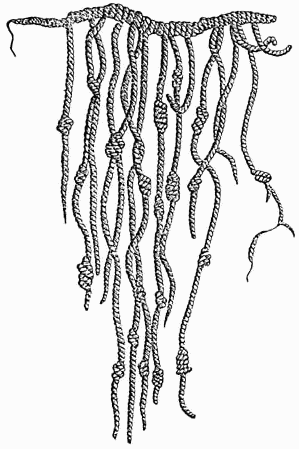
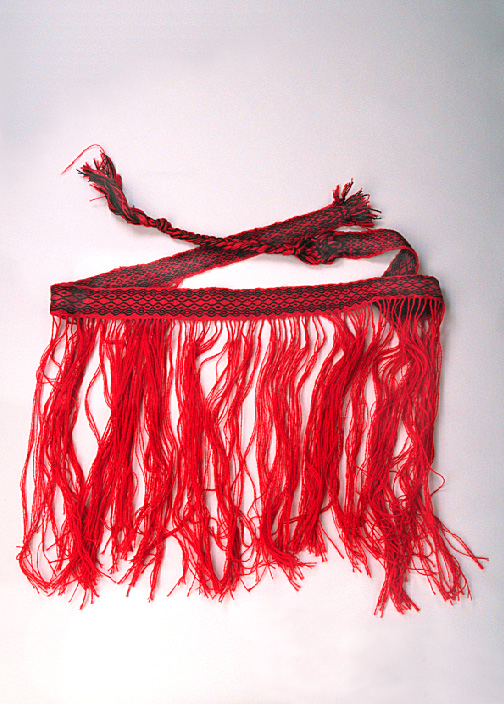
Quipu of Incas of Peru were knotted strings hanging from a belt, for counting & codes, an alternative to written language. Quipu derived from female's 90 degree hanging string-fringe skirts, as seen on Denmark woman mummy (E. Barber) and here:
http://www.smith.edu/hsc/museum/ancient_inventions/stringskirt2.html
http://en.wikipedia.org/wiki/Quipu
 |
| Quipu |
 |
| string skirt |
Wampum were a form of message belt, corded warf threads with colored shells and weft. Wampum derived from 180 degree end-fringed male's loincloth, as seen in Urumchi mummies at Tarim Basin in China's west desert.
http://www.library.upenn.edu/exhibits/rbm/kislak/print/belt.html
 |
| wampum belt |
Tropical forest people usually used inner bark of tree, tapa cloth, pounded with a club or stone, wetted to lubricate.
Flax, linen, hemp etc. were first woven as grasses, later retted and splined/twined into threads and woven into cords/ropes/bands/etc.
Animal skins were pelted (pelleted/beaten) or chewed to soften to physically and chemically loosen the fibers.
Later, goat hair kemp & sheep wool were felted by wetting and pounding, the word 'walk' originated from foot-stamping felt.
Biblical Josephs' many colored coat was of bands of cloth (Afghan wool) woven by nomadic women who spun thread/yarn while walking with the flocks, then the bands were sewn together at camp into blankets, clothing etc. Persian banded shirts of silk were sewn the same way.
http://tletl.blogspot.com/2012/05/figmorarhoa.html
Tuesday, May 29, 2012
Forest
Forest: latin, outside of house (forum, foris)
Arbor: french, tree
Silva: latin, forest (cf agri - field acre, arbori - tree), herb/arb
Endura: mbuti, interior of forest (endu = interior of dome hut)
So the term for 'the woods' is dependent upon authors' perspective & reference point, "inside/outside" of what? In Rome and London, the forest/woods was outside the city walls/fences and were managed by the kings' forest rangers/guards, while the wooded parklands were inside the city walls/fences and were managed by arborists/gardeners.
Forest related words From Carlos Lascaux
...paa(Th)=woods/forest,=pa(middle chinese)=meadow. also, Bantu(Gens)= B/pan-tu(letra/reversal)=topan(N)=over us(their God, the forest)= paa(thai). the chinese=pa=pan(N)=place, apan(N)=river(water/atl/apan).
Cuauhnauac(N)=woods4/trees4, and, the city/ciuia(N/verb)=stimulate(E) is surrounded by forest.
starling: this bird and its wider species follow the plow, has known man and learned from him since agriculture/forest clearings
sea age 2ka a continuation of the nomad deer age. even the word, mast(E)=masta(W.Germ)=
mastr(ONorse/MLG)=mazdos(WIE/West.Indo-Euro), then connects to, mast(E)=fruit of
forest trees,=mast(OHG)=mazdos(WIE)=meat(E)=maz(OHG)=mazatl(N/7 Tona)=deer.
with boat mast=mastro(Portugues)=mastil(sp).
mazatl(N/7) has close relationship to maze(E), to mastr(ONorse)=ma(s)t/l/r
(letra)=matlatl(N)=net, ah, the mast where the netting hangs, and, the word,
noma/nomatka/nomatzinco(N)=nomad(Fr/Lat/Gk)=no matlatl(N)=no/my net/matlatl=
ma(N)=hunt land/sea with net,=atlatl(N)=throwing stick,=at/l/r-at/l/r=arrow=
dart(E)=d/t/tl-ar/l/tl(letra)=a-tl-atl(N), with the d being the d/t/l-atl/art.
dart(E)=tart(OHG)=t/l-ar/l/t/l(letra). fool with r/l/t/l, and, t/l/r/l/t/l
before you tell me Letra doesn't work, por favor. Tlaloc/Rarog, too.
RDeer. the Mazatlan practice shamanism= chamaua(N)=eulogize/xamani(N)=destroy. their ancestors enter trees= treow(OE)=Teotl(N)upon dying and from there guide the living. deer milk made into cheese tastes like sharp Parmesan. 2004 Mazat/ Dukha herdsman had 97 head, tourism arrived, thousands of $ to see a red deer, but none of that money got to the Dukha/Toca(N). [tocharian?]
Okhotsk=Ocotl Tochin(N)= Pine(forest)Conejo/Cony=Bobcat
...onicma(N)=i knew it, i found it out; i learned it,=aenigma(Lat), -mat-=mati(N)=know,=ainigma(Gk)=enigma(E)=riddle in verse=uta(Japonica)= otli(N)=route/order/vein=in uentli(N)=the offering,=odol(Basque)=(b)lood (E)=idol(E)=Odin/Wodin/Wo(r)ding.
tzocatl(N)=socket(E)/wrinkle=w(r)i(n)k(letra)= wick(e)=uic(N)=back and forth/row,=uictli(N)=shovel,=ahuictli(N)=oar, uica(N/verb)=vicar/govern/Viking(Norse)=uiquillia(N/rev)=quiller(Teuton). ...lolo(M)=papalotl(N)=butterfly,=m-lulu(Bantu=Topan/N/reversal/= over us, ah, the Forest itself is their Deity.
http://tlatlatzolteotl.blogspot.com/
http://tletl.blogspot.com/search?q=forest
Dukha/Dukkha ...Tsaatan, short for Ma-zatlan(N)=DeerLand, southernmost reindeer/Mazatl (N/7 Tonalamatl)culture, Mongolian taiga, between Siberian Boreal forest to the North and the Steppes of inner-Asia to the South. smallest ethnic minority in Mongolia
the Mazatlan practice shamanism= chamaua(N)=eulogize/xamani(N)=destroy. their ancestors enter trees= treow(OE)=Teotl(N)upon dying and from there guide the living. [tocharian - toca?]
dukkha is the unsatisfactoriousness of life due to its clamor notorious, being to-/our being/-ca, not catching up to our imaginations running away with our potential=potli(N)=companion/brother(E), also poa(N)=power/flower/plower(E), which is paired with sukha= tzocatl(N)=socket/wrinkle/fill with tzo/mud(E), supposedly the asukha/azucar(sp)=sugar of life, if one can consider, as Xanthippe had to, Tzocrates, as sweet. the Wiki-etymology of these words is the late Buddhist Etym., atomized into unrecognizable mini-particles. but let's give it a try, as their roots hit paydirt when they mention the ancient Aryans=Airyani=Ailia yani(N)=allied pilgrims of the plain/ llano(sp) with their horse/cattle/oxen-drawn carts/tereg(Mongol)= the Castle/rook in chess(from Arabs), saying that -kha=sky, well the sky is a being, but kha/ca(N)all by itself=being, and is the soul of the Pharoah when he unwraps himself from his tomb for nightwalks when his stars are right. ...sukha=good axle=axictli(N)=waterspout that runs
Okhotsk=Ocotl Tochin(N)= Pine(forest)Conejo/Cony=Bobcat
Hodsock=tzocatl(N)=wrinkle/socket(E). ...Matlock=Matlatl tloc(N)=beside the hand/net.
...Que(r)cus=Quech/c-ua(Inca)=Oquichtli(N)=O(r)chid. Onions goes all around the forest on this one, avoiding the O, but putting in every other combination of vowel making O, e.g., ac/aec(OE)=eiche(Ger)/ eik(ON)=aiks(CGerm), on the linguistic merry-go-round, even mistaking the name Acton for Oak related, but, Algodon(sp)=Cotton=A(l)c(o)ton, the cotton armor padding in fashion before metals, the cheap version after. in fact all names thought to be Oak, save Oakley and Noke, which could be, Noquia/Noquilia(N)=verter/spill//purge, have other antecedents, e.g., Agden, cf., Acton.
...lolo(M)=papalotl(N)=butterfly,=m-lulu(Bantu=Topan/N/reversal/= over us, ah, the Forest itself is their Deity.
(S)wa/waa/ua(N)h/th/tilinqui(N) ...or, Swahili=owns tongue/tili-nqui(N)=lingua(Lat)=lengua(sp). ...dunia(S)=world=d/Tonia(letra)=Tonatiuh(N)=Anthony, the Sun,= dunya(Arab)=dune(E)=tune(E)=tone(E)=Tonatiuh(N). dunes are solar. ...ulimwengu(S)=Ollin uentli co(N)=comes the (r)olling offering, i.e., the Sun, Tona, the Naui Ollin of the 5th Age. ...udongo(S)=soil=tzotl(N)=sod/sot/mud/soot,=od/oto(n)c/go(letra)= otocac/toca(N)=sow/sembrar y enterrar/bury. ...matope(S)=mud=m/zud(Mongol)=z/sod/soil(E)=s/z/tzotl(N),=ma/hand idol/toptli(N)=attob(Arab)=tob/tub(Egyptian)=adobe(Amerind)= the mud/tzotl for adobe/al-tob(Arab)=the brick=piccatl(N)=vulva (lipped being=renga/Japonica/=r/tentli ca(N)=tenca(N)=t/renga(J)=brick. ...kilima(S)=mountain/hill,=Colima(Mex/state)=Coliman(N)=maritime province on the Pacific vertiente, Mexico,=colli/culli(N)=abuelo/ abuela,=nocolhuan(N)=my ancestors,=ima(N)=his/their hands/ma(N). ancestors had a close relation with Tepetl=Te(m)ple, idented with mountains, e.g., Colima(N)=hands of(the)Grandfather. ...ziwa(S)=lake=tlaca(N)=body,=ciuatl(N)=woman,=Tzintli ua(N)= the Hon./saintly owner(E)=tzo atl(N)=blood water/atl(N). ...ghuba(S)=bay,=gubb/gubba/gubbat(Arab)=gh/g/cov/b(letra)=cove(E). ...mwitu(S)=wood/forest,=witu(OHG)=wood(E)=quauitl(N)=tree=treow(OE)= teotl(N),=kaede(Japonica)=maple,=keadar(Basque)=cedar(E)=(Al)qaeda (Arab)=vithr(ONorse)=withe/with/wide(E).
topan(N)=over us,=Pan-to(N/reversal)= P/Bantu(Afrikan tribe whose deity=the forest above them).
tree/ki(J) ...tricky=ticitl(N)=doctor/midwife,=tiger(E/birthing animal of the cave Venus,
the ocelotl/ocelome(N/plural);
wood=witu(OHG)=qua-uitl(N)=tree=t(r)eow(OE)=teotl(N)=teo theo deo, ke/keadar(Basque)=smoke/column of smoke,=cedar(E/tree)=kaede(J)=mapletree, =ka/qua-(u)itl/t/de(letra=J/N)=al qaeda(arab)=campfire/HQ,=tlalli quauitl(N)= earth/landtree. ki(J)=chi(N), trees are on top of, over, as the Bantu/Topan(N)= over us, noticed, their deity being the forest itself from which they received
everything. it turns out Neander/Neandra swam the strait of Gibralter near Ceuta=
ceuia(N)=nitla-ceuia(N)=ceui(N)=become cold, apagar el fuego,=Ceutlan(N)=place of
rest and frío, to get to europe, because the Bantu have a cave horizon, pygmy
dwarfs=d/t/z(w)a(r)p/f(letra)=zapa/zapatl(N)=dwarf(E)=zapatero(sp)=shoemaker/
schumacher=s/sh/xotl maca(N)=footmaker,=zapa/zhapa/hapa/japa(N)=Japan, and dwarfs
have an advantage in cave environs [BUT pygmies don't enter caves in Congo?] , pueden esconderse en lugares muy pequeños.
al principio, pensé, ki(J), de q(ua)uitl(N)/kitl, pero, si, ke(Basque)=smoke,
y quemar(sp)=burn=brinnan(OHG)=b/pinaua/opinauah(N)=hacerse rojizo(con verguenza),
pos, idioma viene del cuerpo mismo, entonces tiene, ki(J)=kaede(J) nexo con,
quauitl(N), e.g., kae/ki(J).
"the word string in Nauatl: Toptli/toptia=opt/obey, Tobey/Tobit/Topile/ topilli(N)=truncheon, made of topol(R)=poplarwood, the pruned tree. that Toptia/obey(E)later becomes brick in Egyptian/Arab is telling, as bricks/adobe obey where they are laid, edge to edge" [cf Tarim Basin China, Tocharians/tukhara/twgry/yuezhi/tokharoi toca/dukha? buried kin in poplar trunks or coffin boats of poplar]
Fire: http://en.wiktionary.org/wiki/fire
Etymology: From Middle English fier, from Old English fȳr (“fire”), from West Germanic *fuïr, a regularised form of Proto-Germanic *fōr (“fire”) (compare West Frisian fjoer, Dutch vuur, Low German Für, German Feuer, Danish fyr), from Proto-Indo-European *péh₂ur (compare Hittite 𒉺𒀪𒄯 (paḫḫur), Umbrian pir, Tocharian A/B por/puwar, Czech pȳř (“hot ashes”), Ancient Greek πῦρ (pŷr, “fire”), Armenian հուր (hur, “fire”)). This was an inanimate noun whose animate counterpart was Proto-Indo-European *Hn̥gʷnis.
PIE pehur/pahur (pyre)
Mbuti apa
Malay api
Polynesian ahi
Ainu ape
Apalai Brazil apoto
Hebrew nura
Avestan atar
Turk dial. ot, ates
Latin dial. focu
Atlas berber afa
words around world for fire/ignite/oxidize:
Aché: tata
Afrikaans: vuur (af)
Ainu: アペ (ape)
Akkadian: 𒉈 (išātu) f.
Albanian: zjarr (sq) m.
Ama: ta
Amanayé: tata
Amharic: እሳት (am) (əsat) m.
Amundava: tata
Angaataha: sisɨha
Apalaí: apoto
Apiaká: tata
Arabic: نَارٌ (ar) (nār) f.
Egyptian Arabic: نار (nar) f.
Aragonese: fuego (an)
Aramaic: ܢܘܪܐ
Hebrew: נורא (nūrā’) f.
Syriac: ܢܘܪܐ (nūrā’) f.
Armenian: կրակ (hy) (krak), հուր (hy) (hur)
Aromanian: foc
Avestan: ātar
Aymara: nina (ay)
Azeri: od (az), atəş (az)
Baluchi: آس (ás), آچ (ác)
Bashkir: ут (ut)
Basque: su (eu)
Baure: yaki
Belarusian: агонь (be) (ahónʹ) m.
Bengali: আগুন (bn) (agun), অগ্নি (bn) (ôgni)
Borôro: joru
Breton: tan (br) m.
Bulgarian: огън (bg) (ógǎn) m.
Burmese: တေဇော (my) (tei zo)
Catalan: foc (ca) m.
Cebuano: kalayo
Central Atlas Tamazight: ⴰⴼⴰ (afa) m., ⵜⵉⵎⵙⵙⵉ (timssi) f.
Chamicuro: kajchi
Chamorro: guafi (ch)
Chinese:
Cantonese: 火 (fo2)
Dungan: хуә
Mandarin: 火 (zh) (huǒ)
Min Dong: 火 (huōi)
Min Nan: 火 (hóe, hé)
Wu: 火 (hǔ)
Chuvash: вут (vut)
Coptic:
Bohairic: ⲭⲣⲱⲙ (ʔxrōm) m., ⲥⲁϯ (sati) f.
Sahidic: ⲕⲣⲱⲙ (ʔkrōm) m., ⲥⲁⲧⲉ (sate) f.
Cornish: tan (kw) m.
Corsican: focu (co)
Cree: ᐃᔥᑯᑌᐤ (cr) (ishkuteu)
Crimean Tatar: ot
Czech: oheň (cs) m.
Danish: ild (da) c.
Dolgan: уот (uot)
Dutch: vuur (nl) n.
Egyptian: 𓏴𓏏𓊮 (sdjt) f.
Esperanto: fajro (eo)
Estonian: tuli (et)
Evenki: того (togo)
Faroese: eldur (fo) m.
Finnish: tuli (fi)
French: feu (fr) m.
Old French: fu m., feu m.
Friulian: fûc
Gagauz: ateş
Galician: lume (gl) m.
Georgian: ცეცხლი (ka) (c'ec'xli), ალი (ka) (ali)
German: Feuer (de) n.
Greek:
Ancient: πῦρ (pyr) n.
Modern: φωτιά (el) (fotiá) f.
Hawaiian: ahi
Hebrew: אֵשׁ (he) (eš) f.
Hindi: आग (hi) (āg) f., अग्नि (hi) (agní), आतिश (hi) (ātiś)
Hittite: 𒉺𒀪𒄯 (paḫḫur) n.
Hungarian: tűz (hu)
Icelandic: eldur (is) m., bál (is) n.
Ido: fairo (io)
Igbo: ọku
Indonesian: api (id)
Irish: tine (ga) m.
Old Irish: teine m.
Italian: fuoco (it) m.
Japanese: 火 (ja) (ひ, hi), 燃焼 (ja) (ねんしょう, nenshō)
Javanese: geni (jv)
Kannada: ಬೆಂಕಿ (kn) (benki), ಅಗ್ನಿ (kn) (agni), ಕಿಚ್ಚು (kn) (kiccu)
Karachay-Balkar: от (ot)
Karakalpak: ot
Kazakh: от (kk) (ot)
Khakas: от (ot)
Khmer: ភ្លើង (km) (pləəng)
Korean: 불 (ko) (bul)
Kumyk: от (ot)
Kurdish:
Kurmanji: agir (ku) m., nar (ku) f.
Sorani: ئاگر (ku) (Agir)
Kyrgyz: от (ky) (ot)
Lao: ໄຟ (lo) (fai)
Latgalian: guņs f.
Latin: ignis (la) m., focus (la) m., flamma (la) f.
Latvian: uguns (lv) f.
Lithuanian: ugnis (lt)
Lombard: fööch
Low German: Füer (nds)
Luxembourgish: Feier (lb)
Macedonian: оган (mk) (ógan) m.
Malay: api (ms), pawaka (ms) (in archaic literature, obsolete)
Malayalam: തീ (ml) (thee), അഗ്നി (ml) (agni)
Maltese: nar (mt) f.
Maléku Jaíka: kúe
Manx: çhenney m.
Maori: ahi (mi)
Mapudungun: kütral, kvxal
Marathi: अग्नि (mr) (agni)
Middle Persian: ādur
Miskito: pata
Mongolian: гал (mn)
Nanticoke: tunt
Navajo: kǫʼ
Neapolitan: ffuoco
Nepali: आगो (ne) (Āgō)
Ngarrindjeri: keni
Nogai: от (ot)
Norwegian: ild (no) m.
Nynorsk: eld (no)
Novial: faire
Occitan: fuòc (oc)
Ojibwe: zaka'igewin, ishkode
Old Church Slavonic: огнь (ognĭ) m.
Old English: fyr (ang)
Old Norse: eldr m.
Old Provençal: fuoc
Old Prussian: pannu
Oriya: ଅଗ୍ନି (or) (agni)
Ossetian: арт (art)
Ottoman Turkish: آتش (âteş), نار (nâr), آذر (âzer)
Paumarí: siho
Pennsylvania German: feier
Persian: آتش (fa) (âtaš), آذر (fa) (âzar)
Old Persian: ātar
Phoenician: 𐤀𐤎 (ʾs)
Polish: ogień (pl) m.
Portuguese: fogo (pt) m.
Quechua: nina (qu)
Rapa Nui: ahi
Rohingya: ooin
Romani: jag
Romanian: foc (ro) n.
Romansch: fieu m., fö (rm) m.
Russian: огонь (ru) (ogónʹ) m.
Samoan: afi (sm)
Samogitian: ognis
Sanskrit: अग्नि (sa) (agní)
Scots: fire
Scottish Gaelic: teine (gd) m.
Serbo-Croatian:
Cyrillic: ватра (sh) f., огањ (sh) m.
Roman: vatra (sh) f., oganj (sh) m.
Shor: от (ot)
Sicilian: focu (scn)
Sinhalese: ගින්න (si) (ginna)
Skolt Sami: toll
Slovak: oheň (sk) m.
Slovene: ogenj (sl) m.
Sotho: mollo (st)
Southern Altai: от (ot)
Spanish: fuego (es) m.
Sumerian: 𒉈 (NE)
Swahili: moto (sw)
Swedish: eld (sv) c., brand (sv) c.
Tagalog: apoy (tl)
Tahitian: please add this translation if you can
Tajik: оташ (tg) (otaš)
Tamil: நெருப்பு (ta) (noruppu)
Taos: phà’áne
Tatar: ут (tt) (ut), ялкын (tt) (yalqın)
Telugu: అగ్ని (te) (agni)
Thai: ไฟ (th) (fai)
Tibetan: མེ (bo) (me)
Tocharian A: por
Tocharian B: puwar
Turkish: ateş (tr)
Turkmen: ot (tk)
Tuvan: от (ot)
Tzotzil: k'ok'
Ugaritic: 𐎛𐎌𐎚 (ỉšt)
Ukrainian: вогонь (uk) (vohónʹ) m.
Urdu: آگ (ur) (āg) f., آتش (ur) (ātiś) f., اگنی (ur) (agní)
Uyghur: ئوت (ug) (ot)
Uzbek: oʻt (uz), otash (uz)
Venetian: fógo
Vietnamese: lửa (vi), hoả (vi) (rare) (火 (vi))
Vilamovian: faojer
Welsh: tân (cy) m.
West Frisian: fjoer n.
Xhosa: umlilo
!Xóõ: ǀʻàã
Yakut: уот (uot)
Yiddish: פֿײַער (yi) (fayer) m. and n.
Zhuang: feiz (za)
Arbor: french, tree
Silva: latin, forest (cf agri - field acre, arbori - tree), herb/arb
Endura: mbuti, interior of forest (endu = interior of dome hut)
So the term for 'the woods' is dependent upon authors' perspective & reference point, "inside/outside" of what? In Rome and London, the forest/woods was outside the city walls/fences and were managed by the kings' forest rangers/guards, while the wooded parklands were inside the city walls/fences and were managed by arborists/gardeners.
Forest related words From Carlos Lascaux
...paa(Th)=woods/forest,=pa(middle chinese)=meadow. also, Bantu(Gens)= B/pan-tu(letra/reversal)=topan(N)=over us(their God, the forest)= paa(thai). the chinese=pa=pan(N)=place, apan(N)=river(water/atl/apan).
Cuauhnauac(N)=woods4/trees4, and, the city/ciuia(N/verb)=stimulate(E) is surrounded by forest.
starling: this bird and its wider species follow the plow, has known man and learned from him since agriculture/forest clearings
sea age 2ka a continuation of the nomad deer age. even the word, mast(E)=masta(W.Germ)=
mastr(ONorse/MLG)=mazdos(WIE/West.Indo-Euro), then connects to, mast(E)=fruit of
forest trees,=mast(OHG)=mazdos(WIE)=meat(E)=maz(OHG)=mazatl(N/7 Tona)=deer.
with boat mast=mastro(Portugues)=mastil(sp).
mazatl(N/7) has close relationship to maze(E), to mastr(ONorse)=ma(s)t/l/r
(letra)=matlatl(N)=net, ah, the mast where the netting hangs, and, the word,
noma/nomatka/nomatzinco(N)=nomad(Fr/Lat/Gk)=no matlatl(N)=no/my net/matlatl=
ma(N)=hunt land/sea with net,=atlatl(N)=throwing stick,=at/l/r-at/l/r=arrow=
dart(E)=d/t/tl-ar/l/tl(letra)=a-tl-atl(N), with the d being the d/t/l-atl/art.
dart(E)=tart(OHG)=t/l-ar/l/t/l(letra). fool with r/l/t/l, and, t/l/r/l/t/l
before you tell me Letra doesn't work, por favor. Tlaloc/Rarog, too.
RDeer. the Mazatlan practice shamanism= chamaua(N)=eulogize/xamani(N)=destroy. their ancestors enter trees= treow(OE)=Teotl(N)upon dying and from there guide the living. deer milk made into cheese tastes like sharp Parmesan. 2004 Mazat/ Dukha herdsman had 97 head, tourism arrived, thousands of $ to see a red deer, but none of that money got to the Dukha/Toca(N). [tocharian?]
Okhotsk=Ocotl Tochin(N)= Pine(forest)Conejo/Cony=Bobcat
...onicma(N)=i knew it, i found it out; i learned it,=aenigma(Lat), -mat-=mati(N)=know,=ainigma(Gk)=enigma(E)=riddle in verse=uta(Japonica)= otli(N)=route/order/vein=in uentli(N)=the offering,=odol(Basque)=(b)lood (E)=idol(E)=Odin/Wodin/Wo(r)ding.
tzocatl(N)=socket(E)/wrinkle=w(r)i(n)k(letra)= wick(e)=uic(N)=back and forth/row,=uictli(N)=shovel,=ahuictli(N)=oar, uica(N/verb)=vicar/govern/Viking(Norse)=uiquillia(N/rev)=quiller(Teuton). ...lolo(M)=papalotl(N)=butterfly,=m-lulu(Bantu=Topan/N/reversal/= over us, ah, the Forest itself is their Deity.
http://tlatlatzolteotl.blogspot.com/
http://tletl.blogspot.com/search?q=forest
Dukha/Dukkha ...Tsaatan, short for Ma-zatlan(N)=DeerLand, southernmost reindeer/Mazatl (N/7 Tonalamatl)culture, Mongolian taiga, between Siberian Boreal forest to the North and the Steppes of inner-Asia to the South. smallest ethnic minority in Mongolia
the Mazatlan practice shamanism= chamaua(N)=eulogize/xamani(N)=destroy. their ancestors enter trees= treow(OE)=Teotl(N)upon dying and from there guide the living. [tocharian - toca?]
dukkha is the unsatisfactoriousness of life due to its clamor notorious, being to-/our being/-ca, not catching up to our imaginations running away with our potential=potli(N)=companion/brother(E), also poa(N)=power/flower/plower(E), which is paired with sukha= tzocatl(N)=socket/wrinkle/fill with tzo/mud(E), supposedly the asukha/azucar(sp)=sugar of life, if one can consider, as Xanthippe had to, Tzocrates, as sweet. the Wiki-etymology of these words is the late Buddhist Etym., atomized into unrecognizable mini-particles. but let's give it a try, as their roots hit paydirt when they mention the ancient Aryans=Airyani=Ailia yani(N)=allied pilgrims of the plain/ llano(sp) with their horse/cattle/oxen-drawn carts/tereg(Mongol)= the Castle/rook in chess(from Arabs), saying that -kha=sky, well the sky is a being, but kha/ca(N)all by itself=being, and is the soul of the Pharoah when he unwraps himself from his tomb for nightwalks when his stars are right. ...sukha=good axle=axictli(N)=waterspout that runs
Okhotsk=Ocotl Tochin(N)= Pine(forest)Conejo/Cony=Bobcat
Hodsock=tzocatl(N)=wrinkle/socket(E). ...Matlock=Matlatl tloc(N)=beside the hand/net.
...Que(r)cus=Quech/c-ua(Inca)=Oquichtli(N)=O(r)chid. Onions goes all around the forest on this one, avoiding the O, but putting in every other combination of vowel making O, e.g., ac/aec(OE)=eiche(Ger)/ eik(ON)=aiks(CGerm), on the linguistic merry-go-round, even mistaking the name Acton for Oak related, but, Algodon(sp)=Cotton=A(l)c(o)ton, the cotton armor padding in fashion before metals, the cheap version after. in fact all names thought to be Oak, save Oakley and Noke, which could be, Noquia/Noquilia(N)=verter/spill//purge, have other antecedents, e.g., Agden, cf., Acton.
...lolo(M)=papalotl(N)=butterfly,=m-lulu(Bantu=Topan/N/reversal/= over us, ah, the Forest itself is their Deity.
(S)wa/waa/ua(N)h/th/tilinqui(N) ...or, Swahili=owns tongue/tili-nqui(N)=lingua(Lat)=lengua(sp). ...dunia(S)=world=d/Tonia(letra)=Tonatiuh(N)=Anthony, the Sun,= dunya(Arab)=dune(E)=tune(E)=tone(E)=Tonatiuh(N). dunes are solar. ...ulimwengu(S)=Ollin uentli co(N)=comes the (r)olling offering, i.e., the Sun, Tona, the Naui Ollin of the 5th Age. ...udongo(S)=soil=tzotl(N)=sod/sot/mud/soot,=od/oto(n)c/go(letra)= otocac/toca(N)=sow/sembrar y enterrar/bury. ...matope(S)=mud=m/zud(Mongol)=z/sod/soil(E)=s/z/tzotl(N),=ma/hand idol/toptli(N)=attob(Arab)=tob/tub(Egyptian)=adobe(Amerind)= the mud/tzotl for adobe/al-tob(Arab)=the brick=piccatl(N)=vulva (lipped being=renga/Japonica/=r/tentli ca(N)=tenca(N)=t/renga(J)=brick. ...kilima(S)=mountain/hill,=Colima(Mex/state)=Coliman(N)=maritime province on the Pacific vertiente, Mexico,=colli/culli(N)=abuelo/ abuela,=nocolhuan(N)=my ancestors,=ima(N)=his/their hands/ma(N). ancestors had a close relation with Tepetl=Te(m)ple, idented with mountains, e.g., Colima(N)=hands of(the)Grandfather. ...ziwa(S)=lake=tlaca(N)=body,=ciuatl(N)=woman,=Tzintli ua(N)= the Hon./saintly owner(E)=tzo atl(N)=blood water/atl(N). ...ghuba(S)=bay,=gubb/gubba/gubbat(Arab)=gh/g/cov/b(letra)=cove(E). ...mwitu(S)=wood/forest,=witu(OHG)=wood(E)=quauitl(N)=tree=treow(OE)= teotl(N),=kaede(Japonica)=maple,=keadar(Basque)=cedar(E)=(Al)qaeda (Arab)=vithr(ONorse)=withe/with/wide(E).
topan(N)=over us,=Pan-to(N/reversal)= P/Bantu(Afrikan tribe whose deity=the forest above them).
tree/ki(J) ...tricky=ticitl(N)=doctor/midwife,=tiger(E/birthing animal of the cave Venus,
the ocelotl/ocelome(N/plural);
wood=witu(OHG)=qua-uitl(N)=tree=t(r)eow(OE)=teotl(N)=teo theo deo, ke/keadar(Basque)=smoke/column of smoke,=cedar(E/tree)=kaede(J)=mapletree, =ka/qua-(u)itl/t/de(letra=J/N)=al qaeda(arab)=campfire/HQ,=tlalli quauitl(N)= earth/landtree. ki(J)=chi(N), trees are on top of, over, as the Bantu/Topan(N)= over us, noticed, their deity being the forest itself from which they received
everything. it turns out Neander/Neandra swam the strait of Gibralter near Ceuta=
ceuia(N)=nitla-ceuia(N)=ceui(N)=become cold, apagar el fuego,=Ceutlan(N)=place of
rest and frío, to get to europe, because the Bantu have a cave horizon, pygmy
dwarfs=d/t/z(w)a(r)p/f(letra)=zapa/zapatl(N)=dwarf(E)=zapatero(sp)=shoemaker/
schumacher=s/sh/xotl maca(N)=footmaker,=zapa/zhapa/hapa/japa(N)=Japan, and dwarfs
have an advantage in cave environs [BUT pygmies don't enter caves in Congo?] , pueden esconderse en lugares muy pequeños.
al principio, pensé, ki(J), de q(ua)uitl(N)/kitl, pero, si, ke(Basque)=smoke,
y quemar(sp)=burn=brinnan(OHG)=b/pinaua/opinauah(N)=hacerse rojizo(con verguenza),
pos, idioma viene del cuerpo mismo, entonces tiene, ki(J)=kaede(J) nexo con,
quauitl(N), e.g., kae/ki(J).
"the word string in Nauatl: Toptli/toptia=opt/obey, Tobey/Tobit/Topile/ topilli(N)=truncheon, made of topol(R)=poplarwood, the pruned tree. that Toptia/obey(E)later becomes brick in Egyptian/Arab is telling, as bricks/adobe obey where they are laid, edge to edge" [cf Tarim Basin China, Tocharians/tukhara/twgry/yuezhi/tokharoi toca/dukha? buried kin in poplar trunks or coffin boats of poplar]
Fire: http://en.wiktionary.org/wiki/fire
Etymology: From Middle English fier, from Old English fȳr (“fire”), from West Germanic *fuïr, a regularised form of Proto-Germanic *fōr (“fire”) (compare West Frisian fjoer, Dutch vuur, Low German Für, German Feuer, Danish fyr), from Proto-Indo-European *péh₂ur (compare Hittite 𒉺𒀪𒄯 (paḫḫur), Umbrian pir, Tocharian A/B por/puwar, Czech pȳř (“hot ashes”), Ancient Greek πῦρ (pŷr, “fire”), Armenian հուր (hur, “fire”)). This was an inanimate noun whose animate counterpart was Proto-Indo-European *Hn̥gʷnis.
PIE pehur/pahur (pyre)
Mbuti apa
Malay api
Polynesian ahi
Ainu ape
Apalai Brazil apoto
Hebrew nura
Avestan atar
Turk dial. ot, ates
Latin dial. focu
Atlas berber afa
words around world for fire/ignite/oxidize:
Aché: tata
Afrikaans: vuur (af)
Ainu: アペ (ape)
Akkadian: 𒉈 (išātu) f.
Albanian: zjarr (sq) m.
Ama: ta
Amanayé: tata
Amharic: እሳት (am) (əsat) m.
Amundava: tata
Angaataha: sisɨha
Apalaí: apoto
Apiaká: tata
Arabic: نَارٌ (ar) (nār) f.
Egyptian Arabic: نار (nar) f.
Aragonese: fuego (an)
Aramaic: ܢܘܪܐ
Hebrew: נורא (nūrā’) f.
Syriac: ܢܘܪܐ (nūrā’) f.
Armenian: կրակ (hy) (krak), հուր (hy) (hur)
Aromanian: foc
Avestan: ātar
Aymara: nina (ay)
Azeri: od (az), atəş (az)
Baluchi: آس (ás), آچ (ác)
Bashkir: ут (ut)
Basque: su (eu)
Baure: yaki
Belarusian: агонь (be) (ahónʹ) m.
Bengali: আগুন (bn) (agun), অগ্নি (bn) (ôgni)
Borôro: joru
Breton: tan (br) m.
Bulgarian: огън (bg) (ógǎn) m.
Burmese: တေဇော (my) (tei zo)
Catalan: foc (ca) m.
Cebuano: kalayo
Central Atlas Tamazight: ⴰⴼⴰ (afa) m., ⵜⵉⵎⵙⵙⵉ (timssi) f.
Chamicuro: kajchi
Chamorro: guafi (ch)
Chinese:
Cantonese: 火 (fo2)
Dungan: хуә
Mandarin: 火 (zh) (huǒ)
Min Dong: 火 (huōi)
Min Nan: 火 (hóe, hé)
Wu: 火 (hǔ)
Chuvash: вут (vut)
Coptic:
Bohairic: ⲭⲣⲱⲙ (ʔxrōm) m., ⲥⲁϯ (sati) f.
Sahidic: ⲕⲣⲱⲙ (ʔkrōm) m., ⲥⲁⲧⲉ (sate) f.
Cornish: tan (kw) m.
Corsican: focu (co)
Cree: ᐃᔥᑯᑌᐤ (cr) (ishkuteu)
Crimean Tatar: ot
Czech: oheň (cs) m.
Danish: ild (da) c.
Dolgan: уот (uot)
Dutch: vuur (nl) n.
Egyptian: 𓏴𓏏𓊮 (sdjt) f.
Esperanto: fajro (eo)
Estonian: tuli (et)
Evenki: того (togo)
Faroese: eldur (fo) m.
Finnish: tuli (fi)
French: feu (fr) m.
Old French: fu m., feu m.
Friulian: fûc
Gagauz: ateş
Galician: lume (gl) m.
Georgian: ცეცხლი (ka) (c'ec'xli), ალი (ka) (ali)
German: Feuer (de) n.
Greek:
Ancient: πῦρ (pyr) n.
Modern: φωτιά (el) (fotiá) f.
Hawaiian: ahi
Hebrew: אֵשׁ (he) (eš) f.
Hindi: आग (hi) (āg) f., अग्नि (hi) (agní), आतिश (hi) (ātiś)
Hittite: 𒉺𒀪𒄯 (paḫḫur) n.
Hungarian: tűz (hu)
Icelandic: eldur (is) m., bál (is) n.
Ido: fairo (io)
Igbo: ọku
Indonesian: api (id)
Irish: tine (ga) m.
Old Irish: teine m.
Italian: fuoco (it) m.
Japanese: 火 (ja) (ひ, hi), 燃焼 (ja) (ねんしょう, nenshō)
Javanese: geni (jv)
Kannada: ಬೆಂಕಿ (kn) (benki), ಅಗ್ನಿ (kn) (agni), ಕಿಚ್ಚು (kn) (kiccu)
Karachay-Balkar: от (ot)
Karakalpak: ot
Kazakh: от (kk) (ot)
Khakas: от (ot)
Khmer: ភ្លើង (km) (pləəng)
Korean: 불 (ko) (bul)
Kumyk: от (ot)
Kurdish:
Kurmanji: agir (ku) m., nar (ku) f.
Sorani: ئاگر (ku) (Agir)
Kyrgyz: от (ky) (ot)
Lao: ໄຟ (lo) (fai)
Latgalian: guņs f.
Latin: ignis (la) m., focus (la) m., flamma (la) f.
Latvian: uguns (lv) f.
Lithuanian: ugnis (lt)
Lombard: fööch
Low German: Füer (nds)
Luxembourgish: Feier (lb)
Macedonian: оган (mk) (ógan) m.
Malay: api (ms), pawaka (ms) (in archaic literature, obsolete)
Malayalam: തീ (ml) (thee), അഗ്നി (ml) (agni)
Maltese: nar (mt) f.
Maléku Jaíka: kúe
Manx: çhenney m.
Maori: ahi (mi)
Mapudungun: kütral, kvxal
Marathi: अग्नि (mr) (agni)
Middle Persian: ādur
Miskito: pata
Mongolian: гал (mn)
Nanticoke: tunt
Navajo: kǫʼ
Neapolitan: ffuoco
Nepali: आगो (ne) (Āgō)
Ngarrindjeri: keni
Nogai: от (ot)
Norwegian: ild (no) m.
Nynorsk: eld (no)
Novial: faire
Occitan: fuòc (oc)
Ojibwe: zaka'igewin, ishkode
Old Church Slavonic: огнь (ognĭ) m.
Old English: fyr (ang)
Old Norse: eldr m.
Old Provençal: fuoc
Old Prussian: pannu
Oriya: ଅଗ୍ନି (or) (agni)
Ossetian: арт (art)
Ottoman Turkish: آتش (âteş), نار (nâr), آذر (âzer)
Paumarí: siho
Pennsylvania German: feier
Persian: آتش (fa) (âtaš), آذر (fa) (âzar)
Old Persian: ātar
Phoenician: 𐤀𐤎 (ʾs)
Polish: ogień (pl) m.
Portuguese: fogo (pt) m.
Quechua: nina (qu)
Rapa Nui: ahi
Rohingya: ooin
Romani: jag
Romanian: foc (ro) n.
Romansch: fieu m., fö (rm) m.
Russian: огонь (ru) (ogónʹ) m.
Samoan: afi (sm)
Samogitian: ognis
Sanskrit: अग्नि (sa) (agní)
Scots: fire
Scottish Gaelic: teine (gd) m.
Serbo-Croatian:
Cyrillic: ватра (sh) f., огањ (sh) m.
Roman: vatra (sh) f., oganj (sh) m.
Shor: от (ot)
Sicilian: focu (scn)
Sinhalese: ගින්න (si) (ginna)
Skolt Sami: toll
Slovak: oheň (sk) m.
Slovene: ogenj (sl) m.
Sotho: mollo (st)
Southern Altai: от (ot)
Spanish: fuego (es) m.
Sumerian: 𒉈 (NE)
Swahili: moto (sw)
Swedish: eld (sv) c., brand (sv) c.
Tagalog: apoy (tl)
Tahitian: please add this translation if you can
Tajik: оташ (tg) (otaš)
Tamil: நெருப்பு (ta) (noruppu)
Taos: phà’áne
Tatar: ут (tt) (ut), ялкын (tt) (yalqın)
Telugu: అగ్ని (te) (agni)
Thai: ไฟ (th) (fai)
Tibetan: མེ (bo) (me)
Tocharian A: por
Tocharian B: puwar
Turkish: ateş (tr)
Turkmen: ot (tk)
Tuvan: от (ot)
Tzotzil: k'ok'
Ugaritic: 𐎛𐎌𐎚 (ỉšt)
Ukrainian: вогонь (uk) (vohónʹ) m.
Urdu: آگ (ur) (āg) f., آتش (ur) (ātiś) f., اگنی (ur) (agní)
Uyghur: ئوت (ug) (ot)
Uzbek: oʻt (uz), otash (uz)
Venetian: fógo
Vietnamese: lửa (vi), hoả (vi) (rare) (火 (vi))
Vilamovian: faojer
Welsh: tân (cy) m.
West Frisian: fjoer n.
Xhosa: umlilo
!Xóõ: ǀʻàã
Yakut: уот (uot)
Yiddish: פֿײַער (yi) (fayer) m. and n.
Zhuang: feiz (za)
Thursday, May 24, 2012
Tuscarora
Link between tuscarora/skararure, etruscan, euskara/basque, tukhara/tocharian/tushara/yuezhi/gushi/kushan?
Tuscarora ("hemp gatherers"[1]) are a Native American people of the Iroquoian-language family
Ska:rù:rę' Skarureh refers to the long shirt worn as part of the men's regalia, hence "long shirt people".
http://en.wikipedia.org/wiki/Skarure
Greenwood: Amerind branch he calls Keresiouan. Examples of these citations include:
ku…reh ‘acorn’, in relation to *kul, 'tree'
nyatar ‘sea’, in relation to *na, 'water'
Compare *kul, 'tree' to these:
Greek húlē 'forest, wood; firewood, timber; possibly via Etruscan, from Euroasiatic root *[z]ilwV 'wood' (Starostin), reflected in Altaic *sjulu (˜ *z-, -l´-) 'conifer, pine tree', [and to silva (forest).]
1 For example, a proposed link to IE *k´sul-o- 'log' > Greek ksúlos 'wood'.
http://vasco-caucasian.blogspot.com/2011/09/latin-silva.html
(parts paraphrased by me DDeden)
Tusharas (alias Tukharas, Tócharoi) were a Mleccha tribe, with their kingdom located in the north west of India as per the epic Mahabharata. An account in Mahabharata (Mbh 1:85) depicts Mlechchas as the descendants of Anu
Tuscarora ("hemp gatherers"[1]) are a Native American people of the Iroquoian-language family
Ska:rù:rę' Skarureh refers to the long shirt worn as part of the men's regalia, hence "long shirt people".
http://en.wikipedia.org/wiki/Skarure
Greenwood: Amerind branch he calls Keresiouan. Examples of these citations include:
ku…reh ‘acorn’, in relation to *kul, 'tree'
nyatar ‘sea’, in relation to *na, 'water'
Compare *kul, 'tree' to these:
Greek húlē 'forest, wood; firewood, timber; possibly via Etruscan, from Euroasiatic root *[z]ilwV 'wood' (Starostin), reflected in Altaic *sjulu (˜ *z-, -l´-) 'conifer, pine tree', [and to silva (forest).]
1 For example, a proposed link to IE *k´sul-o- 'log' > Greek ksúlos 'wood'.
http://vasco-caucasian.blogspot.com/2011/09/latin-silva.html
(parts paraphrased by me DDeden)
Tusharas (alias Tukharas, Tócharoi) were a Mleccha tribe, with their kingdom located in the north west of India as per the epic Mahabharata. An account in Mahabharata (Mbh 1:85) depicts Mlechchas as the descendants of Anu
Tuesday, May 15, 2012


Friday, May 4, 2012
The Ark was circular
http://www.guardian.co.uk/uk/2010/jan/01/noahs-ark-was-circular/print
This agrees with my earlier interpretation of round boats preceding longboats.
[Note: see bottom for interesting boat coffins & Urumqi mummies of China Tairm Basin]
The bible mentions rectilinear measurements, but those may have referred to the interior cabins/pens (and perhaps magnified in size and carrying capacity by editors?), not necessarily to the overall circular form.
Note: Noah may have been titled Atram Hasis, from Ad-iram (adramite of Ptolemy/Chatramotitae of Erasthenos/Hadramaut/Ch'Ad/Akkad) while hasis = aziz (Arabic: "highly valued'), related to Oasis & Hasidic (temple well - flowing spring), compare to (at-Ra)Moses (Nile Hebrew), (at)Ra-M-ses (Nile Pharaoh), also the English word Admiral (via Arabic) while Noah relates to Nao-katu/Navigate/boat maker-user.
http://www.guardian.co.uk/uk/2010/jan/01/noahs-ark-was-circular/print
=
There are dozens of ancient tablets that have been found which describe the flood story but Finkel says this one is the first to describe the vessel's shape. "In all the images ever made people assumed the ark was, in effect, an ocean-going boat, with a pointed stem and stern for riding the waves – so that is how they portrayed it," said Finkel. "But the ark didn't have to go anywhere, it just had to float, and the instructions are for a type of craft which they knew very well. It's still sometimes used in Iran and Iraq today, a type of round coracle which they would have known exactly how to use to transport animals across a river or floods." Finkel's research throws light on the familiar Mesopotamian story, which became the account in Genesis, in the Old Testament, of Noah and the ark that saved his menagerie from the waters which drowned every other living thing on earth. In his translation, the god who has decided to spare one just man speaks to Atram-Hasis, a Sumerian king who lived before the flood and who is the Noah figure in earlier versions of the ark story. "Wall, wall! Reed wall, reed wall! Atram-Hasis, pay heed to my advice, that you may live forever! Destroy your house, build a boat; despise possessions And save life! Draw out the boat that you will built with a circular design; Let its length and breadth be the same." The tablet goes on to command the use of plaited palm fibre (rope), waterproofed with bitumen (kophar), before the construction of cabins (qufa/coop/kytos) for the people and wild animals. It ends with the dramatic command of Atram-Hasis to the unfortunate boat builder whom he leaves behind to meet his fate, about sealing up the door once everyone else is safely inside: "When I shall have gone into the boat, Caulk the frame of the door!"
How sensible, a woven round boat with rectangular frame interior to divide compartments.
Note that ancient Egyptian measurements were probably based on the sphere. http://www.plosone.org/article/info%3Adoi%2F10.1371%2Fjournal.pone.0033895
An Ancient Relation between Units of Length and Volume Based on a Sphere
and this note from Chris Tedder: The sun is depicted as a disc rather than a sphere. For example, the sun held between the horns of Hathor in the Dyn 4 ‘Menkaure triad’, is a disc with a slightly curved surface. (pic: [heritage-key.com] ). If they had understood the sun was spherical rather than a disc, we should at least see a hemisphere between the horns. http://heritage-key.com/egypt/triad-menkaure
The circular form was obviously important to the AE (circular sun, moon, horizon etc.), and I suspect they incorporated it into the design of the sqd 5 1/2 pyramid with a geometrical / mathematical relationship to the square base.
For example, the floor level of the sarcophagus chamber and the level of the floor lines of the shafts as they intersected with the face of the pyramid, can be determined graphically using a circle /square combination:
[sites.google.com]
-
Note comparison to my drum-wheel/merkaba theory.
An interesting sidepoint. The Road to Ubar (by Nicholas Clapp) mentions the Arabian tale The City of Brass, where Emir Musa (famed for invading Spain, and later dying at Al Ula (Dedan kingdom) Arabia on the way back to Damascus, traveled to a mysterious brass city, and on the way back, found a coastal mountain which fits the Dophar description (dark skin mountain Hamitic people living in caves wearing leather =matches= Shahra people speaking language of birds not Arabic that herded cattle around caves).
http://groups.yahoo.com/group/ancientarcheology/message/455
In the story: "The men talked about how Solomon had had great powers and was able to put jinns in brass bottles. Solomon had poured melted lead on the bottles and sealed them with his signature..." Lastly in the story "Musa was not sympathetic to Talib; he said, "You acted in a dishonorable way!" The group loaded the riches of the city on their camels. Then they closed the gates before leaving. The party rode along the coast and reached a high mountain next to the sea. It had many caves. People lived in them and Emir Musa said, "Who are those people?" Sheikh Samad said, "They are the people who have the bottles."
{Note: Frankinsense was transported at Qana port on the So. Arabian coast by animal-skin boats (bottles??) floated downstream from Dophar mtns. I think 'bottles' was originally 'boats', from putti/pot/boat/hut/punt skin round boats, like those used on Tigris River and India. Perhaps bottle was diminutive for boat eg. bo(a)t-le. Anyway, note similarity of Noah/Atram saying to 'caulk the ark door', and the story of Solomon sealing the bottled jinns/genies. DDeden}
"Only the king of those people could speak Arabic. He came to the group and welcomed Emir Musa, Sheikh Samad, and the others. They learned that the people of that mountain were descended from Ham, who was one of the sons of Noah. The sea was called Al-Karkar. The king gave a banquet for Musa, Samad, and the rest of the party. He presented them with twelve bottles that had been found in the sea. They gave him and his people gifts that included gold and silver. Musa, Samad, and their companions made the trip back to Syria."
Names-Titles for priests/diviners/fortunetellers/spirits:
Hebrew: Cohen/Coan/Kohannim (link to Goshen)
Egyptian: Coptian/Coptician
Japanese: Koshin-to (ancient shin-to) cf Buddhist Zen-do
Hawaiian: Kahuna (spirit priest)
Hopi AmerInd: Kachina (spirit doll/dance)
So. Arabian: Kahin (soothesayer/fortuneteller)
Adam - Atram - Abram
http://wikimapia.org/#lat=26.6666835&lon=37.9069304&z=18&l=0&m=b
http://mideasttour.blogspot.com/feeds/posts/default?orderby=updated
See story & photos of Chinese Turkestan 4ka Mummies & canoe coffins covered with cowhide accompanied by long (male?) paddles & (female?) punt sticks:
http://blog.hmns.org/tag/xiaohe/
Of the fifteen burial sites uncovered thus far, Xiaohe remains the oldest. The 167 excavated graves yielded more than a thousand artifacts from the period 2000 to 1450 BCE. Victor Mair notes:
There were five levels of burials in coffins in the shape of overturned boats. Live oxen were slaughtered at the site and their still-wet hides were used to wrap the coffins. After they had dried, the hides sealed the coffin tight as a drum, so that not even a speck of sand could enter the burial (Mair 2010, 47).
At the surface, large wooden obelisks were driven into the ground. Those accompanying the tombs of females are pointed in angular fashion, while those over male graves are shaped like paddles. Speculation based on similar grave decorations in northern Europe suggests the possibility that each obelisk is a sexual symbol, perhaps to demonstrate the individual’s virility or fertility.
DDeden
This agrees with my earlier interpretation of round boats preceding longboats.
[Note: see bottom for interesting boat coffins & Urumqi mummies of China Tairm Basin]
The bible mentions rectilinear measurements, but those may have referred to the interior cabins/pens (and perhaps magnified in size and carrying capacity by editors?), not necessarily to the overall circular form.
Note: Noah may have been titled Atram Hasis, from Ad-iram (adramite of Ptolemy/Chatramotitae of Erasthenos/Hadramaut/Ch'Ad/Akkad) while hasis = aziz (Arabic: "highly valued'), related to Oasis & Hasidic (temple well - flowing spring), compare to (at-Ra)Moses (Nile Hebrew), (at)Ra-M-ses (Nile Pharaoh), also the English word Admiral (via Arabic) while Noah relates to Nao-katu/Navigate/boat maker-user.
http://www.guardian.co.uk/uk/2010/jan/01/noahs-ark-was-circular/print
=
There are dozens of ancient tablets that have been found which describe the flood story but Finkel says this one is the first to describe the vessel's shape. "In all the images ever made people assumed the ark was, in effect, an ocean-going boat, with a pointed stem and stern for riding the waves – so that is how they portrayed it," said Finkel. "But the ark didn't have to go anywhere, it just had to float, and the instructions are for a type of craft which they knew very well. It's still sometimes used in Iran and Iraq today, a type of round coracle which they would have known exactly how to use to transport animals across a river or floods." Finkel's research throws light on the familiar Mesopotamian story, which became the account in Genesis, in the Old Testament, of Noah and the ark that saved his menagerie from the waters which drowned every other living thing on earth. In his translation, the god who has decided to spare one just man speaks to Atram-Hasis, a Sumerian king who lived before the flood and who is the Noah figure in earlier versions of the ark story. "Wall, wall! Reed wall, reed wall! Atram-Hasis, pay heed to my advice, that you may live forever! Destroy your house, build a boat; despise possessions And save life! Draw out the boat that you will built with a circular design; Let its length and breadth be the same." The tablet goes on to command the use of plaited palm fibre (rope), waterproofed with bitumen (kophar), before the construction of cabins (qufa/coop/kytos) for the people and wild animals. It ends with the dramatic command of Atram-Hasis to the unfortunate boat builder whom he leaves behind to meet his fate, about sealing up the door once everyone else is safely inside: "When I shall have gone into the boat, Caulk the frame of the door!"
How sensible, a woven round boat with rectangular frame interior to divide compartments.
Note that ancient Egyptian measurements were probably based on the sphere. http://www.plosone.org/article/info%3Adoi%2F10.1371%2Fjournal.pone.0033895
An Ancient Relation between Units of Length and Volume Based on a Sphere
and this note from Chris Tedder: The sun is depicted as a disc rather than a sphere. For example, the sun held between the horns of Hathor in the Dyn 4 ‘Menkaure triad’, is a disc with a slightly curved surface. (pic: [heritage-key.com] ). If they had understood the sun was spherical rather than a disc, we should at least see a hemisphere between the horns. http://heritage-key.com/egypt/triad-menkaure
The circular form was obviously important to the AE (circular sun, moon, horizon etc.), and I suspect they incorporated it into the design of the sqd 5 1/2 pyramid with a geometrical / mathematical relationship to the square base.
For example, the floor level of the sarcophagus chamber and the level of the floor lines of the shafts as they intersected with the face of the pyramid, can be determined graphically using a circle /square combination:
[sites.google.com]
-
Note comparison to my drum-wheel/merkaba theory.
An interesting sidepoint. The Road to Ubar (by Nicholas Clapp) mentions the Arabian tale The City of Brass, where Emir Musa (famed for invading Spain, and later dying at Al Ula (Dedan kingdom) Arabia on the way back to Damascus, traveled to a mysterious brass city, and on the way back, found a coastal mountain which fits the Dophar description (dark skin mountain Hamitic people living in caves wearing leather =matches= Shahra people speaking language of birds not Arabic that herded cattle around caves).
http://groups.yahoo.com/group/ancientarcheology/message/455
In the story: "The men talked about how Solomon had had great powers and was able to put jinns in brass bottles. Solomon had poured melted lead on the bottles and sealed them with his signature..." Lastly in the story "Musa was not sympathetic to Talib; he said, "You acted in a dishonorable way!" The group loaded the riches of the city on their camels. Then they closed the gates before leaving. The party rode along the coast and reached a high mountain next to the sea. It had many caves. People lived in them and Emir Musa said, "Who are those people?" Sheikh Samad said, "They are the people who have the bottles."
{Note: Frankinsense was transported at Qana port on the So. Arabian coast by animal-skin boats (bottles??) floated downstream from Dophar mtns. I think 'bottles' was originally 'boats', from putti/pot/boat/hut/punt skin round boats, like those used on Tigris River and India. Perhaps bottle was diminutive for boat eg. bo(a)t-le. Anyway, note similarity of Noah/Atram saying to 'caulk the ark door', and the story of Solomon sealing the bottled jinns/genies. DDeden}
"Only the king of those people could speak Arabic. He came to the group and welcomed Emir Musa, Sheikh Samad, and the others. They learned that the people of that mountain were descended from Ham, who was one of the sons of Noah. The sea was called Al-Karkar. The king gave a banquet for Musa, Samad, and the rest of the party. He presented them with twelve bottles that had been found in the sea. They gave him and his people gifts that included gold and silver. Musa, Samad, and their companions made the trip back to Syria."
Names-Titles for priests/diviners/fortunetellers/spirits:
Hebrew: Cohen/Coan/Kohannim (link to Goshen)
Egyptian: Coptian/Coptician
Japanese: Koshin-to (ancient shin-to) cf Buddhist Zen-do
Hawaiian: Kahuna (spirit priest)
Hopi AmerInd: Kachina (spirit doll/dance)
So. Arabian: Kahin (soothesayer/fortuneteller)
Adam - Atram - Abram
http://wikimapia.org/#lat=26.6666835&lon=37.9069304&z=18&l=0&m=b
http://mideasttour.blogspot.com/feeds/posts/default?orderby=updated
See story & photos of Chinese Turkestan 4ka Mummies & canoe coffins covered with cowhide accompanied by long (male?) paddles & (female?) punt sticks:
http://blog.hmns.org/tag/xiaohe/
Of the fifteen burial sites uncovered thus far, Xiaohe remains the oldest. The 167 excavated graves yielded more than a thousand artifacts from the period 2000 to 1450 BCE. Victor Mair notes:
There were five levels of burials in coffins in the shape of overturned boats. Live oxen were slaughtered at the site and their still-wet hides were used to wrap the coffins. After they had dried, the hides sealed the coffin tight as a drum, so that not even a speck of sand could enter the burial (Mair 2010, 47).
At the surface, large wooden obelisks were driven into the ground. Those accompanying the tombs of females are pointed in angular fashion, while those over male graves are shaped like paddles. Speculation based on similar grave decorations in northern Europe suggests the possibility that each obelisk is a sexual symbol, perhaps to demonstrate the individual’s virility or fertility.
DDeden
Wednesday, May 2, 2012
Eurolingua
There seems to have been a tidal effect of European language usage spreading from Turkey/Greece/Akkad to the west:
Chad/C-h-ad-iram-at (various spellings So. Arab)
Akkadian/Akkad-yan-a
Chaldean/Chaldian/(Cha)-Lidyan/Lycean/Luwian/Sloveyan/Danubyan
Etruska(ldya)n (w/est (ak)kad?) (chaldun = chaldyan?)
E(tr)uska(ldu)n (estru-chald-yan? Ishtar/Esther?)
Ruskia
Prus(h)ia
Frisian (Vlaamsk=Flemish, -Nor(d)sk-Swe(de)nsk-Dansk)
Bri(ti)sh(k-an-er?) Bri(di)sk?
-Cohen-Kohannim(Jewish priest/keshina "presence of god" eg. burning bush or beyt-El stone)
(early Hebrew/hapiru/abir were nomad herders with El/Alaat/Eloi lunar months eg. Shaban, then settled among Egypt Nile Solar disk/iStar cults, then wandered in Sinai, then settled in Jordan Valley Canaan and adopted YHWH/jehova (yhovalechem/obalisk/shivalingum = sedentary commonwealth under priest/king/judge)
-Khan?
-Kahin (Arabic soothesayer-priest)
-Kachina (Hopi Amerind spirit dance/doll)
-Kahuna (Hawaiian priest)
-Shinshoku (Japanese Shinto priest)
- http://en.wikipedia.org/wiki/Kamui (Ainu spirit-god-messenger)
-
Euska: nekaz - furrow/track
Etruska: ? - ?
Ruskia: lehka - furrow/track
Prushia: wechsal - animal trail
Frissia.: ? - ?
Bri(t)sh: last - follow furrow/foot form http://www.etymonline.com/index.php?term=last
Gaelic:
Chad/C-h-ad-iram-at (various spellings So. Arab)
Akkadian/Akkad-yan-a
Chaldean/Chaldian/(Cha)-Lidyan/Lycean/Luwian/Sloveyan/Danubyan
Etruska(ldya)n (w/est (ak)kad?) (chaldun = chaldyan?)
E(tr)uska(ldu)n (estru-chald-yan? Ishtar/Esther?)
Ruskia
Prus(h)ia
Frisian (Vlaamsk=Flemish, -Nor(d)sk-Swe(de)nsk-Dansk)
Bri(ti)sh(k-an-er?) Bri(di)sk?
-Cohen-Kohannim(Jewish priest/keshina "presence of god" eg. burning bush or beyt-El stone)
(early Hebrew/hapiru/abir were nomad herders with El/Alaat/Eloi lunar months eg. Shaban, then settled among Egypt Nile Solar disk/iStar cults, then wandered in Sinai, then settled in Jordan Valley Canaan and adopted YHWH/jehova (yhovalechem/obalisk/shivalingum = sedentary commonwealth under priest/king/judge)
-Khan?
-Kahin (Arabic soothesayer-priest)
-Kachina (Hopi Amerind spirit dance/doll)
-Kahuna (Hawaiian priest)
-Shinshoku (Japanese Shinto priest)
- http://en.wikipedia.org/wiki/Kamui (Ainu spirit-god-messenger)
-
Euska: nekaz - furrow/track
Etruska: ? - ?
Ruskia: lehka - furrow/track
Prushia: wechsal - animal trail
Frissia.: ? - ?
Bri(t)sh: last - follow furrow/foot form http://www.etymonline.com/index.php?term=last
Gaelic:
Ape nests
http://www.bbc.co.uk/nature/17730971
http://blogs.discovermagazine.com/notrocketscience/2012/04/16/how-orangutan-engineers-build-safe-and-comfortable-treetop-beds/
[not included: morotopith hanging orthogrady, raptorial mimicry, human dome hut derivation]
Nest-building orangutans demonstrate engineering know-how to produce safe,
comfortable beds
Adam van Casteren cs 2012 PNAS
Orangutans must daily build safe & comfortable nest structures in the
forest canopy,
they do this quickly & effectively, using the branches that surround them.
...
We measured the whole nest compliance & the thickness of the branches
used, and recorded the ways in which the branches were fractured.
Branch samples were also collected from the nests, and subjected to
3-point bending tests to determine their mechanical properties.
We demonstrated
- The center of the nest is more compliant than the edges. This may add
extra comfort & safety to the structure.
- During construction, orangs use the fact that branches only break
half-way across in "green-stick" fracture to weave the main nest
structure. They choose thicker branches with greater rigidity & strength
to build the main structure in this way.
- They then detach thinner branches by following greenstick fracture with
a twisting action to make the lining.
These results suggest that orangutans exhibit a degree of technical
knowledge & choice in the construction of nests.
http://blogs.discovermagazine.com/notrocketscience/2012/04/16/how-orangutan-engineers-build-safe-and-comfortable-treetop-beds/
[not included: morotopith hanging orthogrady, raptorial mimicry, human dome hut derivation]
Nest-building orangutans demonstrate engineering know-how to produce safe,
comfortable beds
Adam van Casteren cs 2012 PNAS
Orangutans must daily build safe & comfortable nest structures in the
forest canopy,
they do this quickly & effectively, using the branches that surround them.
...
We measured the whole nest compliance & the thickness of the branches
used, and recorded the ways in which the branches were fractured.
Branch samples were also collected from the nests, and subjected to
3-point bending tests to determine their mechanical properties.
We demonstrated
- The center of the nest is more compliant than the edges. This may add
extra comfort & safety to the structure.
- During construction, orangs use the fact that branches only break
half-way across in "green-stick" fracture to weave the main nest
structure. They choose thicker branches with greater rigidity & strength
to build the main structure in this way.
- They then detach thinner branches by following greenstick fracture with
a twisting action to make the lining.
These results suggest that orangutans exhibit a degree of technical
knowledge & choice in the construction of nests.
Wednesday, April 25, 2012
Archaic Belts: functions
I'm asking for some input. I just connected some ideas relating to the archaic use of belts:
Indian guy climbing tall coconut tree with ankles bound, crawling like an 'inchworm' up the tree. (30 sec. video) [When in Malaysia, I tried climbing a coconut palm but failed, I hadn't known this trick.]
http://www.youtube.com/watch?v=KgW-926XtFs&feature=related
Chinese girl swimming dolphin-style with ankles bound so as to allow 'dolphin tail' undulations.
http://the-arc-ddeden.blogspot.com/2007/10/10-year-old-chinese-girl-dolphin.html
[River dolphins in Yangtze river, dugongs as visual model for early human swimmers?]
Wrist bracelets/necklaces/vests/skirts with shells, beads, holed coins as visible wealth and counters (primitive abacus/calendar such as a thread bracelet with 28 beads to represent lunar month).
Diving belt: kelp/vine/water lily stem or folded cloth sarong (linen/silk/palm fiber/pounded tree bark (tapa cloth of Hawaii/Samoa); wrapped (rappel?) / lashed (leash?) around belly/shoulders/calves (depending on function)
-notched & clipped mongongo or salt-crusted mangrove leaves for hut shingles (origin of salt trade, barter gift exchange between women who constructed their own dome huts)
-net (or skin) bag/basket clipped/strung to belt to hold foods/shells or as woven or inflated floating basket
-used around calves as coconut palm climbing strap (cloth tube sarong not knotted, depends on fiber friction)
-used around ankles as dolphin tail for more efficient long-term swimming (not short dives)
-used as baby backpack (I saw an Indonesian woman swaddle her infant in a square cloth, piggy-back style, then easily switch to nursing postion, far more simply practical than today's baby backpacks)
-used to hold short sharp (bamboo) stick spear/prybar and flint/razorclam blade, hand-axe holder/handle/hook while swimming/climbing/walking to keep hands and legs free for movements.
-AmerIndians used wampum belts of shells on strings: http://en.wikipedia.org/wiki/Wampum
for quipu, tokens and memory devices, highly valued. Other materials used porcupine quills. pounded goldleaf etc.
http://tech.groups.yahoo.com/group/AAT/message/364
-possibly after deep dive descent (while negatively buoyant) a (woven short sarong/skirt) could open parachute-like between ascending strokes to slow descent and then close during each arm/leg stroke phase to allow faster ascent. (from DeeperBlue.com message: This is how a dive works: Because of the air in our lungs, we are buoyant on the surface and remain so until about fifteen metres. The weight that a constant-weight diver wears around the neck helps him or her overcome the resistance at this depth. (Campbell wears about four pounds.) Between fifteen and thirty metres, most people are neutrally buoyant, and after thirty metres they are negatively buoyant, which means they sink. "Deeper than thirty metres, nobody swims," Marco Nones, a dive instructor in Sharm al-Sheikh, told me. "Fall down, fall down. Every diver slips." At the bottom of a deep dive, a diver is very heavy, because the lungs are so radically contracted. To return to neutral buoyancy, he must labor against this. Sometimes, on no-fins dives, he actually sinks while gliding between strokes and has to work to recover lost ground.
http://forums.deeperblue.com/general-freediving/84091-deepest-dive-new-yorker-article-sara-campbell.html.
When ascending at depth, one can't just propel up, one must brake downwards gravity effect, to stop sliding back down. This is like climbing a coconut palm tree without a foot strap, one tends to slip downwards after each step up, unlike climbing a ladder where you ratchet upwards each step and can't sink down (more like wearing long fins or monofin). One must brake the fall between strokes while allowing the glide up.
Any momentary rest, one must slow the descent by parachuting like a jellyfish*, or by becoming more horizontal. Probably spiral climbing is more efficient, like a tight corkscrew, each hand stroke vertically pulled down and pushed down but finished with horizontal outward flick to brake a second, then pulling hands inwards (and downwards slightly) and then forwards smoothly along body to far front and flick out hands again to brake before doing another stroke.
DDeden
Indian guy climbing tall coconut tree with ankles bound, crawling like an 'inchworm' up the tree. (30 sec. video) [When in Malaysia, I tried climbing a coconut palm but failed, I hadn't known this trick.]
http://www.youtube.com/watch?v=KgW-926XtFs&feature=related
Chinese girl swimming dolphin-style with ankles bound so as to allow 'dolphin tail' undulations.
http://the-arc-ddeden.blogspot.com/2007/10/10-year-old-chinese-girl-dolphin.html
[River dolphins in Yangtze river, dugongs as visual model for early human swimmers?]
Wrist bracelets/necklaces/vests/skirts with shells, beads, holed coins as visible wealth and counters (primitive abacus/calendar such as a thread bracelet with 28 beads to represent lunar month).
Diving belt: kelp/vine/water lily stem or folded cloth sarong (linen/silk/palm fiber/pounded tree bark (tapa cloth of Hawaii/Samoa); wrapped (rappel?) / lashed (leash?) around belly/shoulders/calves (depending on function)
-notched & clipped mongongo or salt-crusted mangrove leaves for hut shingles (origin of salt trade, barter gift exchange between women who constructed their own dome huts)
-net (or skin) bag/basket clipped/strung to belt to hold foods/shells or as woven or inflated floating basket
-used around calves as coconut palm climbing strap (cloth tube sarong not knotted, depends on fiber friction)
-used around ankles as dolphin tail for more efficient long-term swimming (not short dives)
-used as baby backpack (I saw an Indonesian woman swaddle her infant in a square cloth, piggy-back style, then easily switch to nursing postion, far more simply practical than today's baby backpacks)
-used to hold short sharp (bamboo) stick spear/prybar and flint/razorclam blade, hand-axe holder/handle/hook while swimming/climbing/walking to keep hands and legs free for movements.
-AmerIndians used wampum belts of shells on strings: http://en.wikipedia.org/wiki/Wampum
for quipu, tokens and memory devices, highly valued. Other materials used porcupine quills. pounded goldleaf etc.
http://tech.groups.yahoo.com/group/AAT/message/364
-possibly after deep dive descent (while negatively buoyant) a (woven short sarong/skirt) could open parachute-like between ascending strokes to slow descent and then close during each arm/leg stroke phase to allow faster ascent. (from DeeperBlue.com message: This is how a dive works: Because of the air in our lungs, we are buoyant on the surface and remain so until about fifteen metres. The weight that a constant-weight diver wears around the neck helps him or her overcome the resistance at this depth. (Campbell wears about four pounds.) Between fifteen and thirty metres, most people are neutrally buoyant, and after thirty metres they are negatively buoyant, which means they sink. "Deeper than thirty metres, nobody swims," Marco Nones, a dive instructor in Sharm al-Sheikh, told me. "Fall down, fall down. Every diver slips." At the bottom of a deep dive, a diver is very heavy, because the lungs are so radically contracted. To return to neutral buoyancy, he must labor against this. Sometimes, on no-fins dives, he actually sinks while gliding between strokes and has to work to recover lost ground.
http://forums.deeperblue.com/general-freediving/84091-deepest-dive-new-yorker-article-sara-campbell.html.
When ascending at depth, one can't just propel up, one must brake downwards gravity effect, to stop sliding back down. This is like climbing a coconut palm tree without a foot strap, one tends to slip downwards after each step up, unlike climbing a ladder where you ratchet upwards each step and can't sink down (more like wearing long fins or monofin). One must brake the fall between strokes while allowing the glide up.
Any momentary rest, one must slow the descent by parachuting like a jellyfish*, or by becoming more horizontal. Probably spiral climbing is more efficient, like a tight corkscrew, each hand stroke vertically pulled down and pushed down but finished with horizontal outward flick to brake a second, then pulling hands inwards (and downwards slightly) and then forwards smoothly along body to far front and flick out hands again to brake before doing another stroke.
DDeden
Thursday, April 19, 2012
wechsel / exchange/period counts?
DD: planets "wander", English-Dutch "week" ~ wander/vika/weave back & forth/via/vector/vaya.
eurologistApr 15, 2012 03:13 AM
"week" has nothing to do with "wander" - instead, it is related to the Germanic word for "change" - still surviving in the German word "Wechsel" with the same meaning. It refers to the periodic changeover of planet-gods that watched over specific days of the week. See also the Latin word "vices" with the same meaning.
a comment from Maju: "astelehena, realize that it's a composite word from 'aste' (week) and 'lehen(a)' ((the) first): the first of the week, ironically the last of the week (asteazkena) is wednesday and nobody knows why (I speculate that the weekend was four-days long but who knows)."
Eka (line, digit, ichi), Weka/Ueka/Vika (reciprocal way), Weba (weave, inter-digit)
Eusk: nekaz - furrow/track
Etrusk: ? - ?
Rusk: lehka - furrow/track
Prush: wechsal - animal trail
Fris.: ? - ?
Britsh: last - follow furrow/foot form http://www.etymonline.com/index.php?term=last
Gaelic: traict - shore trace
Week: http://www.etymonline.com/index.php?term=week
Furrow: http://www.etymonline.com/index.php?allowed_in_frame=0&search=furrow&searchmode=none
First: http://www.etymonline.com/index.php?allowed_in_frame=0&search=first&searchmode=none
Reciprocal: http://www.etymonline.com/index.php?term=reciprocal&allowed_in_frame=0
Arabic: Wahad - one, Yom Ahad - first day (Sunday)
Compare Wahad to Wechsal, Vaya, Week, Woch
Etruscan furrow: From VIIe century, the Etruscan ships furrow the Tyrrhenian Sea
the Etruscan ritual books (see p. 270). A peasant of Tar- quinia is said to have
been ploughing a field when he turned up in his furrow a miraculous being (child)
http://en.wikipedia.org/wiki/Tages
http://iof3.idrottonline.se/SvenskaSkidskytteforbundet/ARBETSRUM/WorldCupOstersund-ENGLISH/Visitors1/ExchangeWechselCambio/
The German word wechsel (from wechsal: animal trail) means reciprocal exchange, eg. exchanging currency between two people.
exchange (n.) : late 14c., "act of reciprocal giving and receiving," from Anglo-Fr. eschaunge, from O.Fr. eschange (Mod.Fr. échange), from L.L. excambium, from excambiare, from L. ex- "out" (see ex-) + cambire "barter" (see change).
exchange (v.) : late 15c., from O.Fr. eschangier "exchange, barter," from V.L. *excambiare (cf. It. scambiare); see exchange (n.).
Denver: "ford or passage used by the Danes," from O.E. Dena (gen. pl.) + fær.
camber : 1610s, nautical term, from O.Fr. cambre, chambre "bent," from L. camurum (nom. camur) "crooked, arched;"
Cambio: Of Celtic origin, from Proto-Celtic *kamb- (“crooked, bent”), from Proto-Indo-European *(s)ḱamb-, *(s)kamb- (“crooked”). Cognate with Old Irish camm (“crooked”), Welsh cam (“crooked”), Breton kamm (“crooked”), Old High German skimph (“joke, amusement, pastime”), Swedish skumpa (“to limp”). More at change.
Change: Via Middle English, from Old French changier, compare French changer, from Latin cambiō (“exchange, barter”). Cognate with Italian cambiare, Portuguese cambiar, Romanian schimb, Spanish cambiar. Used in English since the 13th Century.
http://en.wiktionary.org/wiki/cashier (Hebrew: qupa'y cf quba/qufa/sukha/chuppa, stall/store) Cash changer works at a till or receiving payments (note till/thill/tillerudder-furrowmaker/changemaker) [Cashier is tamil]
Originally, exchange gift/barter was "meiy" http://starling.rinet.ru/cgi-bin/etymology.cgi?single=1&basename=/data/ie/baltet&text_number=++1043&root=config&encoding=utf-eng unrelated to later change/exchange from cambio/wechsel/furrow
If musical chords may be formed by raising (major) or lowering (minor) the fifth a whole step, they may also be formed by lowering (major) or raising (minor) the root a half-step to wechsel (step-change), the leading tone or leitton.
מענה, a furrow, as in Psalm 129:3, is in the absolute state instead of the construct, because several nouns follow in the construct state (cf. Ewald, 291, a.). צמד, lit. things bound together, then a pair; here it signifies a pair or yoke of oxen, but in the transferred sense of a piece of land that could be ploughed in one morning with a yoke of oxen, like the Latin jugum, jugerum. It is called the furrow of an acre of land, because the length only of half an acre of land was to be given, and not the breadth or the entire circumference.. This was a space of ground which the Romans call "actus", a measure of land one hundred and twenty feet square, which being doubled made an acre, called by them "jugerum", being as much as a yoke of oxen could plough in one day. is supposed by some (p) to be the length of one furrow; but if so, it must be a circular furrow; so much ground was given to Horatius Cocles as could be ploughed round about in one day
http://www.maravot.com/Indo-European_Table1A.html
-
Latin : vices (“in place of”) cf ["follows in order/trail"]
Danish: vice last
German: vice Laster
Polish: vices wada (pl) f.
Romanian: vice viciu
Sanskrit: vice व्यसन (sa) (vyasana-) n.
Spanish: vicio (es) m.
Swedish: last (sv)
http://en.wiktionary.org/wiki/truck (not 1st etym. which is for tricked)
truck (v.) "to exchange, barter," early 13c., from O.N.Fr. troquer "to barter, exchange," from M.L. trocare "barter," of unknown origin.
tract (1) "area," late 15c., "period or lapse of time," from L. tractus "track, course, space, duration," lit, "a drawing out or pulling," from stem of trahere "to pull, draw," from PIE root *tragh- "to draw, drag, move" (cf. Slovenian trag "trace, track," M.Ir. tragud "ebb," perhaps with a variant form *dhragh-; see drag).
drag: http://www.etymonline.com/index.php?term=drag&allowed_in_frame=0
wag/weg/wagon: http://www.etymonline.com/index.php?allowed_in_frame=0&search=wag&searchmode=none
midway: O.E. mid-weg "the middle of a way or distance."
wain/wayne: http://www.etymonline.com/index.php?term=wain&allowed_in_frame=0
planet: late O.E., from O.Fr. planete (Fr. planète), from L.L. planeta, from Gk. (asteres) planetai "wandering (stars)," from planasthai "to wander," of unknown origin. So called because they have apparent motion, unlike the "fixed" stars. Originally including also the moon and sun
weave (v.) O.E. wefan "form by interlacing yarn" (class V strong verb; past tense wæf, pp. wefen), from P.Gmc. *webanan (cf. O.N. vefa, M.L.G., M.Du., Du. weven, O.H.G. weban, Ger. weben "to weave"), from PIE *webh-/*wobh- (cf. Skt. ubhnati "he laces together," Pers. baftan "to weave," Gk. hyphe "web").
weft O.E. weft, wefta, from wefan "to weave", woof
warp (n.) "threads running lengthwise in a fabric," O.E. wearp-, from P.Gmc. *warpo- (cf. M.L.G. warp, O.H.G. warf "warp," O.N. varp "cast of a net"), from root *werp- (see warp (v.)). The warp of fabric is that across which the woof is "thrown." Applied in 20c. astrophysics to the "fabric" of space-time, popularized in noun phrase warp speed by 1960s TV series "Star Trek." warp (v.) "to bend, twist, distort," O.E. weorpan "to throw, throw away, hit with a missile," from P.Gmc. *werpanan "to fling by turning the arm" (cf. O.S. werpan, O.N. verpa "to throw," Swed. värpa "to lay eggs," O.Fris. werpa, M.L.G., Du. werpen, Ger. werfen, Goth. wairpan "to throw"), from PIE *werb- "to turn, bend" (cf. L. verber "whip, rod;" Gk. rhabdos "rod," rhombos "magic wheel"), from root *wer- "to turn, bend" (see versus).
web O.E. webb "woven fabric," from P.Gmc. *wabjan (cf. O.S. webbi, O.N. vefr, Du. webbe, O.H.G. weppi, Ger. gewebe "web"), from PIE *webh-
orbita: "wheel track, rut" (orbit of eye)
orb: early 15c. (implied in orbicular), "sphere, globe," also "emblem of sovereignty," from O.Fr. orbe (13c.), from L. orbem (nom. orbis) "circle, disk, ring," probably related to orbita "wheel track, rut," of unknown origin. Some suggest a connection with the root of orchid (q.v.). A three-dimensional extension of a word originally describing two-dimensional shapes.
calibrate: from Arabic qalib "a mold for casting." [hand + librt?]
calendar
teller/ tell (v.) O.E. tellan "to reckon, calculate, consider, account," from P.Gmc. *taljanan "to mention in order" (cf. O.S. tellian, O.N. telja, O.Fris. tella "to count, tell," Du. tellen "to count, reckon," O.S. talon "to count, reckon," Dan. tale "to speak," O.H.G. zalon, Ger. zählen "to count, reckon"), from root *talo (see tale). [talk?] talo from PIE root *del- "to recount, count." The secondary English sense of "number, numerical reckoning" (c.1200) probably was the primary one in Germanic; cf. teller (see tell) and O.Fris. tale, M.Du. tal "number," O.S. tala "number," O.H.G. zala, Ger. Zahl "number."
tiller: originally "weaver's beam," from M.L. telarium, from L. tela "web, loom," from PIE *teks-la-, from root *teks- "to weave" (see texture).
L. colonus "tiller of the soil, farmer"
tile (n.) O.E. tigele "roofing shingle," from W.Gmc. *tegala (cf. O.H.G. ziagal, Ger. ziegel, Du. tegel, O.N. tigl), a borrowing from L. tegula "tile" (cf. It. tegola, Fr. tuile), from tegere "roof, to cover" (see stegosaurus). Also used in O.E. and early M.E. for "brick,"
shell (n.) O.E. sciell, scill, Anglian scell "seashell, eggshell," related to O.E. scealu "shell, husk," from P.Gmc. *skaljo "divide, separate" (cf. W.Fris. skyl "peel, rind," M.L.G. schelle "pod, rind, egg shell," Goth. skalja "tile"), with the notion of "covering that splits off," from PIE root *(s)kel- "to cut, cleave" (cf. O.C.S. skolika "shell," Rus. skala "bark").
shingle (1) "thin piece of wood," c.1200, scincle, from L.L. scindula, altered (by influence of Gk. schidax "lath" or schindalmos "splinter") from L. scandula "roof tile," from scindere "to cleave, split," from PIE root *sked- "to split."
place (n.) O.E. "open space in a city, market place, square," from O.Fr. place, from M.L. placea "place, spot," from L. platea "courtyard, open space, broad street," from Gk. plateia (hodos) "broad (way)," fem. of platys "broad," from PIE *plat- "to spread" (cf. Skt. prathati "spreads out;" Hitt. palhi "broad;" Lith. platus "broad;" Ger. Fladen "flat cake;" O.Ir. lethan "broad"); extended variant form of root *pele- (see plane (1)).
order (n.) from L. ordinem (nom. ordo) "row, rank, series, arrangement," originally "a row of threads in a loom," from Italic root *ored(h)- "to arrange, arrangement" (cf. ordiri "to begin to weave," e.g. in primordial), of unknown origin.
compare ord to ard (early scratch plow) & adze
compare shoe last axe to wedge/wicker/week/work/furrow/drain ditch
http://onlinelibrary.wiley.com/doi/10.1111/j.1600-0390.2007.00100.x/pdf
(used in gardens 5ka, wells available, loess soil, middle Danube)
The Jesuit missionaries in the new world produced a map of Lake Superior using canoe strokes to measure distances, would these be equal to vika oar changes, to measure both time and distance? (furrow/week as period) http://www.wisconsinhistory.org/whi/fullimage.asp?id=39791
http://carljweber.com/ellingtonstone.htm stone indicating jesuits in south Ill.
eurologistApr 15, 2012 03:13 AM
"week" has nothing to do with "wander" - instead, it is related to the Germanic word for "change" - still surviving in the German word "Wechsel" with the same meaning. It refers to the periodic changeover of planet-gods that watched over specific days of the week. See also the Latin word "vices" with the same meaning.
a comment from Maju: "astelehena, realize that it's a composite word from 'aste' (week) and 'lehen(a)' ((the) first): the first of the week, ironically the last of the week (asteazkena) is wednesday and nobody knows why (I speculate that the weekend was four-days long but who knows)."
Eka (line, digit, ichi), Weka/Ueka/Vika (reciprocal way), Weba (weave, inter-digit)
Eusk: nekaz - furrow/track
Etrusk: ? - ?
Rusk: lehka - furrow/track
Prush: wechsal - animal trail
Fris.: ? - ?
Britsh: last - follow furrow/foot form http://www.etymonline.com/index.php?term=last
Gaelic: traict - shore trace
Week: http://www.etymonline.com/index.php?term=week
Furrow: http://www.etymonline.com/index.php?allowed_in_frame=0&search=furrow&searchmode=none
First: http://www.etymonline.com/index.php?allowed_in_frame=0&search=first&searchmode=none
Reciprocal: http://www.etymonline.com/index.php?term=reciprocal&allowed_in_frame=0
Arabic: Wahad - one, Yom Ahad - first day (Sunday)
Compare Wahad to Wechsal, Vaya, Week, Woch
Etruscan furrow: From VIIe century, the Etruscan ships furrow the Tyrrhenian Sea
the Etruscan ritual books (see p. 270). A peasant of Tar- quinia is said to have
been ploughing a field when he turned up in his furrow a miraculous being (child)
http://en.wikipedia.org/wiki/Tages
http://iof3.idrottonline.se/SvenskaSkidskytteforbundet/ARBETSRUM/WorldCupOstersund-ENGLISH/Visitors1/ExchangeWechselCambio/
The German word wechsel (from wechsal: animal trail) means reciprocal exchange, eg. exchanging currency between two people.
exchange (n.) : late 14c., "act of reciprocal giving and receiving," from Anglo-Fr. eschaunge, from O.Fr. eschange (Mod.Fr. échange), from L.L. excambium, from excambiare, from L. ex- "out" (see ex-) + cambire "barter" (see change).
exchange (v.) : late 15c., from O.Fr. eschangier "exchange, barter," from V.L. *excambiare (cf. It. scambiare); see exchange (n.).
Denver: "ford or passage used by the Danes," from O.E. Dena (gen. pl.) + fær.
camber : 1610s, nautical term, from O.Fr. cambre, chambre "bent," from L. camurum (nom. camur) "crooked, arched;"
Cambio: Of Celtic origin, from Proto-Celtic *kamb- (“crooked, bent”), from Proto-Indo-European *(s)ḱamb-, *(s)kamb- (“crooked”). Cognate with Old Irish camm (“crooked”), Welsh cam (“crooked”), Breton kamm (“crooked”), Old High German skimph (“joke, amusement, pastime”), Swedish skumpa (“to limp”). More at change.
Change: Via Middle English, from Old French changier, compare French changer, from Latin cambiō (“exchange, barter”). Cognate with Italian cambiare, Portuguese cambiar, Romanian schimb, Spanish cambiar. Used in English since the 13th Century.
http://en.wiktionary.org/wiki/cashier (Hebrew: qupa'y cf quba/qufa/sukha/chuppa, stall/store) Cash changer works at a till or receiving payments (note till/thill/tillerudder-furrowmaker/changemaker) [Cashier is tamil]
Originally, exchange gift/barter was "meiy" http://starling.rinet.ru/cgi-bin/etymology.cgi?single=1&basename=/data/ie/baltet&text_number=++1043&root=config&encoding=utf-eng unrelated to later change/exchange from cambio/wechsel/furrow
If musical chords may be formed by raising (major) or lowering (minor) the fifth a whole step, they may also be formed by lowering (major) or raising (minor) the root a half-step to wechsel (step-change), the leading tone or leitton.
מענה, a furrow, as in Psalm 129:3, is in the absolute state instead of the construct, because several nouns follow in the construct state (cf. Ewald, 291, a.). צמד, lit. things bound together, then a pair; here it signifies a pair or yoke of oxen, but in the transferred sense of a piece of land that could be ploughed in one morning with a yoke of oxen, like the Latin jugum, jugerum. It is called the furrow of an acre of land, because the length only of half an acre of land was to be given, and not the breadth or the entire circumference.. This was a space of ground which the Romans call "actus", a measure of land one hundred and twenty feet square, which being doubled made an acre, called by them "jugerum", being as much as a yoke of oxen could plough in one day. is supposed by some (p) to be the length of one furrow; but if so, it must be a circular furrow; so much ground was given to Horatius Cocles as could be ploughed round about in one day
http://www.maravot.com/Indo-European_Table1A.html
-
Latin : vices (“in place of”) cf ["follows in order/trail"]
Danish: vice last
German: vice Laster
Polish: vices wada (pl) f.
Romanian: vice viciu
Sanskrit: vice व्यसन (sa) (vyasana-) n.
Spanish: vicio (es) m.
Swedish: last (sv)
http://en.wiktionary.org/wiki/truck (not 1st etym. which is for tricked)
truck (v.) "to exchange, barter," early 13c., from O.N.Fr. troquer "to barter, exchange," from M.L. trocare "barter," of unknown origin.
tract (1) "area," late 15c., "period or lapse of time," from L. tractus "track, course, space, duration," lit, "a drawing out or pulling," from stem of trahere "to pull, draw," from PIE root *tragh- "to draw, drag, move" (cf. Slovenian trag "trace, track," M.Ir. tragud "ebb," perhaps with a variant form *dhragh-; see drag).
drag: http://www.etymonline.com/index.php?term=drag&allowed_in_frame=0
wag/weg/wagon: http://www.etymonline.com/index.php?allowed_in_frame=0&search=wag&searchmode=none
midway: O.E. mid-weg "the middle of a way or distance."
wain/wayne: http://www.etymonline.com/index.php?term=wain&allowed_in_frame=0
planet: late O.E., from O.Fr. planete (Fr. planète), from L.L. planeta, from Gk. (asteres) planetai "wandering (stars)," from planasthai "to wander," of unknown origin. So called because they have apparent motion, unlike the "fixed" stars. Originally including also the moon and sun
weave (v.) O.E. wefan "form by interlacing yarn" (class V strong verb; past tense wæf, pp. wefen), from P.Gmc. *webanan (cf. O.N. vefa, M.L.G., M.Du., Du. weven, O.H.G. weban, Ger. weben "to weave"), from PIE *webh-/*wobh- (cf. Skt. ubhnati "he laces together," Pers. baftan "to weave," Gk. hyphe "web").
weft O.E. weft, wefta, from wefan "to weave", woof
warp (n.) "threads running lengthwise in a fabric," O.E. wearp-, from P.Gmc. *warpo- (cf. M.L.G. warp, O.H.G. warf "warp," O.N. varp "cast of a net"), from root *werp- (see warp (v.)). The warp of fabric is that across which the woof is "thrown." Applied in 20c. astrophysics to the "fabric" of space-time, popularized in noun phrase warp speed by 1960s TV series "Star Trek." warp (v.) "to bend, twist, distort," O.E. weorpan "to throw, throw away, hit with a missile," from P.Gmc. *werpanan "to fling by turning the arm" (cf. O.S. werpan, O.N. verpa "to throw," Swed. värpa "to lay eggs," O.Fris. werpa, M.L.G., Du. werpen, Ger. werfen, Goth. wairpan "to throw"), from PIE *werb- "to turn, bend" (cf. L. verber "whip, rod;" Gk. rhabdos "rod," rhombos "magic wheel"), from root *wer- "to turn, bend" (see versus).
web O.E. webb "woven fabric," from P.Gmc. *wabjan (cf. O.S. webbi, O.N. vefr, Du. webbe, O.H.G. weppi, Ger. gewebe "web"), from PIE *webh-
orbita: "wheel track, rut" (orbit of eye)
orb: early 15c. (implied in orbicular), "sphere, globe," also "emblem of sovereignty," from O.Fr. orbe (13c.), from L. orbem (nom. orbis) "circle, disk, ring," probably related to orbita "wheel track, rut," of unknown origin. Some suggest a connection with the root of orchid (q.v.). A three-dimensional extension of a word originally describing two-dimensional shapes.
calibrate: from Arabic qalib "a mold for casting." [hand + librt?]
calendar
teller/ tell (v.) O.E. tellan "to reckon, calculate, consider, account," from P.Gmc. *taljanan "to mention in order" (cf. O.S. tellian, O.N. telja, O.Fris. tella "to count, tell," Du. tellen "to count, reckon," O.S. talon "to count, reckon," Dan. tale "to speak," O.H.G. zalon, Ger. zählen "to count, reckon"), from root *talo (see tale). [talk?] talo from PIE root *del- "to recount, count." The secondary English sense of "number, numerical reckoning" (c.1200) probably was the primary one in Germanic; cf. teller (see tell) and O.Fris. tale, M.Du. tal "number," O.S. tala "number," O.H.G. zala, Ger. Zahl "number."
tiller: originally "weaver's beam," from M.L. telarium, from L. tela "web, loom," from PIE *teks-la-, from root *teks- "to weave" (see texture).
L. colonus "tiller of the soil, farmer"
tile (n.) O.E. tigele "roofing shingle," from W.Gmc. *tegala (cf. O.H.G. ziagal, Ger. ziegel, Du. tegel, O.N. tigl), a borrowing from L. tegula "tile" (cf. It. tegola, Fr. tuile), from tegere "roof, to cover" (see stegosaurus). Also used in O.E. and early M.E. for "brick,"
shell (n.) O.E. sciell, scill, Anglian scell "seashell, eggshell," related to O.E. scealu "shell, husk," from P.Gmc. *skaljo "divide, separate" (cf. W.Fris. skyl "peel, rind," M.L.G. schelle "pod, rind, egg shell," Goth. skalja "tile"), with the notion of "covering that splits off," from PIE root *(s)kel- "to cut, cleave" (cf. O.C.S. skolika "shell," Rus. skala "bark").
shingle (1) "thin piece of wood," c.1200, scincle, from L.L. scindula, altered (by influence of Gk. schidax "lath" or schindalmos "splinter") from L. scandula "roof tile," from scindere "to cleave, split," from PIE root *sked- "to split."
place (n.) O.E. "open space in a city, market place, square," from O.Fr. place, from M.L. placea "place, spot," from L. platea "courtyard, open space, broad street," from Gk. plateia (hodos) "broad (way)," fem. of platys "broad," from PIE *plat- "to spread" (cf. Skt. prathati "spreads out;" Hitt. palhi "broad;" Lith. platus "broad;" Ger. Fladen "flat cake;" O.Ir. lethan "broad"); extended variant form of root *pele- (see plane (1)).
order (n.) from L. ordinem (nom. ordo) "row, rank, series, arrangement," originally "a row of threads in a loom," from Italic root *ored(h)- "to arrange, arrangement" (cf. ordiri "to begin to weave," e.g. in primordial), of unknown origin.
compare ord to ard (early scratch plow) & adze
compare shoe last axe to wedge/wicker/week/work/furrow/drain ditch
http://onlinelibrary.wiley.com/doi/10.1111/j.1600-0390.2007.00100.x/pdf
(used in gardens 5ka, wells available, loess soil, middle Danube)
The Jesuit missionaries in the new world produced a map of Lake Superior using canoe strokes to measure distances, would these be equal to vika oar changes, to measure both time and distance? (furrow/week as period) http://www.wisconsinhistory.org/whi/fullimage.asp?id=39791
http://carljweber.com/ellingtonstone.htm stone indicating jesuits in south Ill.
Subscribe to:
Posts (Atom)